AI-native hiring platforms: what they are, how to choose one, and how Laand compares
AI recruiting agents, AI sourcing networks and ATS platforms with AI added are not the same thing. Here's how to tell them apart.

You're the CEO of an eleven-person AI startup, and you've just closed a round. The board deck says you'll hire six people in two quarters. You open four browser tabs.
The first is an applicant tracking system with a new "AI" badge on the pricing page. The second is a YC company that says its AI agent will send interview-ready candidates into your Slack. The third is an AI that says it already knows 100,000+ candidates and will hand you a shortlist in minutes. The fourth is a tool that promises to screen every applicant with an AI phone interview within a minute of them applying.
All four say AI-native. They are not the same product. They don't even solve the same problem.
This article is for founders and executives at AI-native startups who still make the hiring calls, and who need to pick the right kind of tool before they pick a vendor. I'll define what an AI-native hiring platform actually is, give you five tests to run on any of them, show you how Laand works on screen, and then compare Laand honestly with the companies you're most likely to be looking at.
What is an AI-native hiring platform?
An AI-native hiring platform is hiring software designed from the start for companies whose teams do most of their work through AI agents. It has three properties a traditional platform doesn't:
- It works where your team works. You can run a hire from Slack, from Claude or ChatGPT, or from your code editor, because your agents can call it directly (for example, through MCP).
- It measures judgment over AI, not credentials. When agents do the typing, the scarce skill is knowing what to build, checking what the agent got wrong, and driving work to done. The platform's assessments let candidates use AI, make it visible, and score how they used it.
- It starts from the result, not the role. It asks what you need to get done, and which part of that a person must own versus what agents can already do.
Compare that with an AI-added platform: a tool built for the pre-AI hiring loop (job post, CV, screen, interview) that has added AI to make each step faster. Faster CV screening is useful. But if CVs are now AI-written and look the same, screening them faster doesn't fix the signal.
Why this choice matters more for AI-native teams
On a team under twenty people, the founders are the hiring process. Every tool you add is a tab you have to open, a login your team has to share, and a place where decisions get lost. That's why the "where does it live" question isn't a nice-to-have.
Sokari Gillis-Harry, founder of Roofteller, put it better than I can:
"As a solo founder with a very small team, my workflow relies heavily on AI agents. Like, most of the work I do is in Claude, and Claude is integrated to my Slack, my emails, and everything."
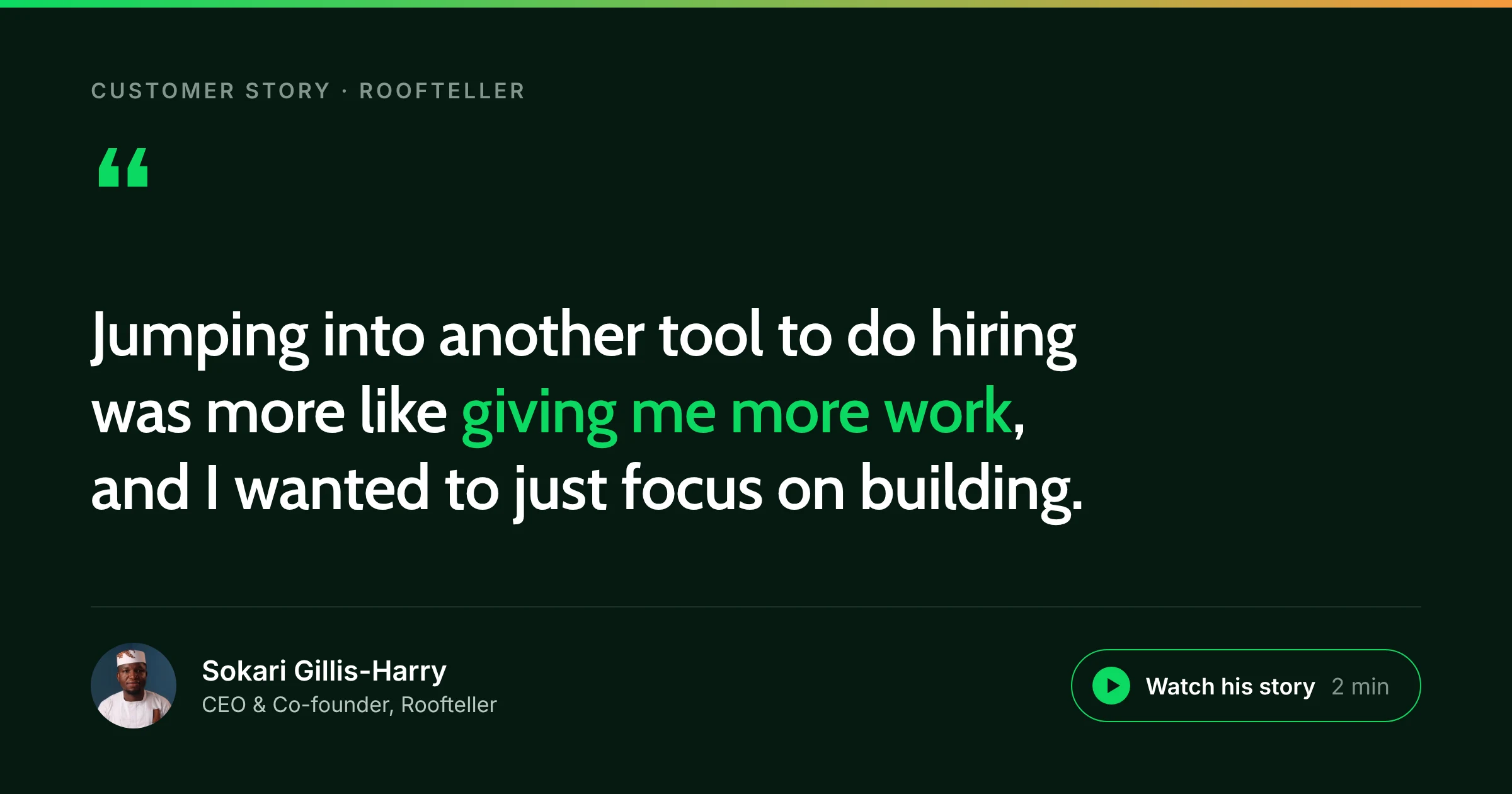
There's also the signal problem. Sokari again: you "don't want to be overwhelmed with applications that you know that most of them are just AI-generated."
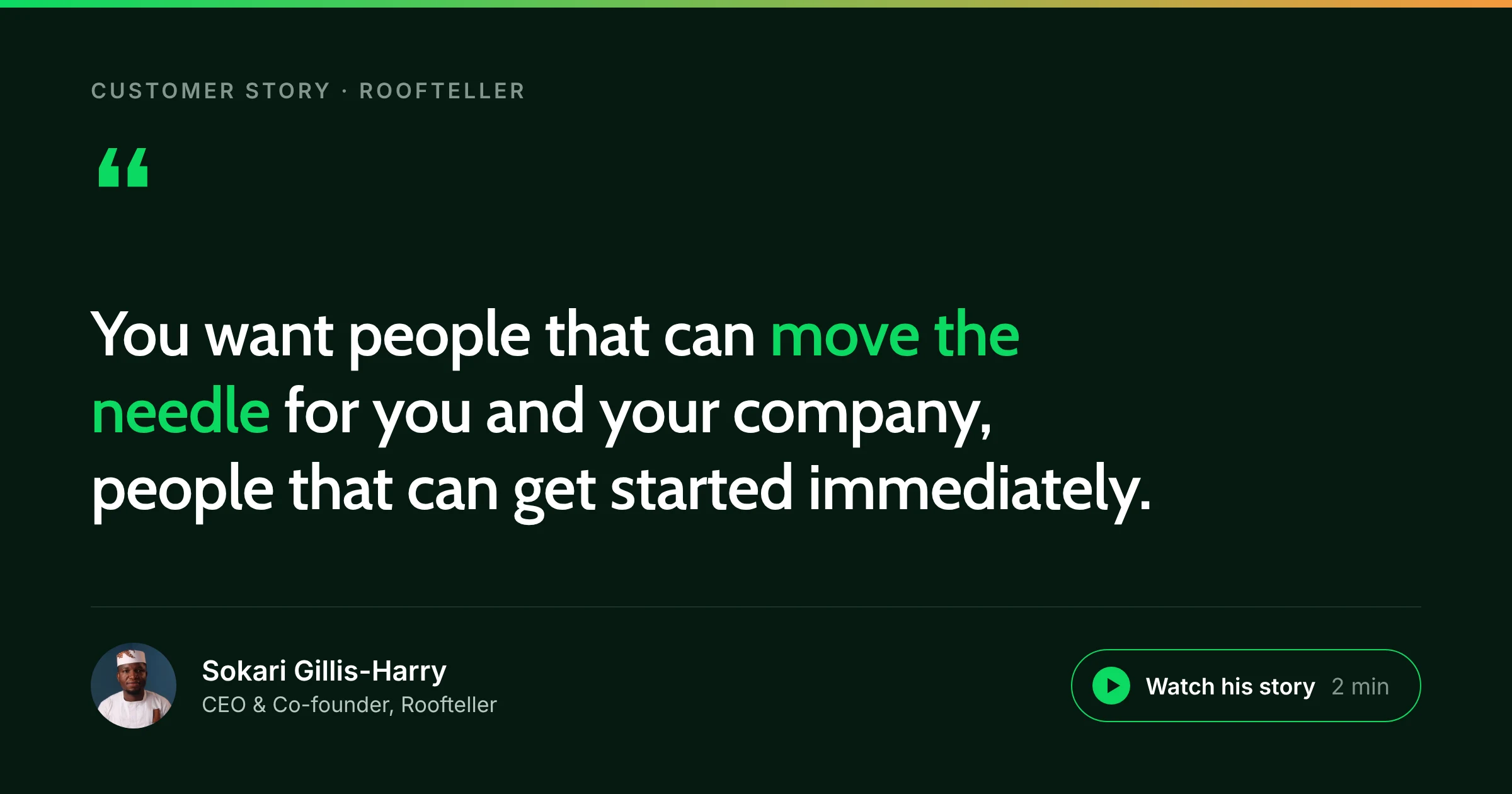
What he wanted instead:
And most of the market still screens for the document, not the work. Of the 411,000 new job descriptions in the October 2026 Laand Hiring Index, only 11% ask to see the work, while 19% still make a degree a hard requirement:

So the right platform for an AI-native team has to solve both: hiring without leaving your tools, and a signal that AI-generated applications can't fake.
Five tests for any AI-native hiring platform
Run these on every tool you're evaluating, including ours.
1. Can you start and run a hire without leaving your tools?
Ask: can I start a role from a Slack thread? From Claude? Can my coding agent read candidates' submissions? Can my team decide in a channel? If every step needs a new tab, it's not built for how you work.
2. Does it start from the result you need?
Ask: does it help me define what I need done, and tell me which part an AI agent could do instead? Brian Chesky, CEO of Airbnb, put the principle simply:
"Start with the results and work backwards to the people. Most [startups] start with resumes."
A platform that starts with a job title and a CV parser is starting with resumes.
3. What evidence do you see before you interview?
Ask: before I spend an hour on a call, what have I seen? A CV and a match score? A transcript of an AI phone screen? Or real work on my problem? Work is the only signal that can't be generated in seconds.
4. How does it treat AI in the assessment?
Ask: are candidates allowed to use AI? Can I see how they used it? Is there anything that tells me whether they checked the AI's output or just pasted it? Banning AI tests a job nobody on your team does.
5. What are you paying for?
Ask: do I pay per seat, per posting, per interview, a percentage of salary, or per person I actually want? Each model rewards the vendor for different things. Make sure it rewards them for the outcome you want.
How Laand works, on screen
Here's what those five tests look like in Laand, in the order you'd use it.
Start the hire from where the result already lives
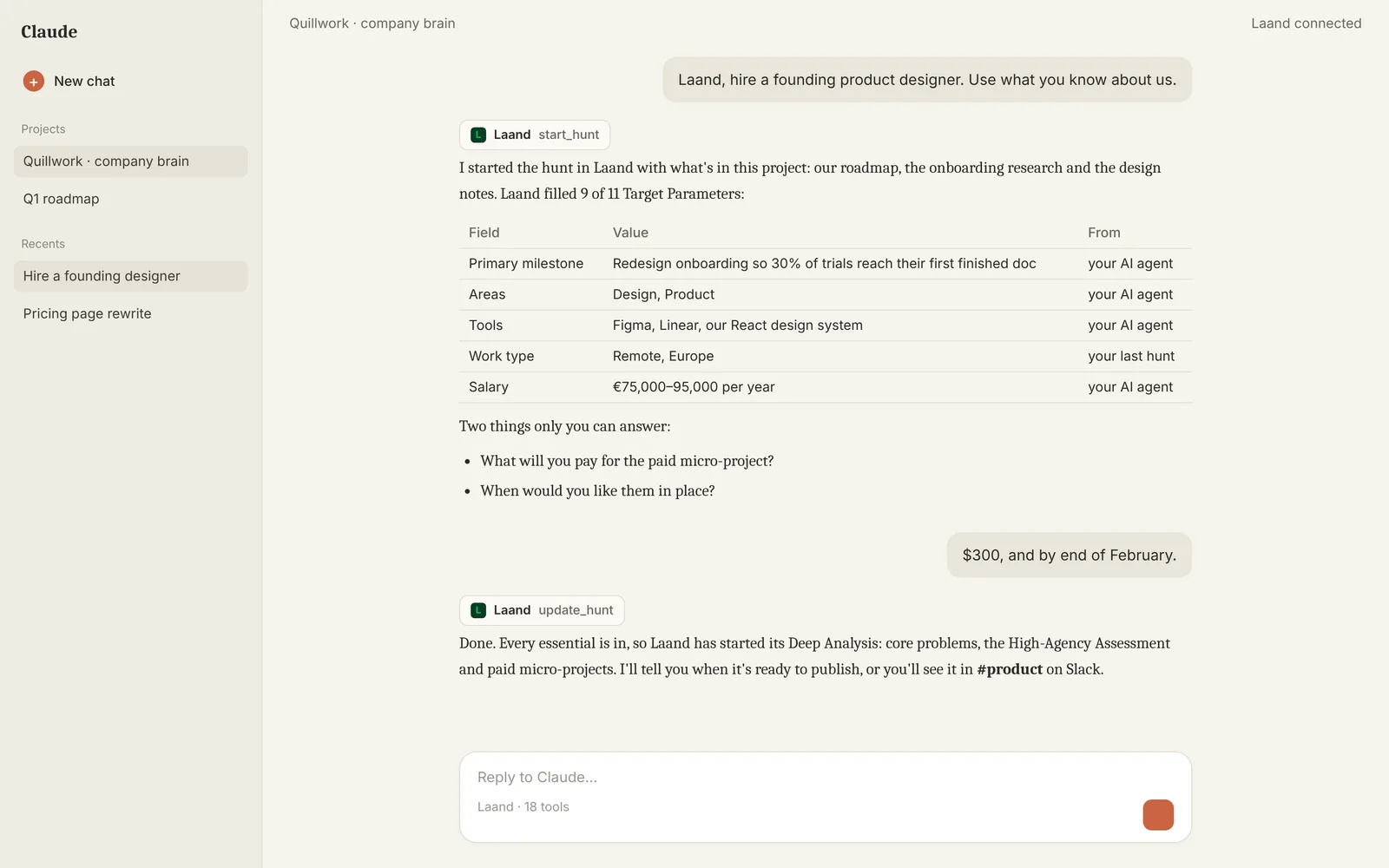
Most hires already have a job description, written by accident in a Slack thread or a Claude project. Laand starts from that. In Claude, you say "start a hunt for the onboarding problem we talked about", and Laand fills the role's Target Parameters from what Claude knows about your company, then asks only what it can't know.
It works the same in Slack (@Laand hire…), Claude Code, Codex, Cursor and ChatGPT. With GitHub connected read-only, Laand reads the stack and the core problems from your codebase too. This is what Sokari meant:
Get a straight answer to "hire or agent?"
Before a hunt opens, Laand's Deep Analysis splits the role into what agents can already do and what a person must own, and writes the role around the person's part. Sometimes the honest answer is that you need less of a hire than you thought.
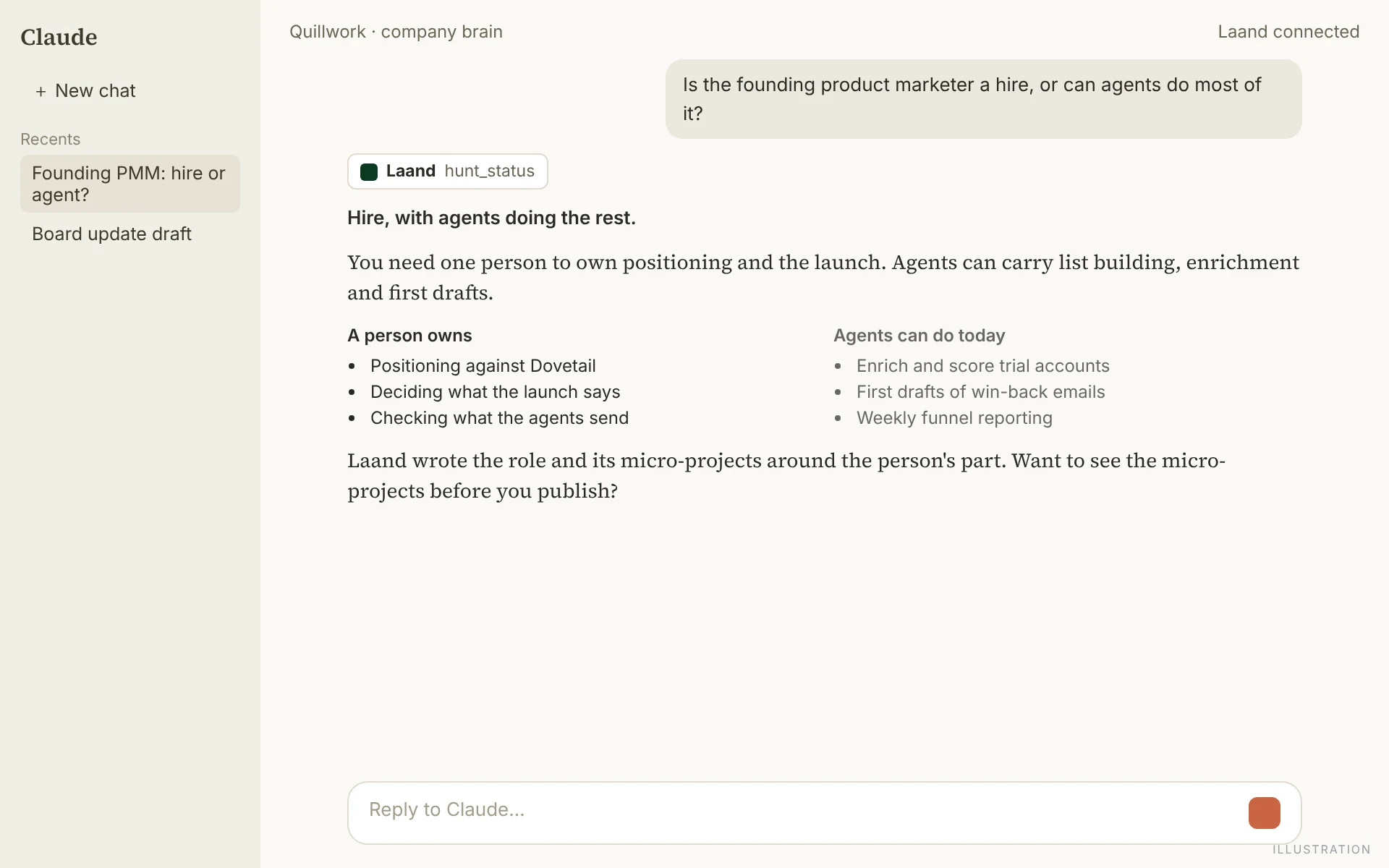
Filter before anyone spends effort
Candidates get an honest Fit Score before they go further, then a short High-Agency Assessment drawn from your core problems. You see a leaderboard at the bar you set, not a pile of AI-written applications.
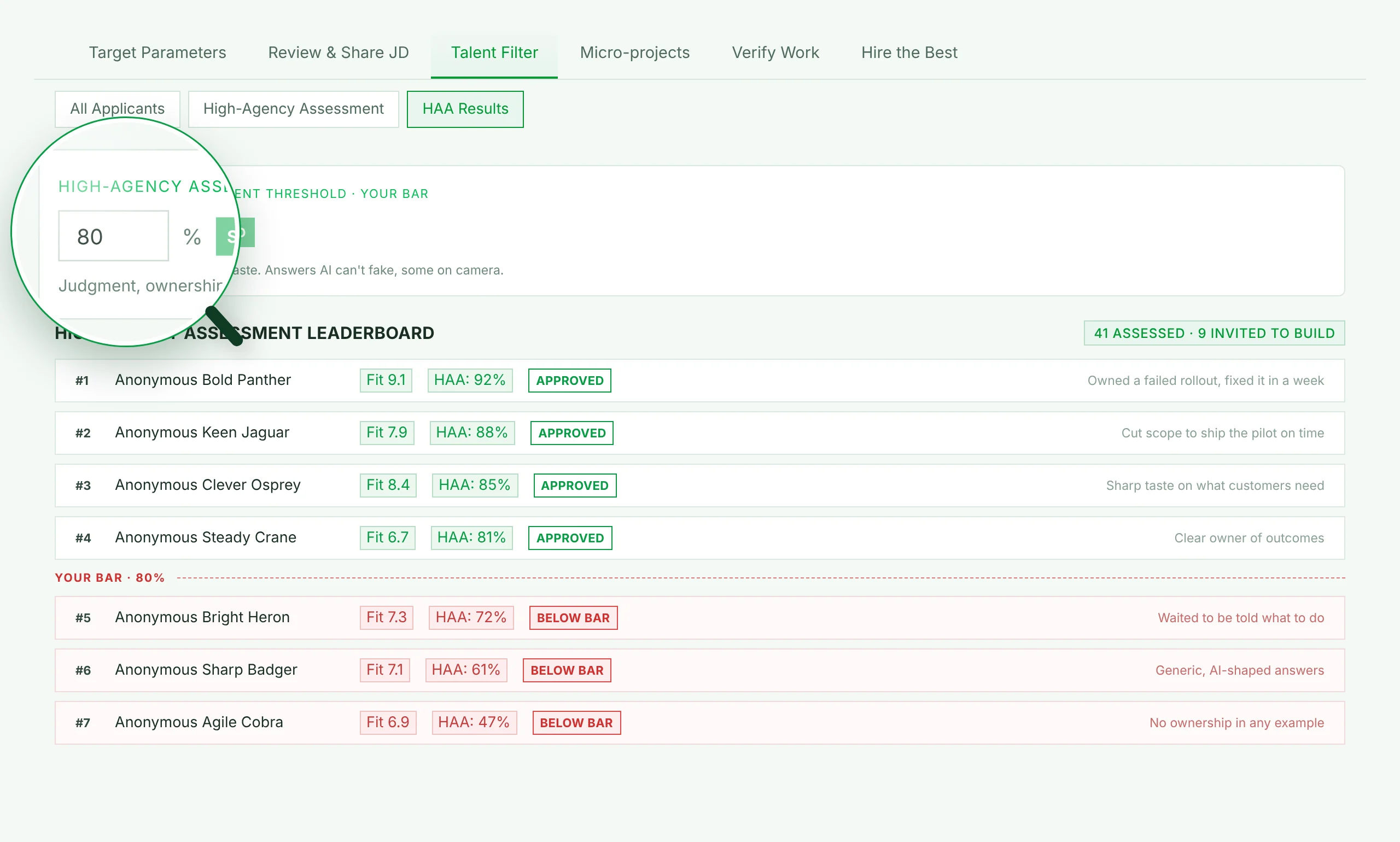
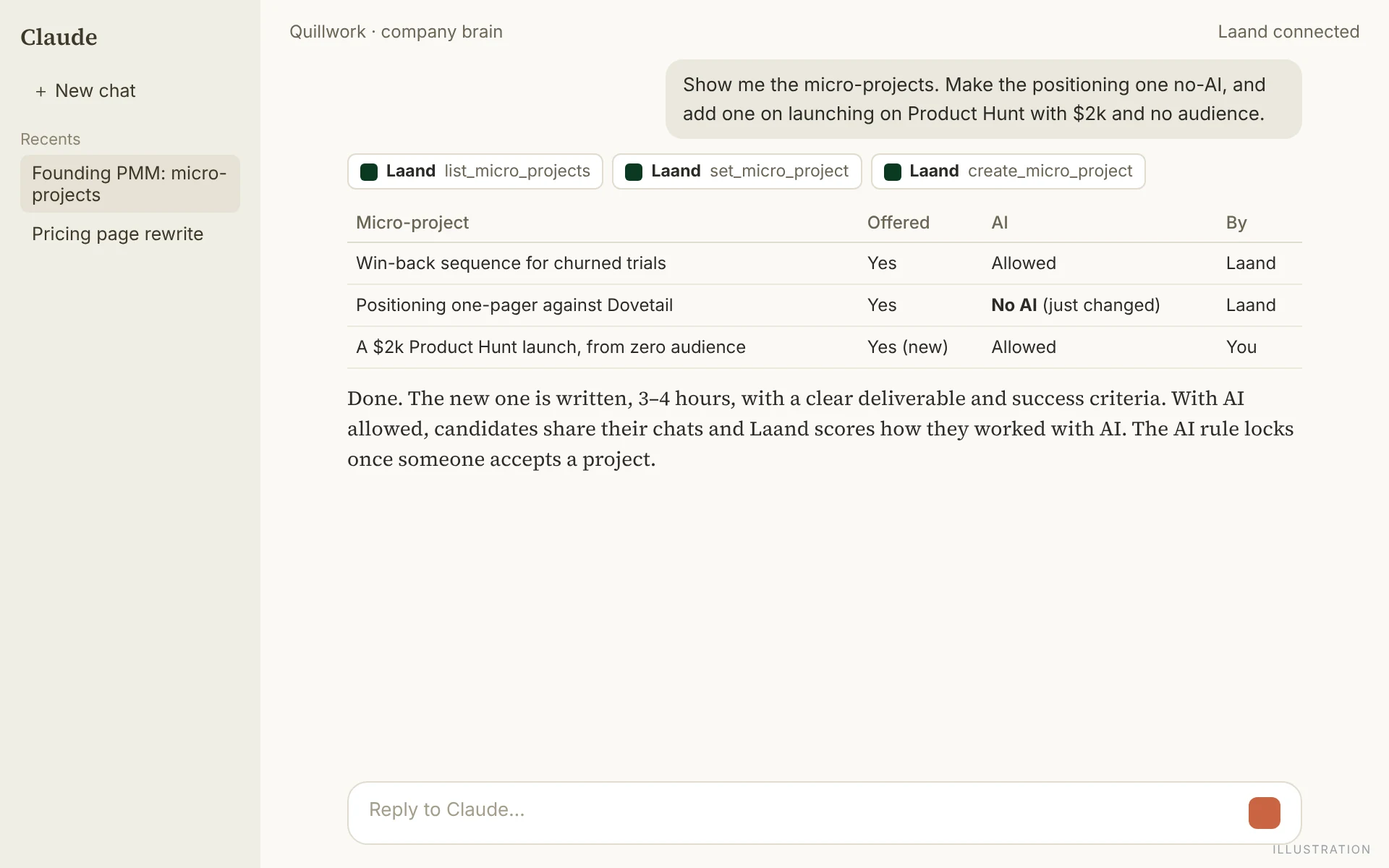
See real, AI-made work on your problem
The top candidates do a paid micro-project: a few hours of real work on one of your core problems. You choose, per project, whether AI is allowed. Each brief has a planted mistake to catch, and Laand scores the work and how the person worked with AI. You can add your own project from one sentence, from Slack or your AI agent.
Your coding agent can then run the finalists' work for you. Here's Claude Code testing a submission and finding its weak spots:
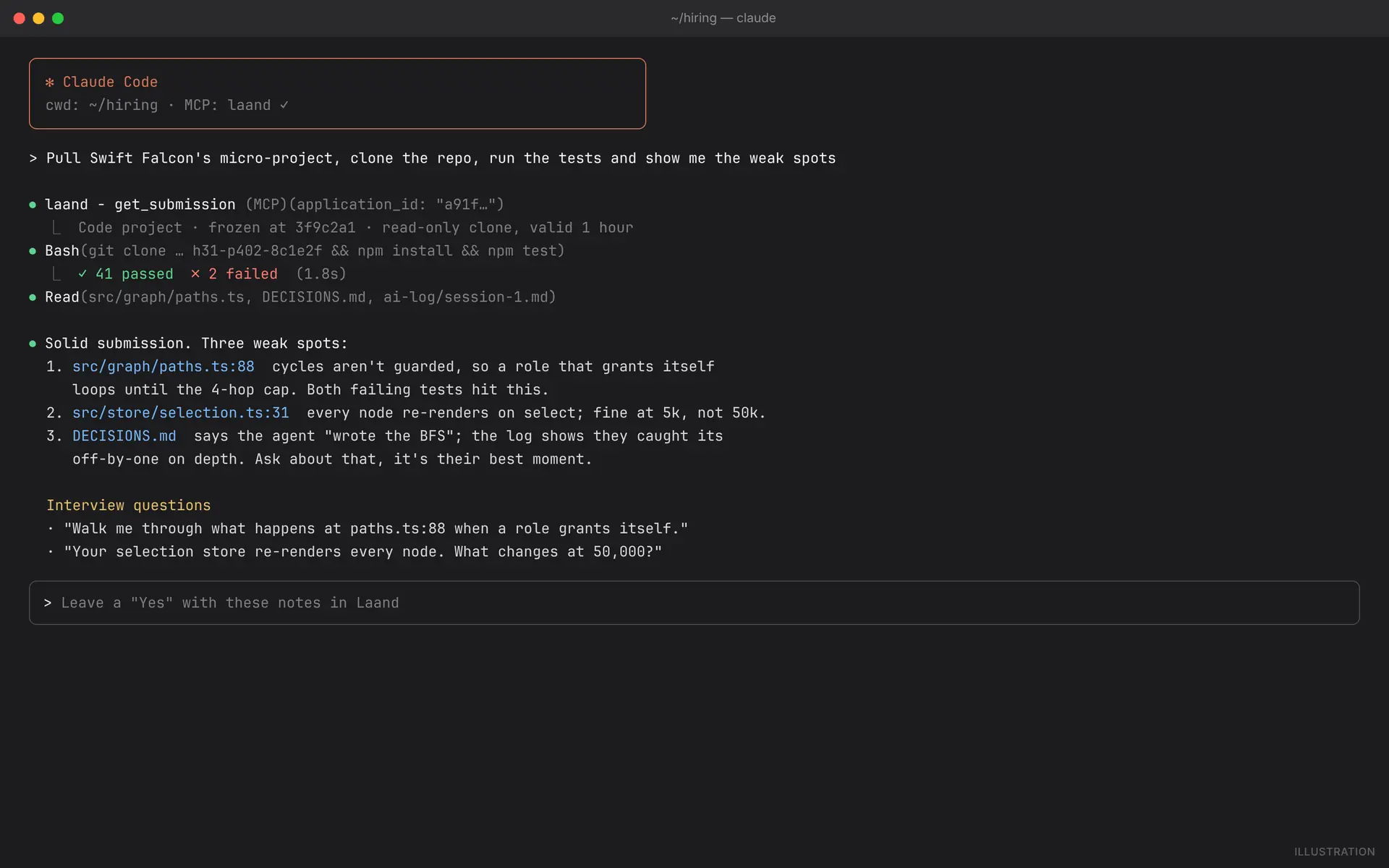
Decide as a team, and pay only for who you want
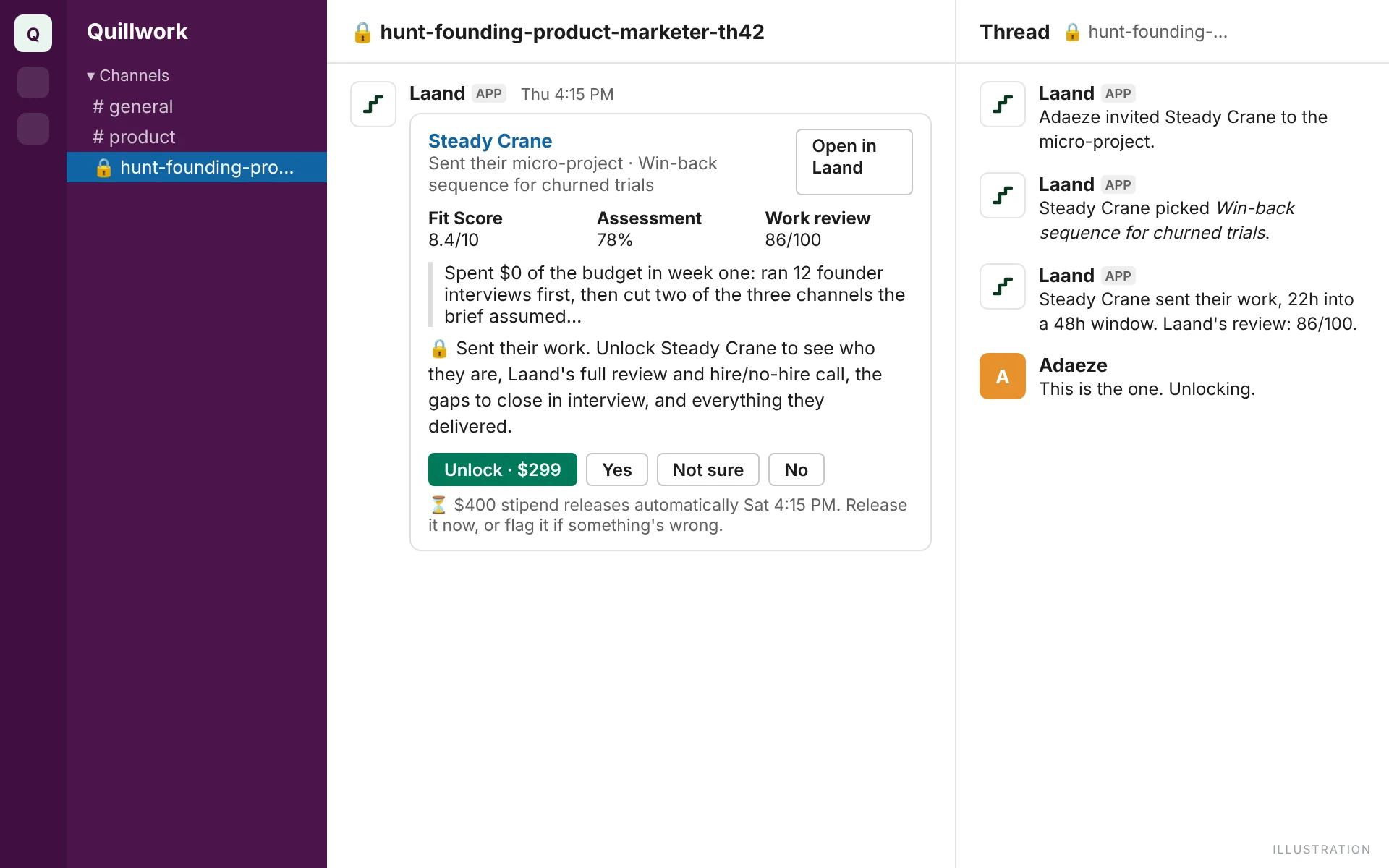
Candidates stay anonymous (a made-up name, their scores and the opening of Laand's review) until you unlock them. Your team decides in a private Slack channel per hunt. Publishing is free; you pay $750 per talent unlocked. With Google Drive connected, the contract draft and onboarding guide land in your hiring folder.
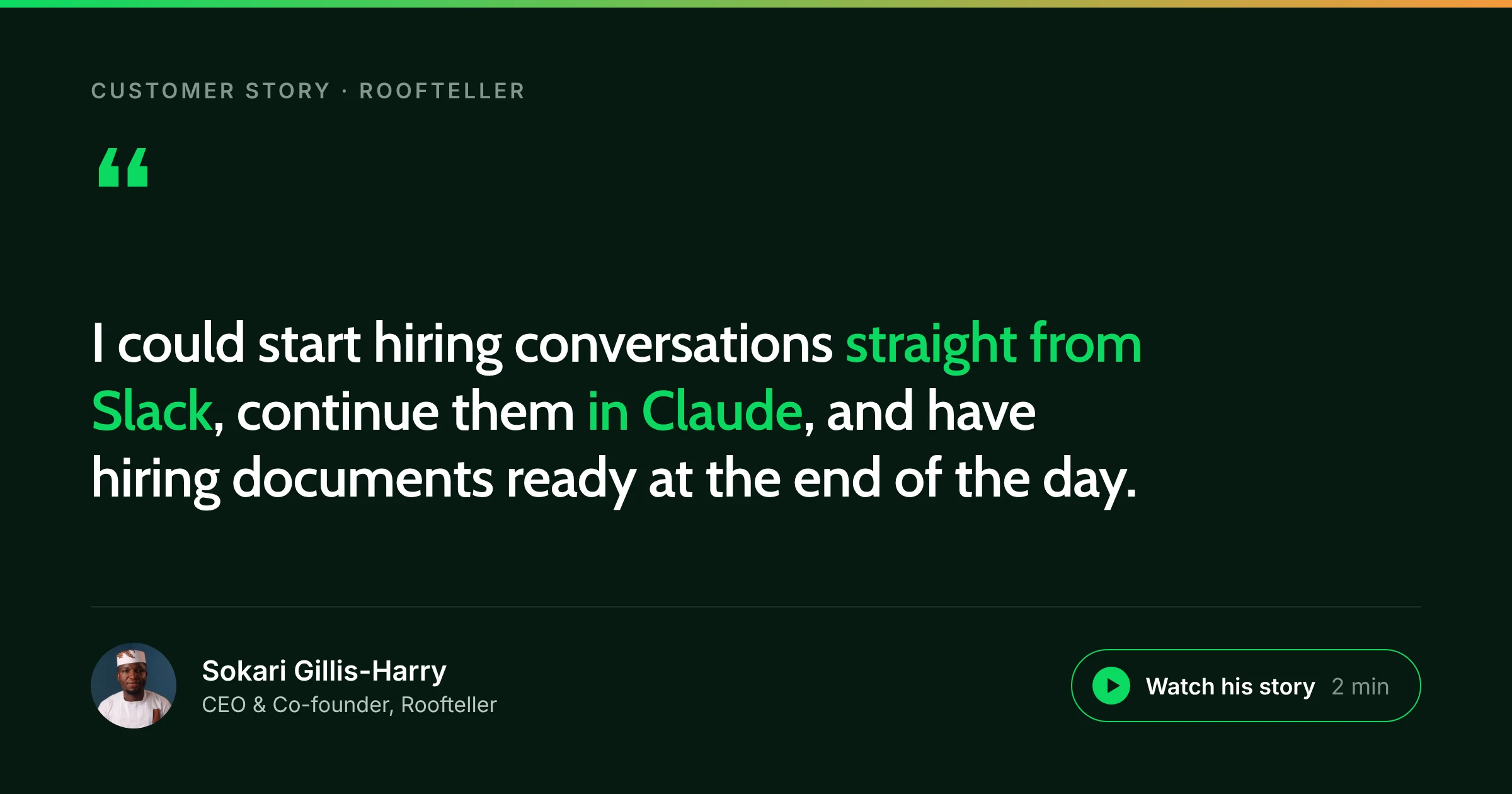
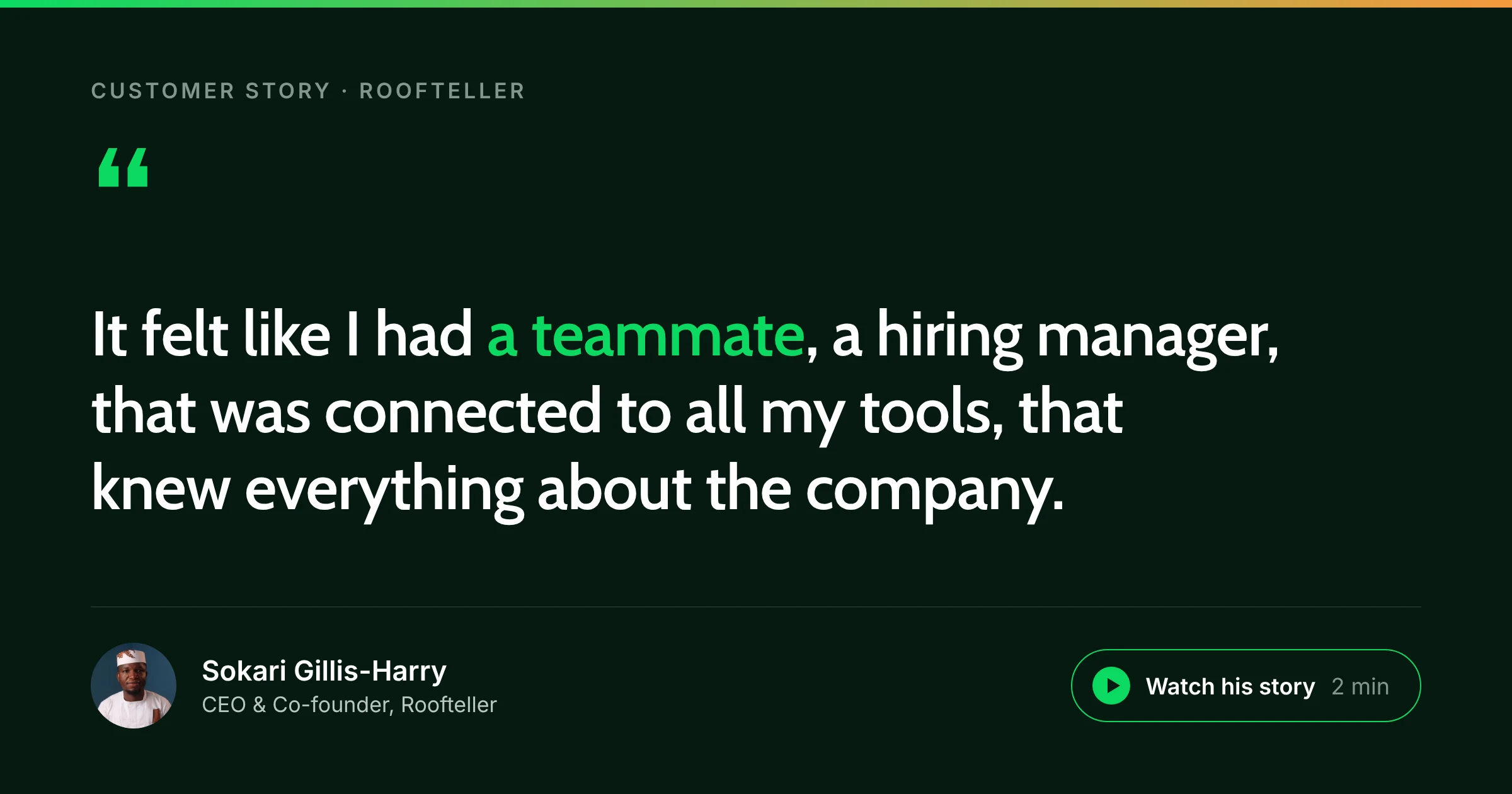
Sokari's summary of what that feels like:
How Laand compares with other AI hiring platforms
The tools you're likely evaluating fall into four groups. They solve different problems, and some of them work well alongside each other. What follows is based on each company's public materials as of November 2026; check their sites for the latest.
AI-native recruiting agencies: Perfectly
Perfectly is a Y Combinator-backed company that describes itself as an AI-native recruiting agency. Its AI recruiter sources and screens candidates for you and delivers interview-ready people into your Slack, and it charges a placement-style fee when you hire, like a traditional agency.
Where it fits: you want the sourcing done for you and you're comfortable paying an agency-style fee for it. How Laand differs: Laand doesn't hand you people it picked. It shows you what candidates did on your real problem, with AI use visible and scored, before you meet them. You pay a flat $750 when you unlock someone, not a percentage of their salary.
AI sourcing and referral agents: Jack & Jill, Clara
Jack & Jill pairs two AI agents: Jack works with candidates, and Jill works with companies, returning a curated shortlist from Jack's candidate network, with a fee charged when you hire. Clara positions its AI around sorting and referring candidate profiles to hiring teams.
Where they fit: you need a fast shortlist from a large pool, and a strong profile match is a good enough first signal for the role. How Laand differs: a match is a prediction from a profile. Laand's signal is evidence: paid work on your problem, a planted mistake caught or missed, and a score for how the person steered AI. Laand is also driven from your own agents and Slack, so the hire runs inside your workflow rather than through another inbox.
ATS platforms with AI added: Ashby, Greenhouse, Workable
Ashby, Greenhouse and Workable are applicant tracking systems: the system of record for jobs, applications, interviews and offers. All three have added AI features, such as help writing job descriptions, summarising applications and screening or matching candidates.
Where they fit: you hire at volume, you have a recruiter or a recruiting team, and you need structured pipelines, compliance and reporting. How Laand differs: an ATS organises the CV-first loop. Laand replaces its front half (the job post, the CV screen and the first interviews) with an honest fit check, an agency assessment and paid work. Many teams can use Laand without an ATS until they're much bigger; teams that already have one can use Laand to decide who's worth putting into it.
At a glance
| Laand | AI recruiting agency (e.g. Perfectly) | AI sourcing agents (e.g. Jack & Jill, Clara) | ATS with AI (Ashby, Greenhouse, Workable) | |
|---|---|---|---|---|
| What it is | Hiring platform for AI-native teams | Agency with an AI recruiter | AI that matches or refers candidates | System of record for hiring |
| Starts from | The result you need, plus hire or agent | Your role brief | Your role brief | A job post |
| Main signal before you meet | Paid work on your problem, AI use scored | The agency's screen | Profile match | CV, plus AI summaries |
| Runs from your agents (MCP) and Slack | Yes, start to finish | Delivers candidates to Slack | Varies | Mostly in its own app |
| AI in the assessment | Allowed per project, visible and scored | Not the focus | Not the focus | Not the focus |
| Candidates anonymous until you choose | Yes | No | No | No |
| How you pay | Free to publish; $750 per talent unlocked | Fee on hire | Fee on hire | Subscription |
We'll publish a detailed comparison for each of these in the coming weeks, with the trade-offs in both directions.
Which kind of platform should you choose?
Here's my honest take, as someone who's hired for my own team and for many clients:
- Choose an AI recruiting agency if you'd rather outsource sourcing entirely and the fee is fine for the role.
- Choose an AI sourcing agent if your main problem is volume at the top of the funnel and a profile match is a good enough first filter.
- Choose an ATS if you're past fifty people, hiring at volume, and need the system of record.
- Choose Laand if you're a founder-led AI-native team, your hiring decisions happen in Slack and Claude, and you want to see people steer AI on your real problems before you spend a single hour interviewing.
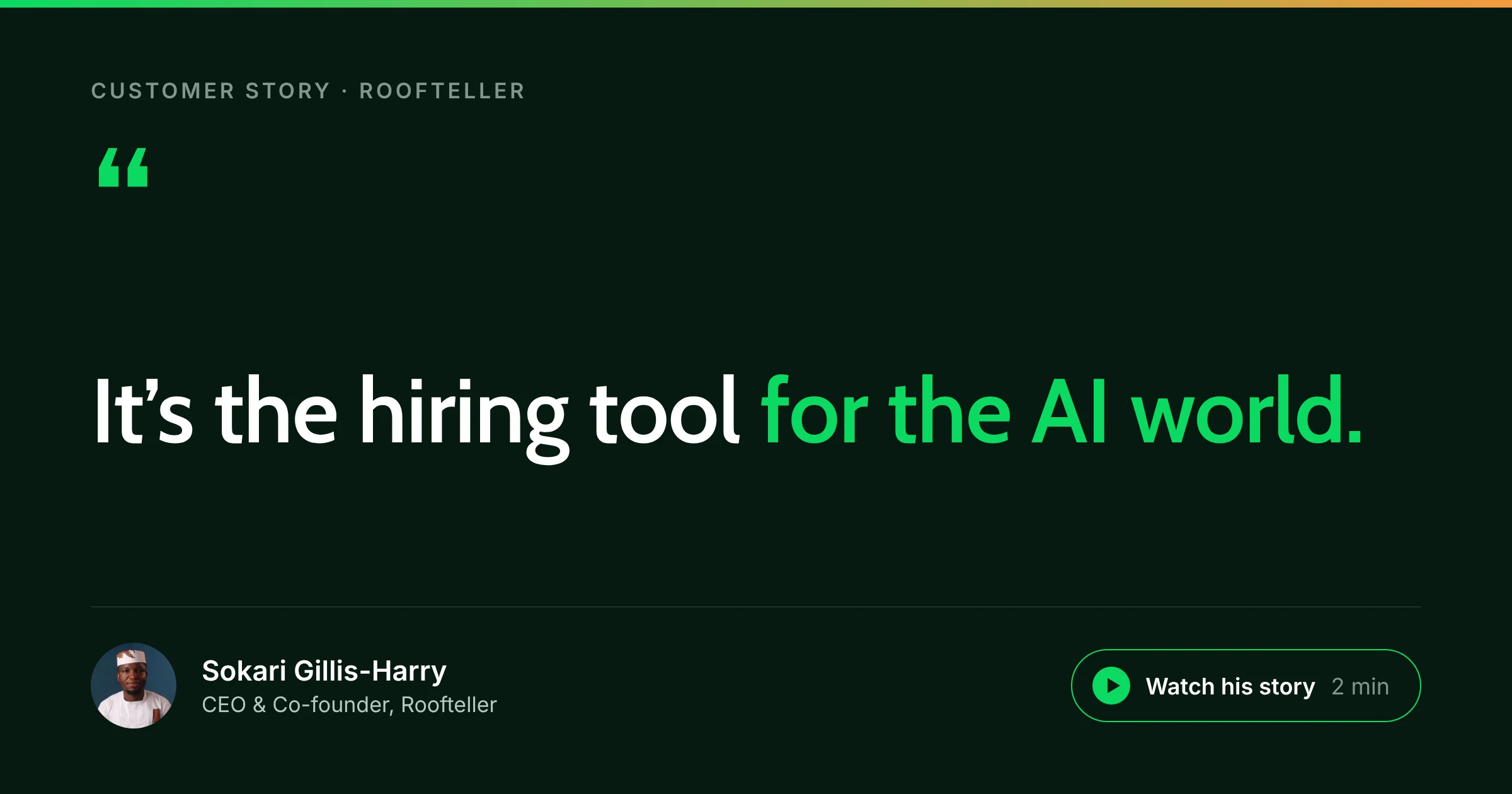
Or, as Sokari put it:
Frequently asked questions
What is an AI-native hiring platform?
An AI-native hiring platform is hiring software built for teams that work through AI agents. It runs inside the tools those teams already use (Slack, Claude, ChatGPT, code editors), starts from the result a company needs, and judges candidates on real work made with AI rather than on CVs.
What's the difference between AI-native and AI-powered hiring software?
AI-powered (or AI-added) software speeds up the traditional loop: job post, CV screen, interviews. AI-native software changes the loop itself, replacing the CV screen with evidence such as paid work samples, and running the process from AI agents and team chat.
Is Laand an ATS?
No. Laand replaces the front of the hiring process (the job post, CV screen and first interviews) with a Fit Score, a High-Agency Assessment and paid micro-projects. Small teams often don't need an ATS alongside it; larger teams can use Laand to decide who goes into theirs.
Can I run hiring from Claude or ChatGPT?
Yes, with Laand. Connect it once as a connector, and you can start Talent Hunts, set up micro-projects and review anonymous candidates in a conversation. See the guides for Claude and ChatGPT.
How much does an AI-native hiring platform cost?
It varies by model: subscriptions for ATS platforms, a fee on hire for agencies and sourcing agents. Laand is free to publish, and you pay $750 per talent you unlock.
Start with the result
If you've read this far, you probably already have the result written down somewhere: a Slack thread, a Claude project, a ticket. That's your first hire. For the full playbook on running it, read hiring for AI-native teams.
Then start a Talent Hunt from where that result lives. Publishing is free, and the first people you meet will have already done real work on your problem.
Stop applying blind.
Laand scores your fit for any role, then builds the application kit that proves you can do the job.
Join LaandHire from the tools you already work in
Start a Talent Hunt from Slack, Claude or your dashboard. See real, AI-made work on your problem before you meet anyone. Publishing is free; $750 per talent you unlock.
Start a Talent Hunt