The Laand blog
Field notes on hiring, proof of work, and landing roles on merit rather than on keywords.
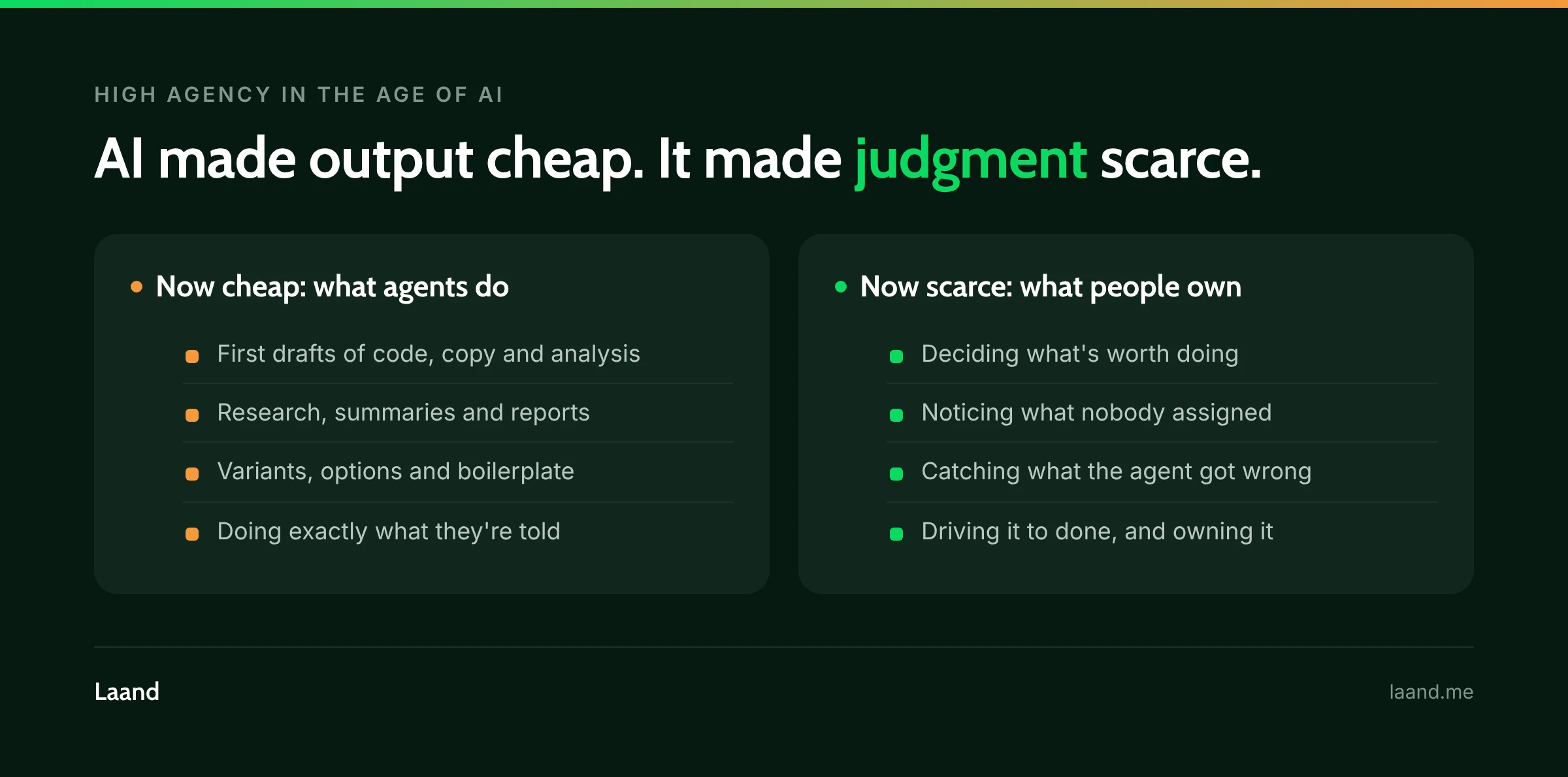
High agency in the age of AI: why agents made judgment the scarcest skill in your company
AI agents now do the first draft of almost everything. That didn't make high-agency people less valuable. It made them the bottleneck. Here's why AI makes agency scarce, why agency now needs taste to be safe, what "steering AI" actually looks like, and how to hire for it with work scoped from your real problems.
9 min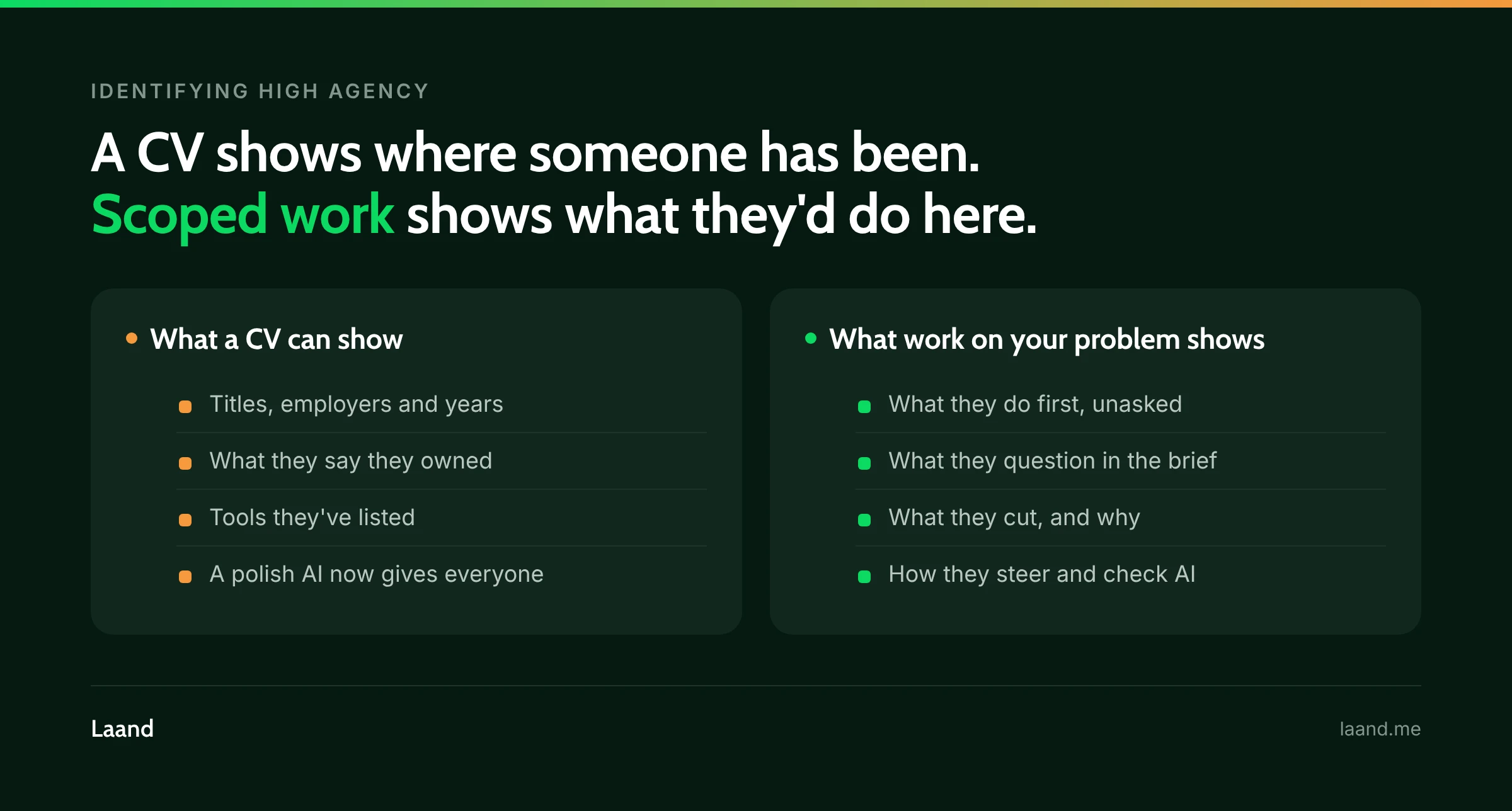
How to identify high-agency candidates: you can't see it on a CV, you see it on scoped work
Every CV now says "owned", "drove" and "led", often written by AI. None of it tells you whether someone will act with judgment in your company. Here's how to identify high-agency candidates: the signals that are real, the ones that mislead, and why work scoped from the problems they'd actually solve is the only test that shows agency and taste together.
9 min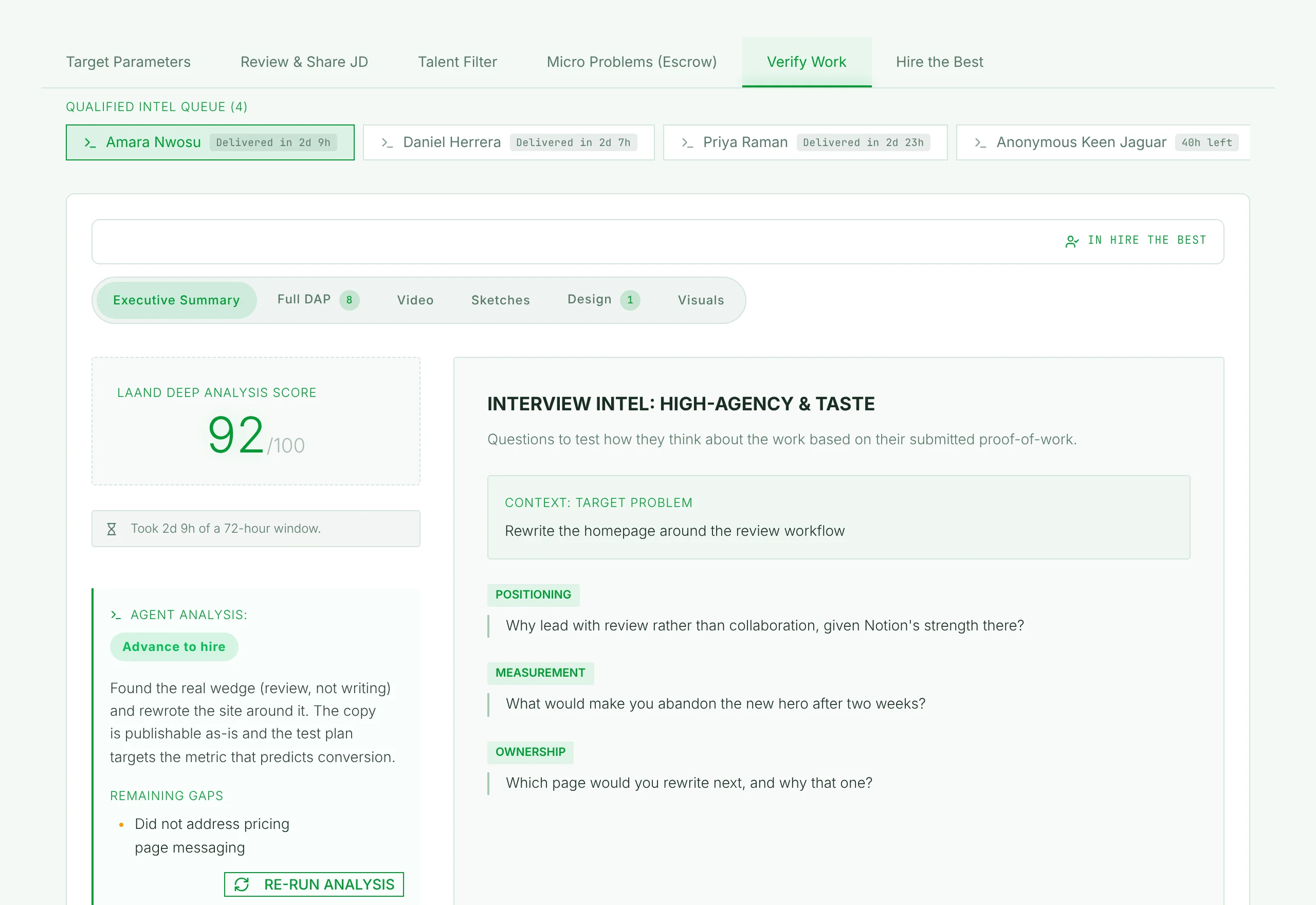
Skills-based hiring for startups: why "drop the degree" was only the first step
Big companies spent five years announcing they'd dropped degree requirements, and mostly hired the same way. For startups, skills-based hiring is a real advantage, but only if you test skills directly. Here's what skills-based hiring means in the AI era, why the AI-native version tests judgment over AI, and how to run it at a small company.
9 min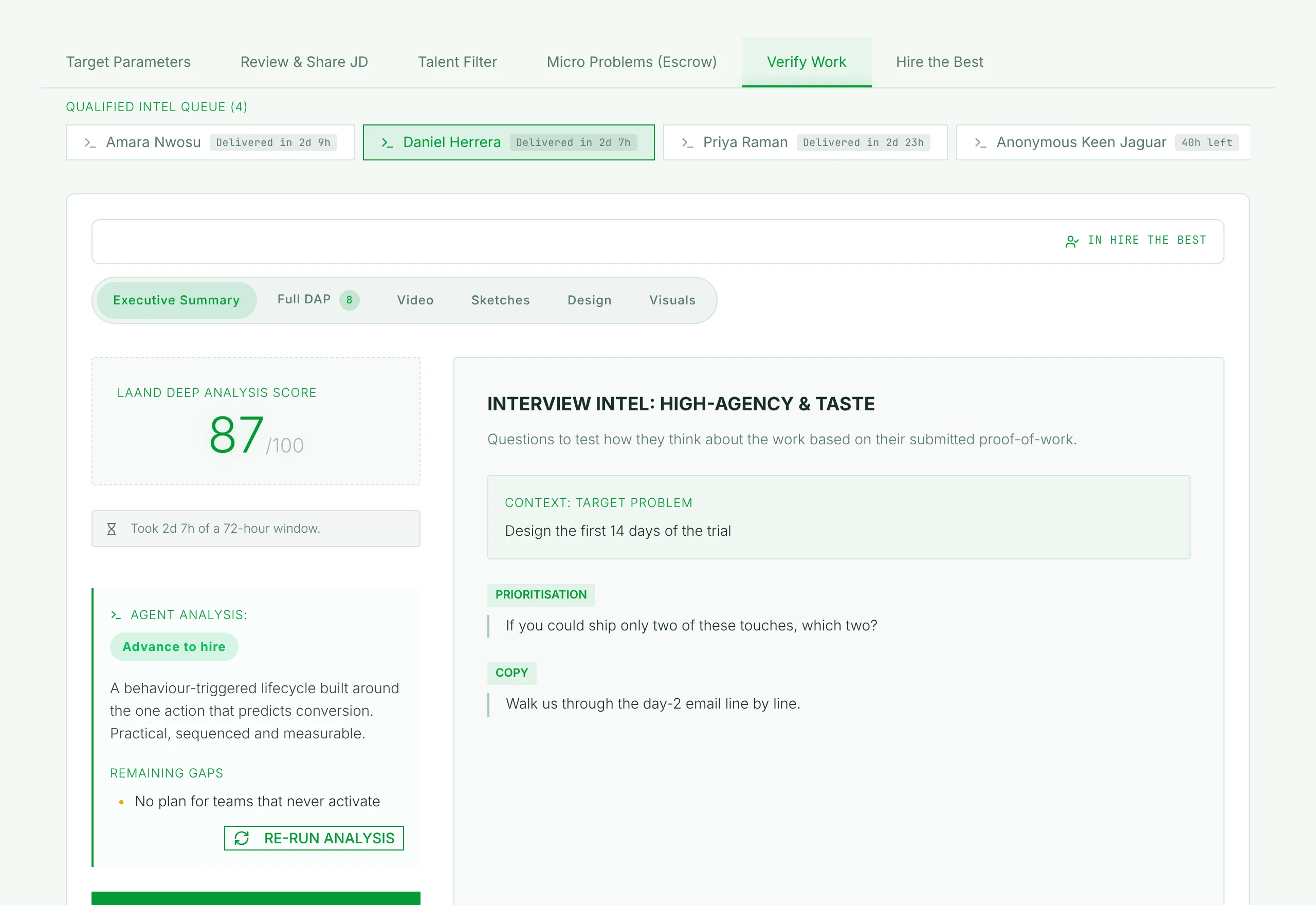
Proof of work hiring: the end of the résumé as the main hiring signal
Proof of work hiring means deciding who to hire on what people have actually done, preferably on your real problems, rather than on what they say they've done. Here's why it's replacing the résumé at AI-native startups, the three kinds of proof and how strong each is, and how to make proof of work the centre of your hiring.
9 min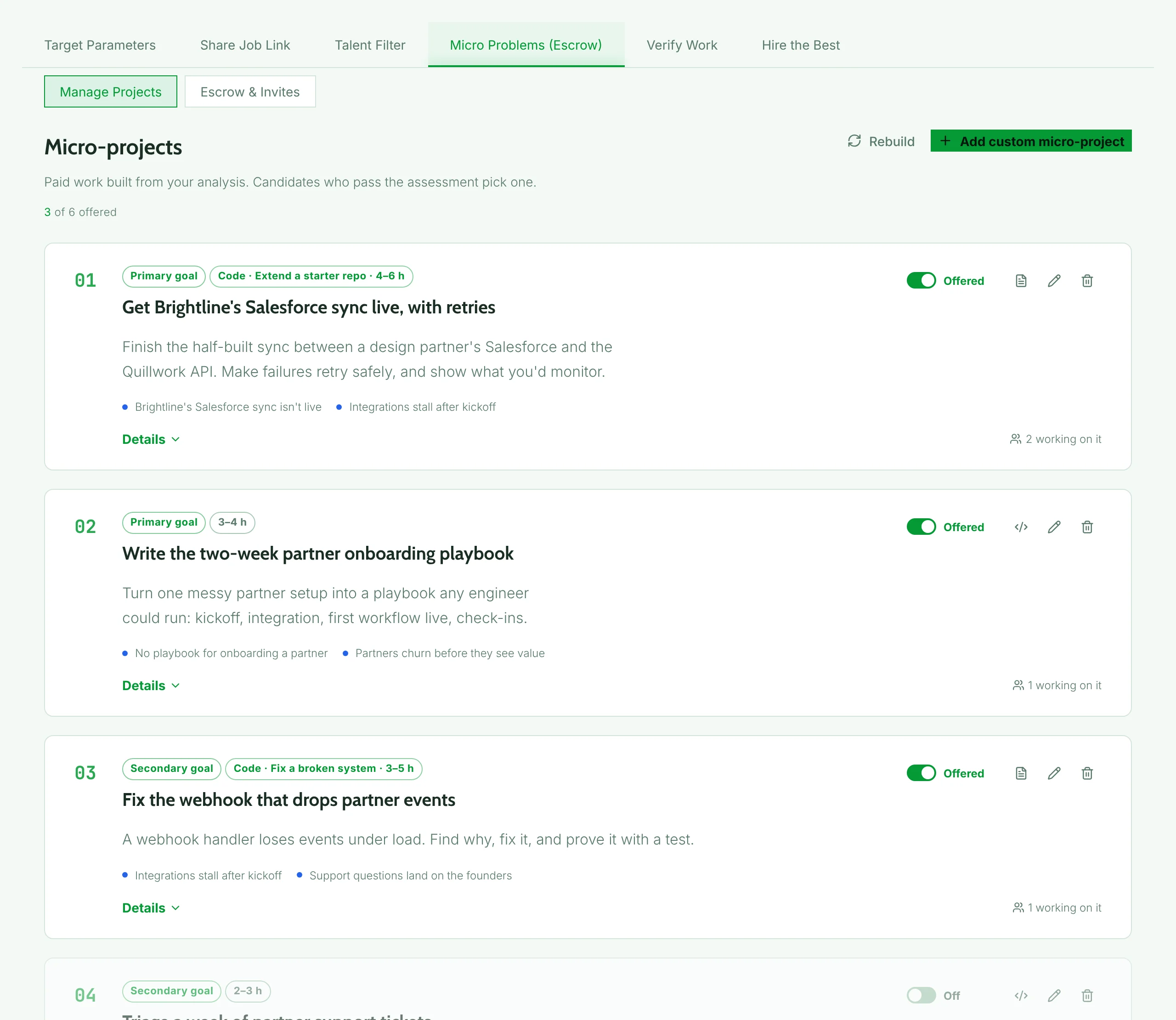
Paid work trial vs take-home assignment: which one to use, and the version that works with AI
Take-home assignments were the best hiring signal of the 2010s. In 2026, AI can complete most of them in minutes, and the best candidates refuse to do them unpaid. Here's how a paid work trial compares, when to use each, and how to design a short paid trial that works with AI instead of against it.
9 min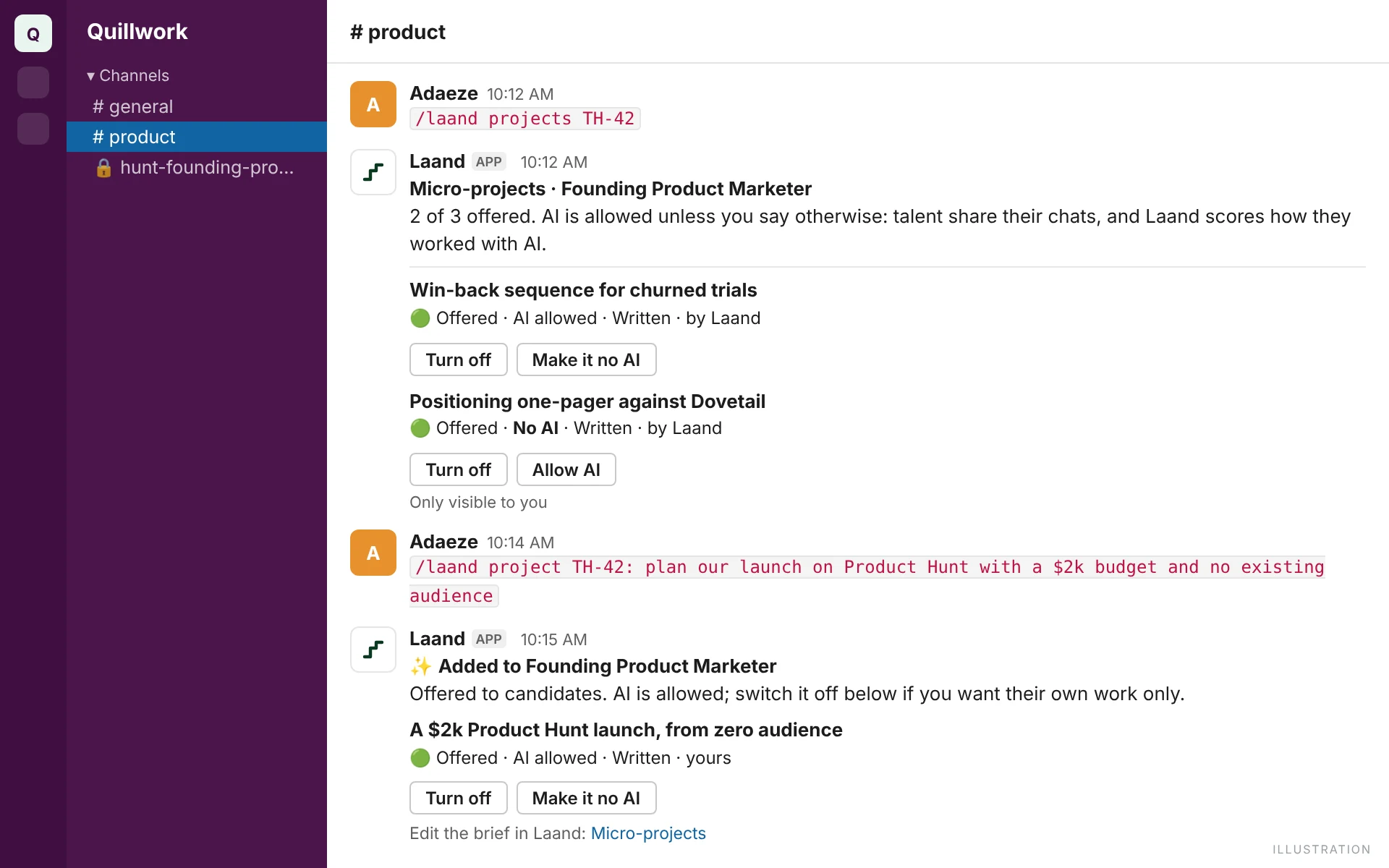
How to run a paid trial project: a step-by-step guide with examples for engineering, GTM and operations
A paid trial project is the strongest hiring signal a startup can get, if it's run well. Here's the step-by-step: how to scope a six-hour project from a real problem, what to pay, how to write the brief (with a planted mistake), how to handle AI, how to review it, and complete examples for software engineering, GTM and operations roles.
9 min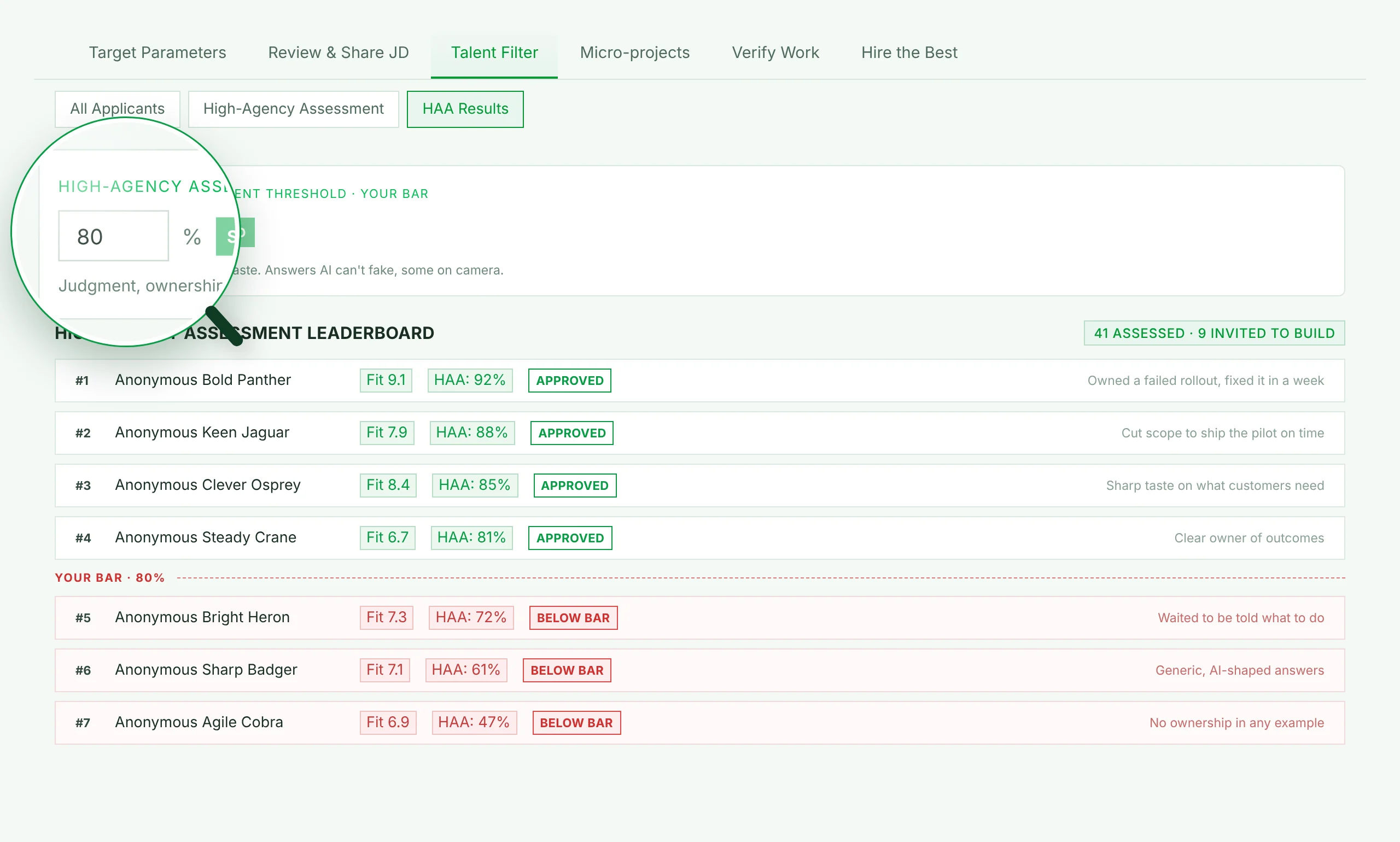
How to test for high agency in interviews: 20 questions, a scoring rubric and the test that beats both
Standard behavioural questions are the easiest part of an interview to rehearse, and AI now rehearses them for candidates. Here's how to test for high agency in interviews: question formats that resist preparation, a scoring rubric, role-specific examples for engineering, GTM and operations, and why a short paid work sample beats them all.
9 minHow to hire high-agency people: a founder's field guide
High-agency people own outcomes without waiting to be told how, and on an AI-native team they steer agents to results nobody expected. Here's how to define high agency for your role, where to find these people, how to spot it, and the hiring process that surfaces them.
9 min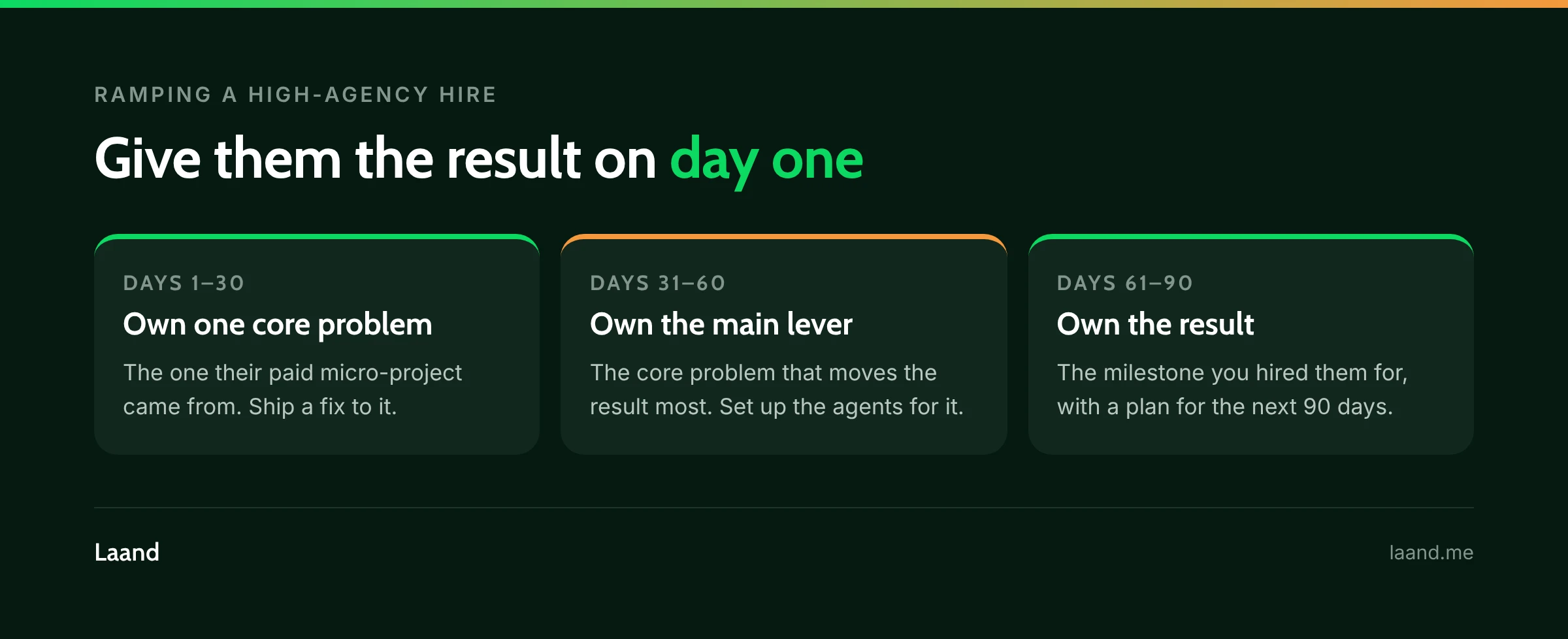
The 30-60-90 day plan for a high-agency hire at a startup (with templates by role)
Most 30-60-90 day plans are learning plans: absorb, observe, contribute, then own. For a high-agency hire, that's backwards. Here's a 30-60-90 day plan built around ownership, tied to the core problems the person was hired to solve, with week-by-week actions, templates for engineering, GTM and operations roles, and how Laand drafts one from the work your hire already did.
10 min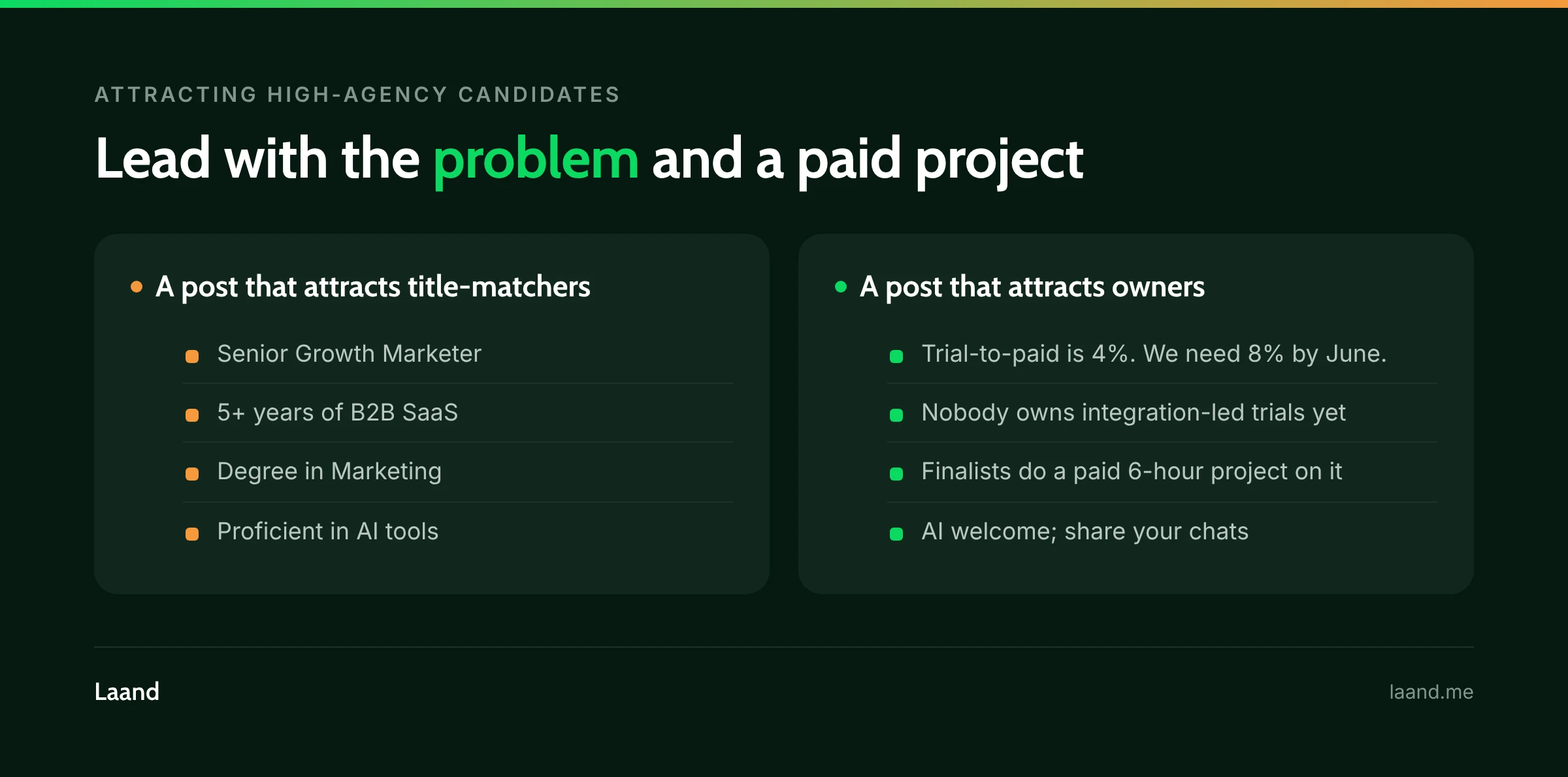
How to attract high-agency candidates: lead with the problem and a paid project
You can't attract high-agency people with "rockstar", "fast-paced" or "thrives in ambiguity". Every job ad says that. They respond to a real problem worth owning, a clear result, honest stakes and a paid project instead of an interview gauntlet. Here's how to write job posts and outreach that attract high-agency candidates with taste, with before-and-after examples.
9 min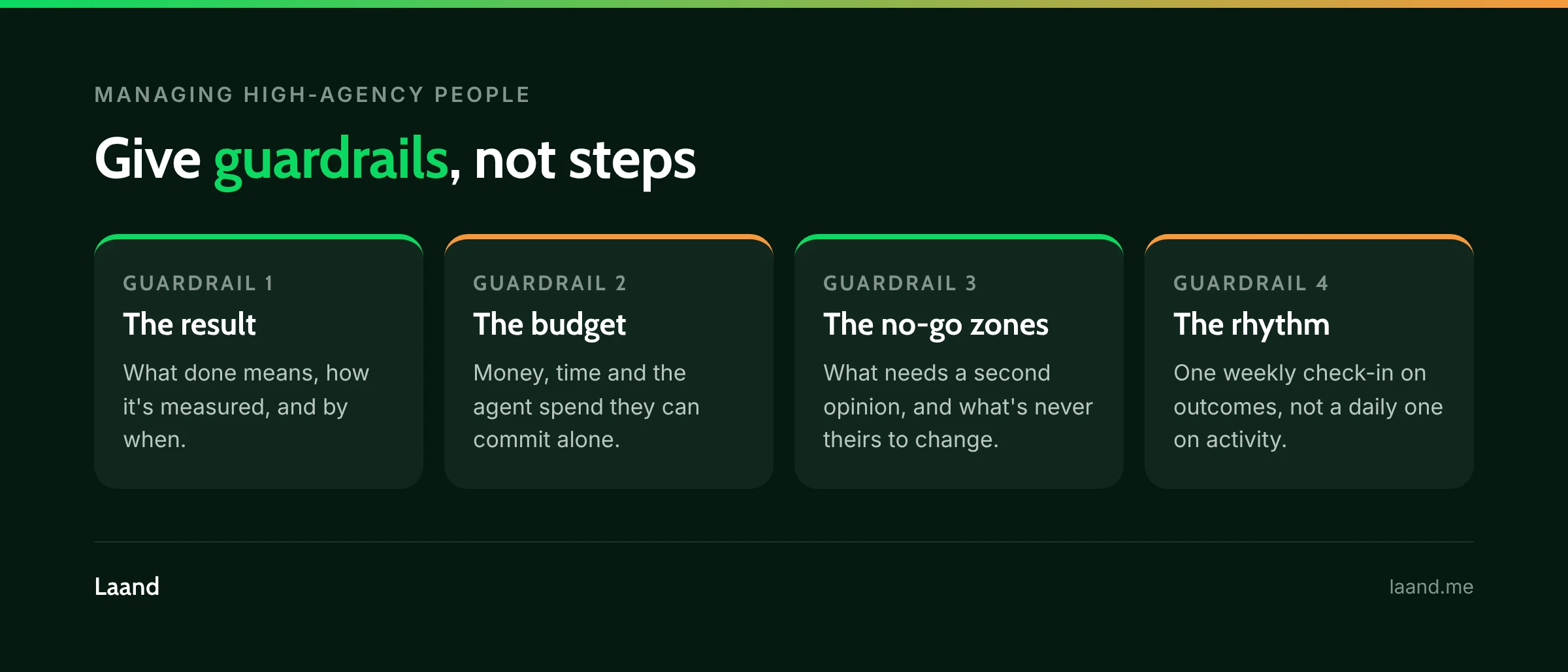
How to manage high-agency people without micromanaging them: guardrails, not steps
High-agency people are the easiest to hire badly and the hardest to keep. Micromanage them and they leave; leave them alone and some go off the rails. Here's how to manage high-agency people well: four guardrails instead of step-by-step instructions, a weekly rhythm on outcomes, how to handle the downsides (burnout, misdirected energy, friction), and why taste is what makes autonomy safe.
10 min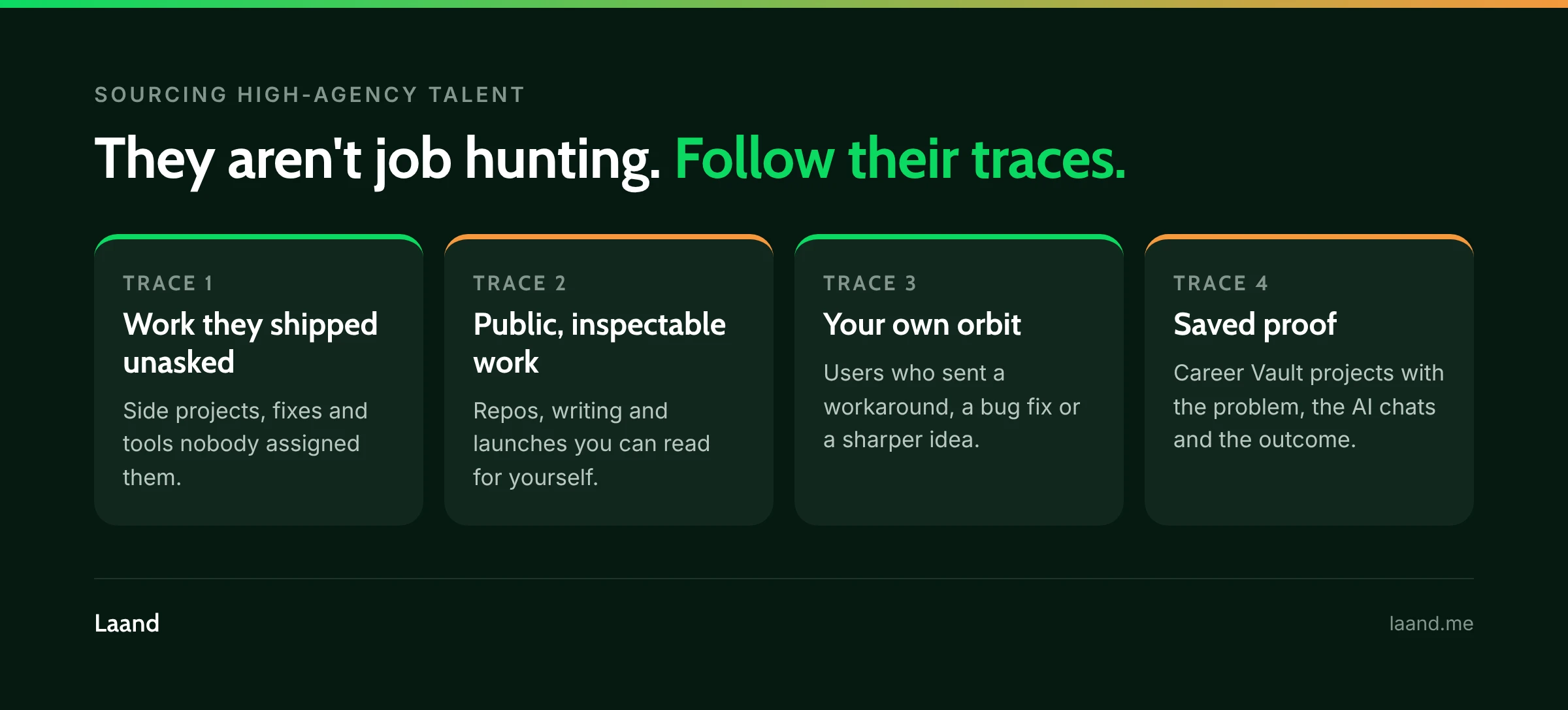
Where to find high-agency talent: they aren't job hunting, so follow their traces
High-agency people are rarely on job boards. They're employed, busy and fixing things nobody assigned them. But they leave traces: work they shipped unasked, public work you can inspect, your own users who send you fixes, and proof they've saved. Here's where to find high-agency talent, how to read the traces for taste as well as agency, and how to turn a trace into a hire.
9 min