Greenhouse alternatives for small teams: what to use when you're 5 to 20 people
Greenhouse was built for structured hiring at scale. Small teams need structure too, just not that kind.

Picture an eight-person team that just raised its seed round. The lead investor, trying to help, says: "Set up Greenhouse now, so you build good hiring habits early."
So the CEO does. Interview kits. Scorecards for each stage. Approval workflows. A careers page. Two days of setup for a company that will make four hires this year.
Three weeks in, nobody is filling in the scorecards. The interview kits are fine but the interviews are still chats. The real decisions happen in a Slack thread called #hiring-chat, and Greenhouse gets updated on Fridays, if anyone remembers.
The investor was right about the habit. Structured hiring, where everyone is judged on the same evidence by the same criteria, is the single best thing you can do for hiring quality. What a small team needs is that habit, without the machinery built for a 500-person company.
What Greenhouse gets right
Greenhouse popularised structured hiring: decide what you're looking for before you meet anyone, ask every candidate the same questions, score them against the same criteria, and decide on the evidence rather than gut feel. It's backed by decades of research showing that structured assessments predict job performance far better than unstructured interviews.
Greenhouse has also added AI to help draft job posts, summarise candidates and assist recruiters. For mid-size and large companies with recruiting teams, it remains excellent.
Why small teams outgrow it in the other direction
Small teams don't leave Greenhouse because it's bad. They leave because:
- The structure lives in forms nobody fills in. On an eight-person team, the interviewer is also the engineer shipping this week's release.
- It's built for many interviewers. A small team has two or three decision-makers who talk every day.
- It's priced for scale. A subscription is a lot to justify for a handful of hires.
- The evidence is still a CV and a conversation. Structure makes interviews fairer; it doesn't make them a better test of whether someone can do the work.
The best Greenhouse alternatives for small teams
| Tool | What it is | Best for | Pricing model |
|---|---|---|---|
| Workable | Simpler ATS with job board reach and AI tools | Small teams that want a lighter ATS | Subscription |
| Ashby | ATS + CRM + scheduling + analytics | Fast-growing startups with a recruiter | Subscription |
| Lever | ATS + candidate CRM | Repeat roles and talent pipelines | Subscription |
| Perfectly | AI-native recruiting agency | Outsourcing sourcing entirely | Fee on hire |
| Jack & Jill | AI agents matching from a candidate network | A fast shortlist | Fee on hire |
| Laand | Work-first hiring platform for AI-native teams | Same evidence for every finalist, decided in Slack | Free to publish; $750 per talent unlocked |
Based on each company's public materials as of November 2026.
Workable is the most common "Greenhouse but lighter" choice: quicker to set up, posts to many job boards at once, and usable without a dedicated recruiter.
Ashby suits startups that expect to scale fast and want strong reporting from day one. See Ashby alternatives for AI startups for when that's more than you need.
Lever is useful if you nurture candidates over months for repeat roles.
Perfectly and Jack & Jill replace sourcing, not structure: you'd still need a consistent way to judge who they send.
The structured-hiring alternative that isn't an ATS
Here's the idea that changed how I think about this. Structured hiring has two parts: the same evidence and the same criteria. An ATS gives you the criteria (scorecards) but the evidence is still a CV and an interview.
What if the evidence were the same for everyone, and it was actual work?
That's how Laand works. Here's what it looks like for that eight-person team.
Same problem for every candidate
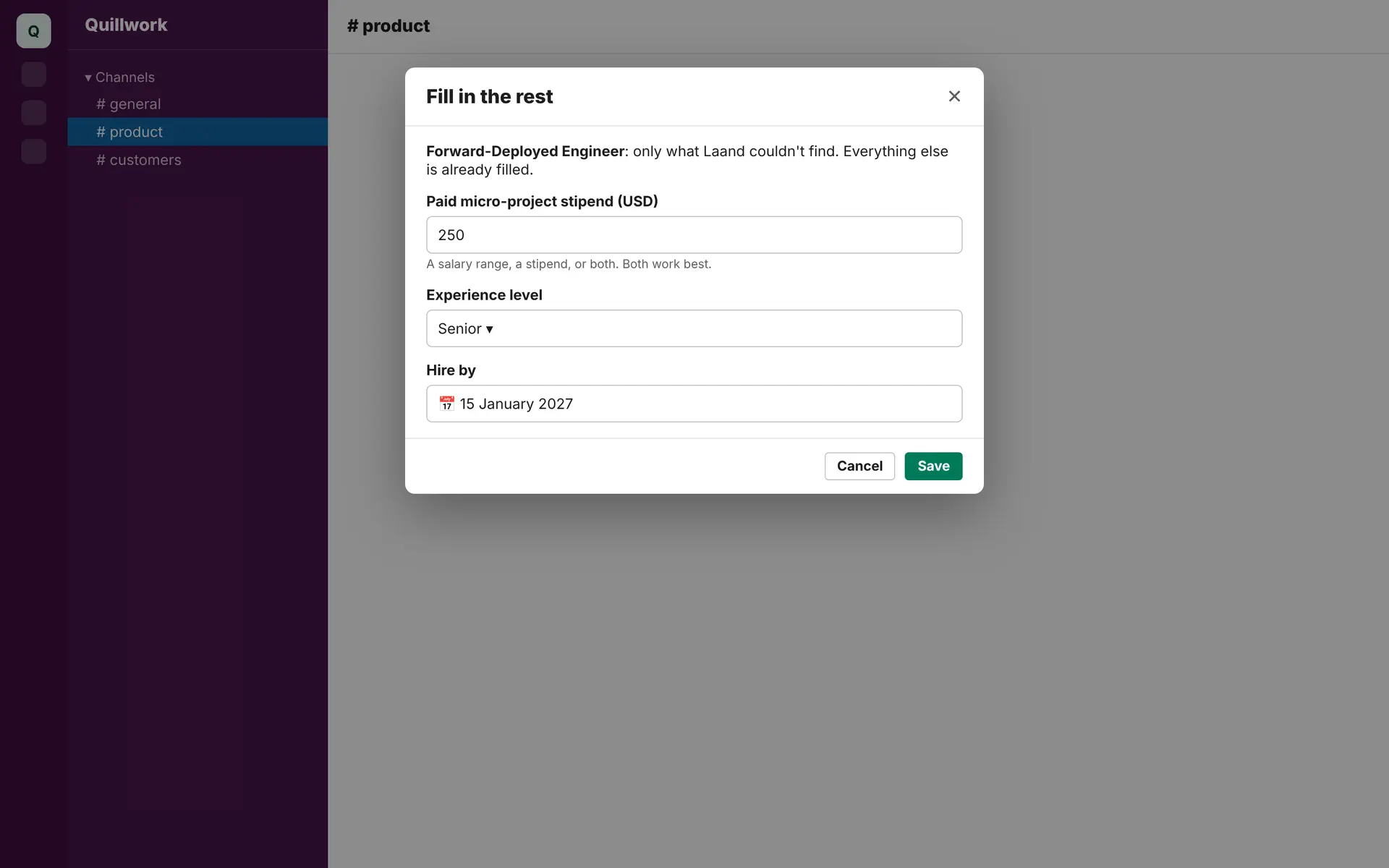
The role starts from the result you need. In Slack, the CEO types @Laand hire a Growth Lead in #hiring-chat, where the problem has already been discussed. Laand fills the role from the thread and asks only what it can't find.
Laand's Deep Analysis then splits the role into what agents can already do and what a person must own, and turns the person's part into core problems. Every candidate is judged against those same problems.
Same assessment, same bar
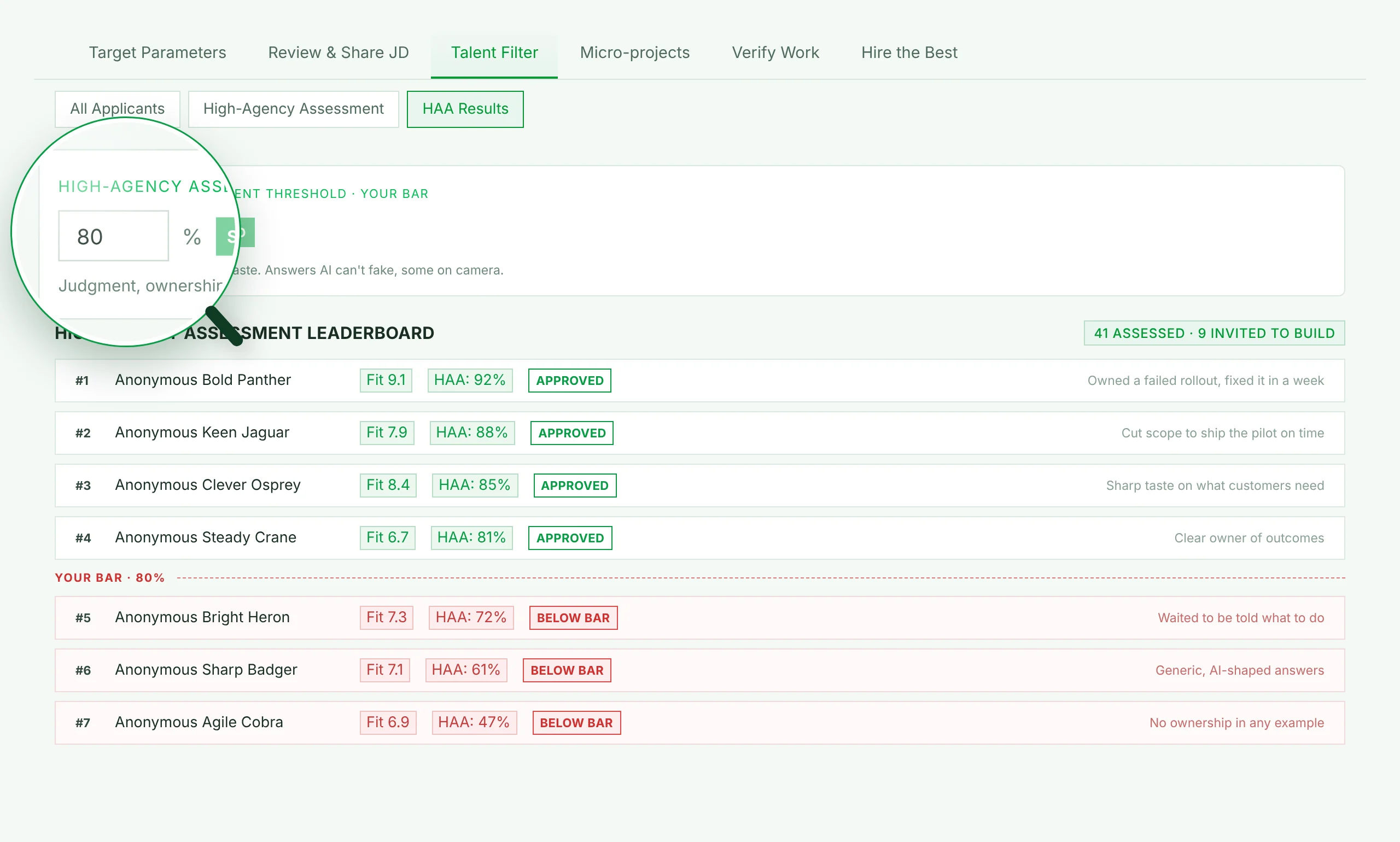
Every candidate gets a Fit Score, then the same High-Agency Assessment drawn from the core problems, scored against the bar you set. That's your scorecard, filled in automatically.
Same paid work
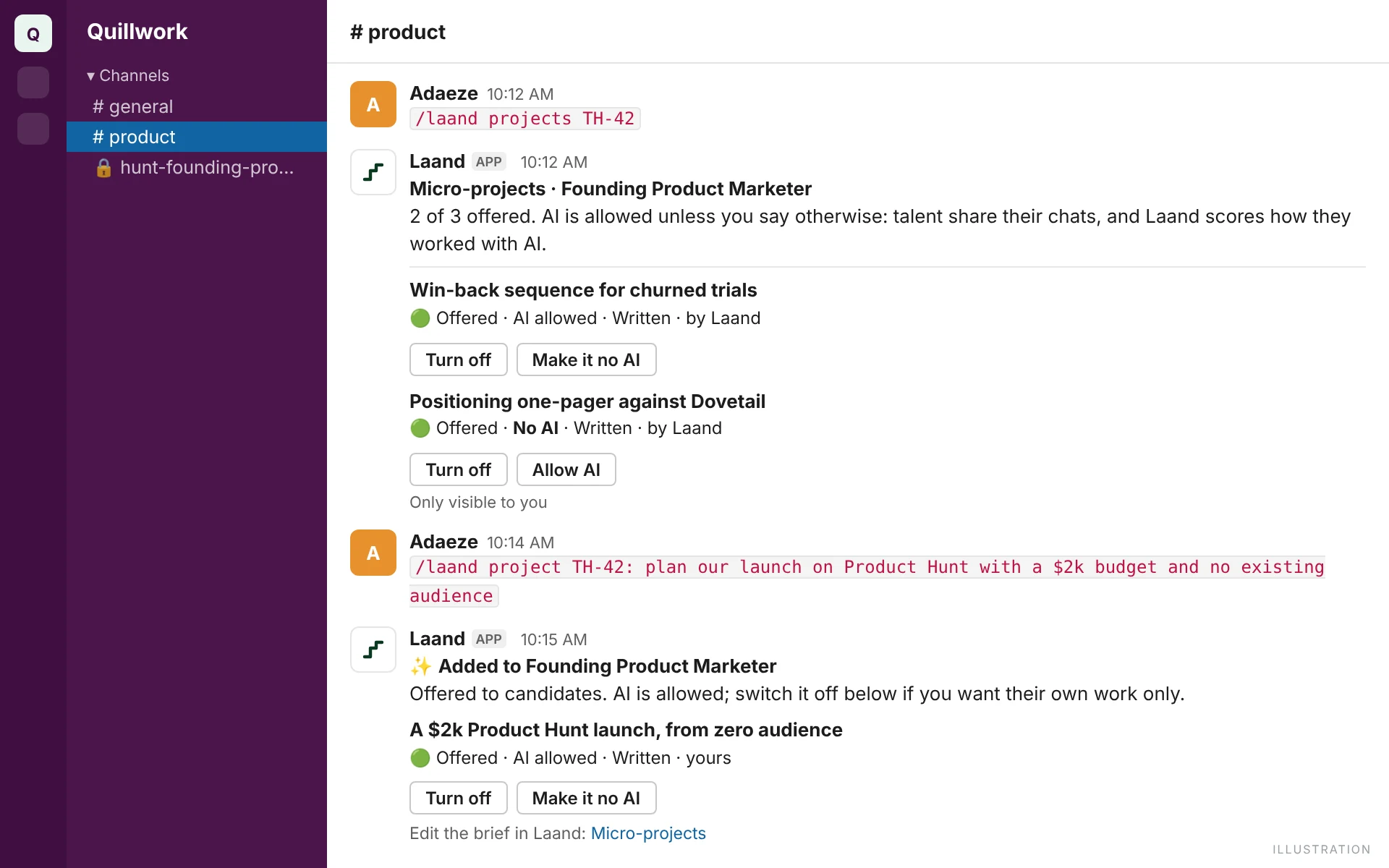
Finalists do the same paid micro-project: about six hours of real work, AI allowed and visible unless you turn it off, with a planted mistake every candidate has the same chance to catch. You can add your own project from a sentence in Slack with /laand project.
Same evidence in front of every decision-maker
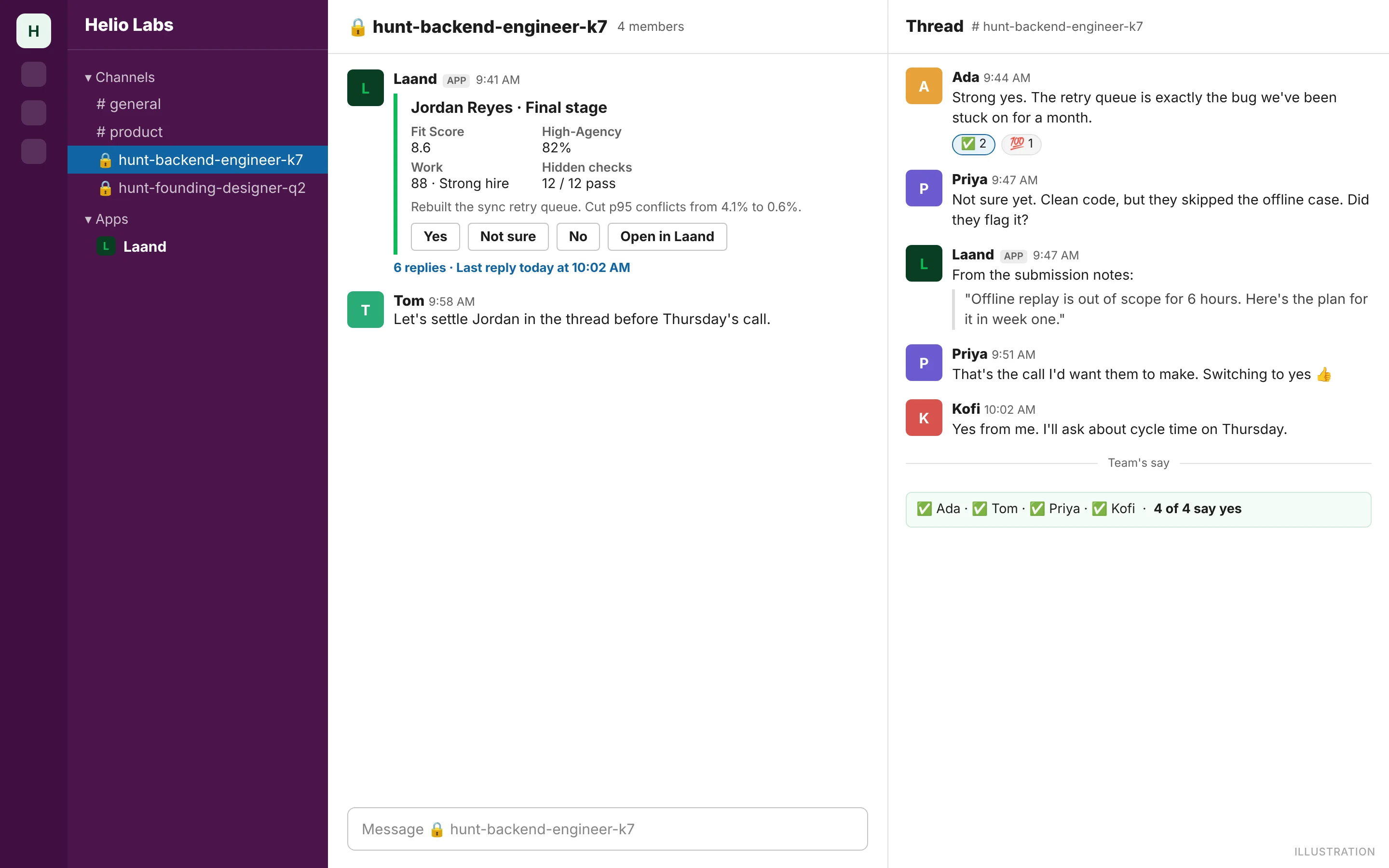
Each hunt gets a private Slack channel. Candidates appear as anonymous cards with their scores and the opening of Laand's review. Your team weighs in right there. Nobody has to fill in a form; the evidence is the card.
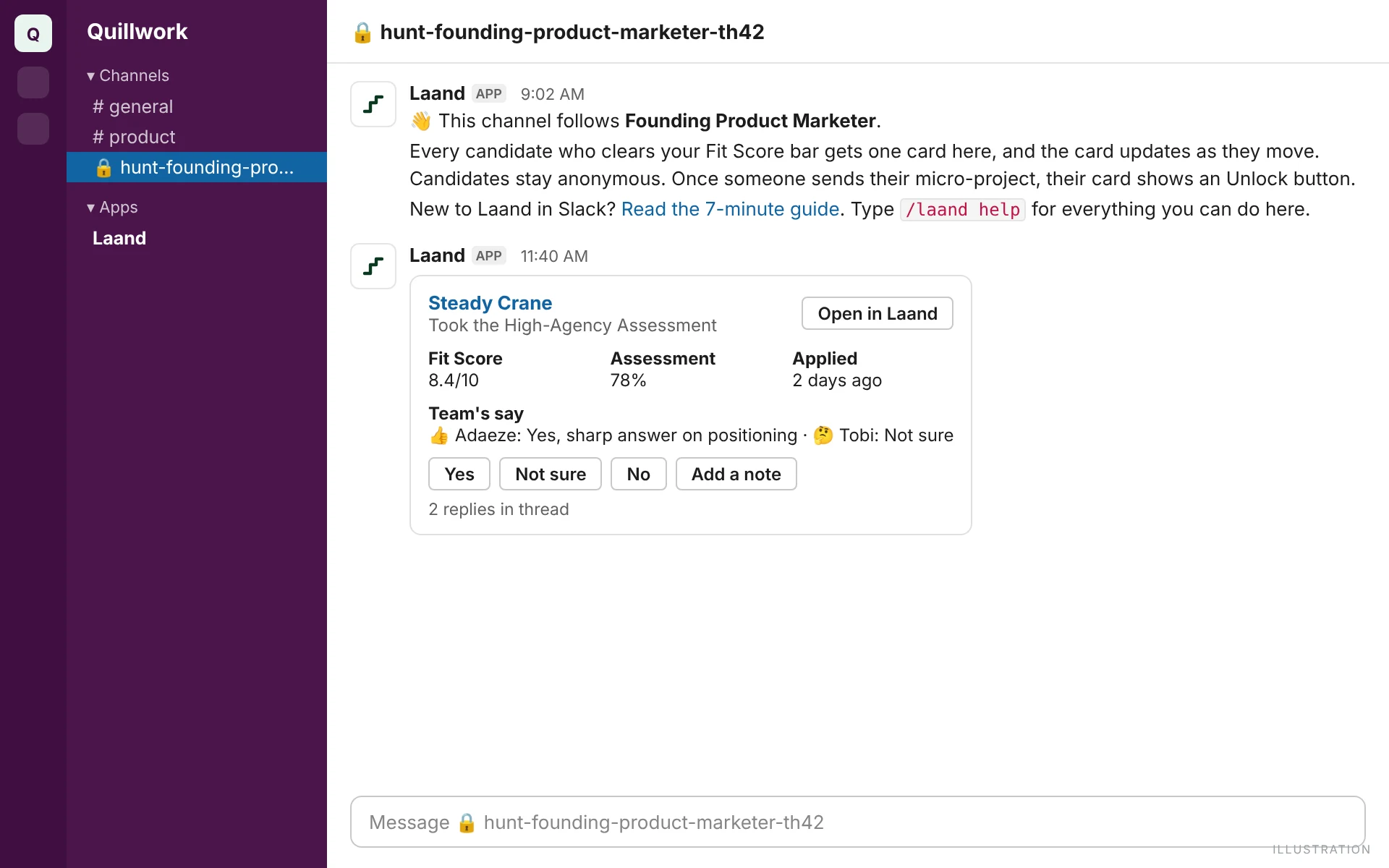
Anonymity is part of the structure. Names, photos and schools stay hidden until you unlock someone, at $750 per talent unlocked. Publishing is free.
Greenhouse vs Laand for a small team
| Greenhouse | Laand | |
|---|---|---|
| Structure comes from | Scorecards and interview kits | Same core problems, assessment and paid work for everyone |
| Evidence | CV and interviews | Paid real work, AI use scored |
| Bias controls | Structured questions | Candidates anonymous until you unlock |
| Where decisions happen | In Greenhouse | In Slack, Claude or the dashboard |
| Setup | Days | Minutes, from a thread |
| Pricing | Subscription | Free to publish; $750 per talent unlocked |
| Best for | Companies with recruiting teams | Teams of about 5 to 20 where founders decide |
The data behind "show the work"
Structured hiring only works if the evidence is good. In October 2026, the Laand Hiring Index found that only 11% of 411,000 new roles asked candidates to show any work, while 19% still required a degree.

A small team that hired this way
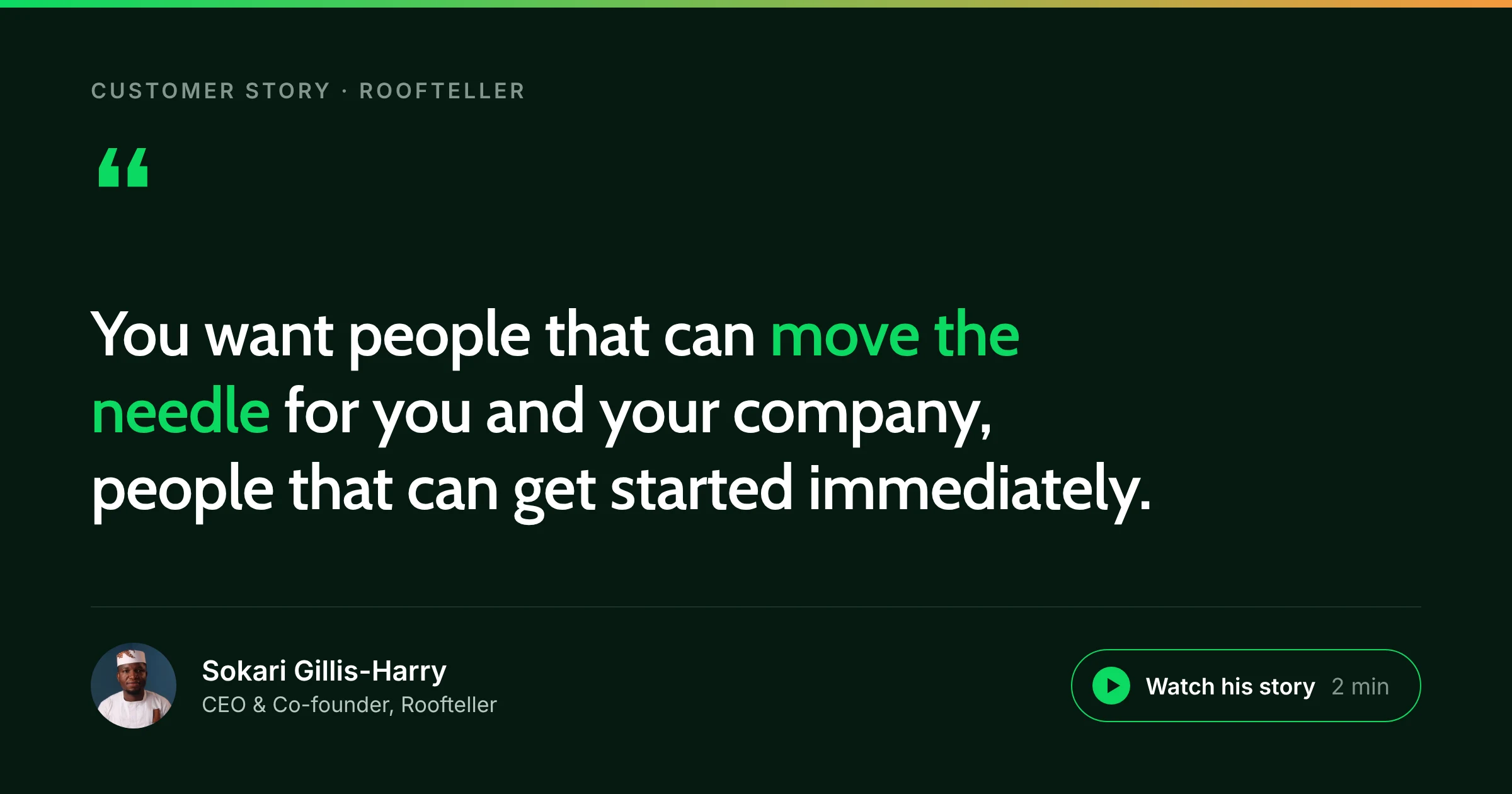
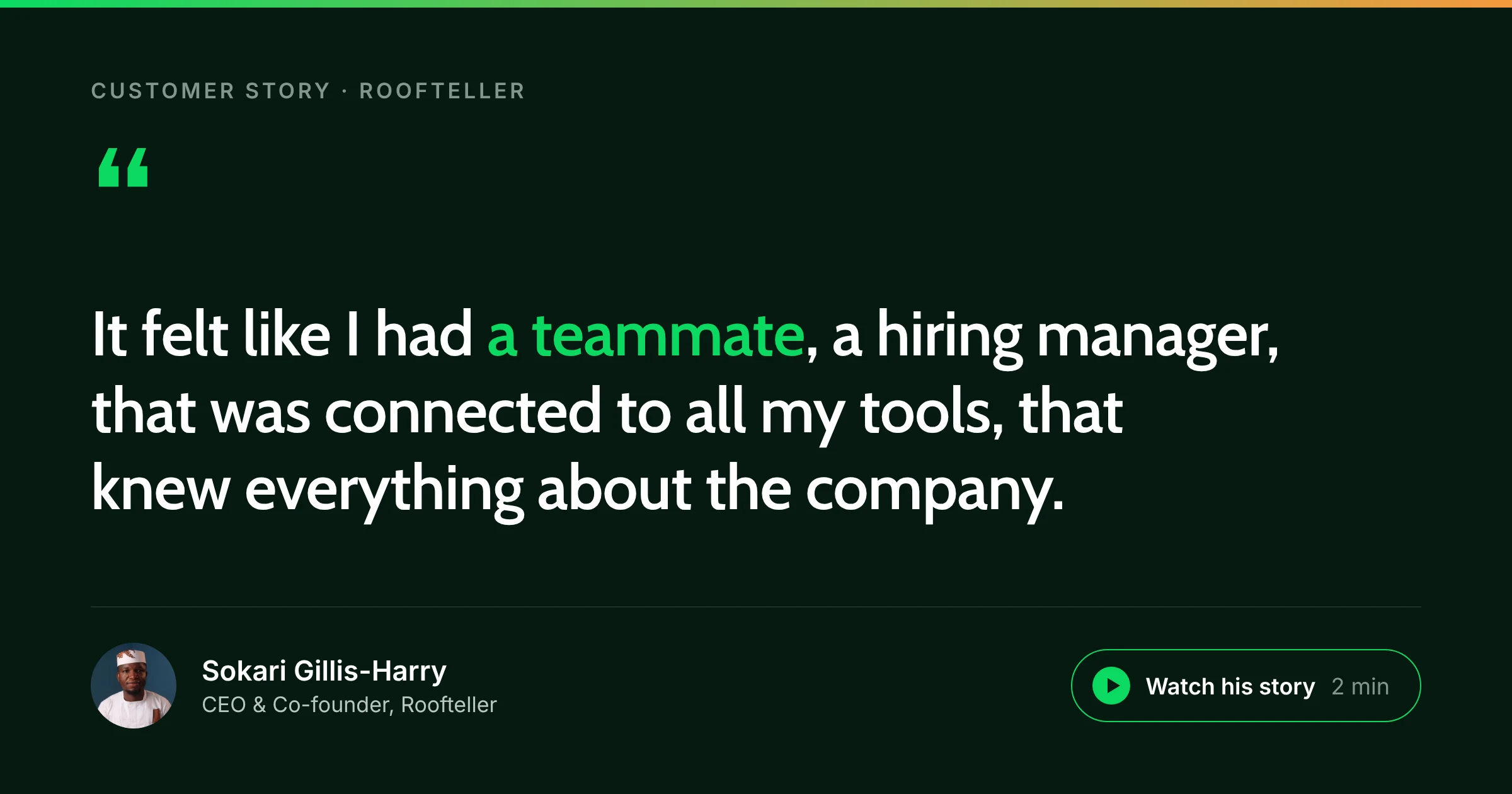
Sokari Gillis-Harry runs Roofteller with a very small team. He wanted to hire fast without reading a wall of AI-generated applications:
What the research says about structured hiring
Structured hiring isn't a fashion. Decades of personnel research, from Schmidt and Hunter's well-known 1998 meta-analysis to Sackett and colleagues' 2022 re-analysis, put structured interviews and job-relevant work samples among the strongest predictors of job performance, well ahead of years of experience or education.
Two lessons follow for a small team:
- Consistency matters more than volume. Asking every candidate the same job-relevant questions beats a long, free-flowing conversation.
- Job-relevant evidence beats proxies. The closer the assessment is to the actual work, the better it predicts the work.
Greenhouse built a product around the first lesson. A work-first platform builds around both: the same paid work, on your real problem, for every finalist.
A structured hiring template for a team of 5 to 20
Use this for your next hire, with or without any tool:
| Stage | What every candidate gets | Who decides | Time for you |
|---|---|---|---|
| 1. Result | Nothing yet: you write the result, the measure, the deadline and the constraint | Founders | 30 minutes |
| 2. Fit check | The same 5 questions about your problem | Rubric, then founders | Minutes per candidate |
| 3. Agency check | The same 2 scenarios with a hard constraint | Rubric | Minutes per candidate |
| 4. Paid work | The same 6-hour project, AI rule stated, one planted mistake | 2–3 reviewers, scored independently | 15–20 minutes per submission |
| 5. Interview | 30 minutes about their work | The same reviewers | 30 minutes per finalist |
| 6. Decision | Anonymous until the team agrees | Founders | One conversation |
Laand runs stages 1 to 4 for you and gives you the material for stage 5. You keep the decision.
Switching checklist
- Export any candidates you want to keep from Greenhouse.
- Decide which roles go to Laand first (start with the one where judgment matters most).
- Add Laand to Slack and invite the two or three people who decide.
- Connect Google Drive for contracts and onboarding, and GitHub (read-only) if you hire engineers.
- Start a hunt from the thread where the role was discussed.
- Agree your rubric before the first submission arrives.
When Greenhouse is still the right answer
Stay on Greenhouse (or move to it) if:
- You have a recruiting team that lives in it every day.
- You run many interview loops at once, with many interviewers.
- You need compliance reporting for regulated hiring.
- You're hiring dozens of people a year and need one system of record.
None of those describe most teams of five to twenty. But if they describe yours, keep Greenhouse, and use Laand for the handful of roles where you need high-agency people who steer AI.
Key takeaways
- Greenhouse's best idea, structured hiring, matters more for small teams, not less.
- Workable is the lighter ATS; Ashby suits fast scaling; Lever suits long-term pipelines.
- A work-first platform gives every finalist the same paid work, scored the same way.
- Anonymous first review is part of the structure, not an extra.
- Most teams under twenty don't need an ATS yet.
Frequently asked questions
What is the best Greenhouse alternative for a small business?
Workable is the most common lighter ATS. If your team is under about twenty and decides in Slack, Laand gives you structured hiring (same work, same criteria, anonymous review) without running an ATS.
Is Greenhouse too expensive for small teams?
It's priced and built for companies with recruiting teams. For a handful of hires a year, you pay for the software in the months you don't hire too. Pay-per-outcome models, like Laand's $750 per talent unlocked, scale with how much you actually hire.
How do I do structured hiring without an ATS?
Define the result before you meet anyone, give every finalist the same short, paid piece of real work, score it against the same criteria, and hide identities for the first review. Laand does all four from Slack or Claude.
Can Laand replace Greenhouse?
For teams under about twenty, often yes: it replaces the job post, CV screen and first interviews. Larger companies can use Laand for key roles and keep Greenhouse as the system of record.
Is Workable better than Greenhouse for small teams?
Workable is generally quicker to set up and easier to run without a recruiter, which suits many small teams. Greenhouse offers deeper structured-hiring tools for companies with many interviewers. Both are still built around applications and CVs.
What do small teams lose without an ATS?
Mainly a single system of record and reporting across many roles. Teams under about twenty rarely use those enough to justify the overhead, and can add an ATS later.
Keep reading
Or start a Talent Hunt from your #hiring-chat thread. Your structure is already in it.
Stop applying blind.
Laand scores your fit for any role, then builds the application kit that proves you can do the job.
Join LaandStructured hiring, without the ATS
Every candidate does the same paid work on your real problem, scored the same way, decided by your team in Slack. Free to publish; $750 per talent you unlock.
Start a Talent Hunt