Ashby alternatives for AI startups: when you need evidence, not a better pipeline
Ashby is an excellent ATS. Whether an AI startup under 20 people needs an ATS at all is a different question.

Picture a CTO at a twelve-person AI company rolling out Ashby. It takes a week to set up: stages, scorecards, email templates, the careers page, the Slack integration. It's genuinely well built. Then they post three roles.
Six weeks later they have 1,100 applicants neatly organised into stages, a beautiful analytics dashboard showing where people dropped off, and no hires. The CTO and CEO are each spending around eight hours a week reading AI-written applications inside a very good tool.
The tool isn't the problem. They've just organised a pile they shouldn't have had.
That's the real question behind most searches for Ashby alternatives. Not "is there a better ATS?" but "is an ATS the right tool for how we hire?"
This article covers both: the ATS alternatives worth considering, and the alternatives to the ATS model itself.
What Ashby does well
Credit where it's due. Ashby combines an ATS, a candidate CRM, scheduling and analytics in one product, and it's popular with fast-growing tech startups for good reason. Its reporting is unusually strong, it handles complex interview loops cleanly, and it has added AI features such as help drafting and reviewing applications.
If you have a recruiter, hire twenty-plus people a year and want one system for everything, Ashby is a strong choice. Keep it.
Why AI startups look for an Ashby alternative
The teams I talk to who leave, or never start, usually say one of four things:
- "We don't have a recruiter." An ATS is a recruiter's tool. Without one, the founders run it.
- "The applications are all the same." AI-written CVs and cover letters flood every posting. A better pipeline organises the flood; it doesn't stop it.
- "Our team decides in Slack, not in the ATS." The real debate happens in threads, then someone has to copy it back.
- "We're paying for software, not hires." A subscription feels heavy in a quarter when you make one hire.
If none of those apply, you probably don't need an alternative. If two or more do, read on.
The best Ashby alternatives, by what you actually need
| If you need… | Consider | What it is | Pricing model |
|---|---|---|---|
| A different full ATS | Greenhouse | Structured-hiring ATS, strong for interview rigour | Subscription |
| A simpler, cheaper ATS | Workable | ATS with built-in job board reach and AI tools | Subscription |
| An ATS plus CRM | Lever | ATS with candidate relationship tools | Subscription |
| Sourcing done for you | Perfectly | AI-native recruiting agency | Fee on hire |
| A fast shortlist | Jack & Jill | AI agents matching from a candidate network | Fee on hire |
| Proof someone can do the work | Laand | Work-first hiring platform for AI-native teams | Free to publish; $750 per talent unlocked |
Descriptions are based on each company's public materials as of November 2026.
Greenhouse
Greenhouse is the classic structured-hiring ATS: scorecards, interview kits and fairness built into the process. It suits companies that want rigour across many interviewers. It's a sideways move from Ashby, not a different model. More in Greenhouse alternatives for small teams.
Workable
Workable is a simpler ATS that posts to many job boards at once and has added AI for sourcing and screening. It's often easier to run without a recruiter, though it's still built around applications.
Lever
Lever combines an ATS with a candidate CRM for nurturing talent over time. It's useful if you build long-term pipelines for repeat roles.
Perfectly and Jack & Jill
Perfectly is an AI-native recruiting agency that delivers interview-ready candidates into Slack. Jack & Jill uses AI agents to match you with candidates from its network. Both charge when you hire. They replace sourcing, not tracking: you'd still need somewhere to decide.
Laand
Laand replaces the front half of the ATS loop (the job post, the CV screen and the first interviews) with evidence. It's built for teams that work through AI agents, so it runs from Slack, Claude, ChatGPT and your code editor as well as its own dashboard.
What replacing Ashby with Laand looks like
Here's how that CTO's three roles would run.
Step 1: Start each hire where it was already discussed
No job-post template. The CTO opens the Claude project where the team has been planning, and says "start a hunt for a forward-deployed engineer." Laand fills the role from what Claude already knows and, with GitHub connected read-only, from the codebase.
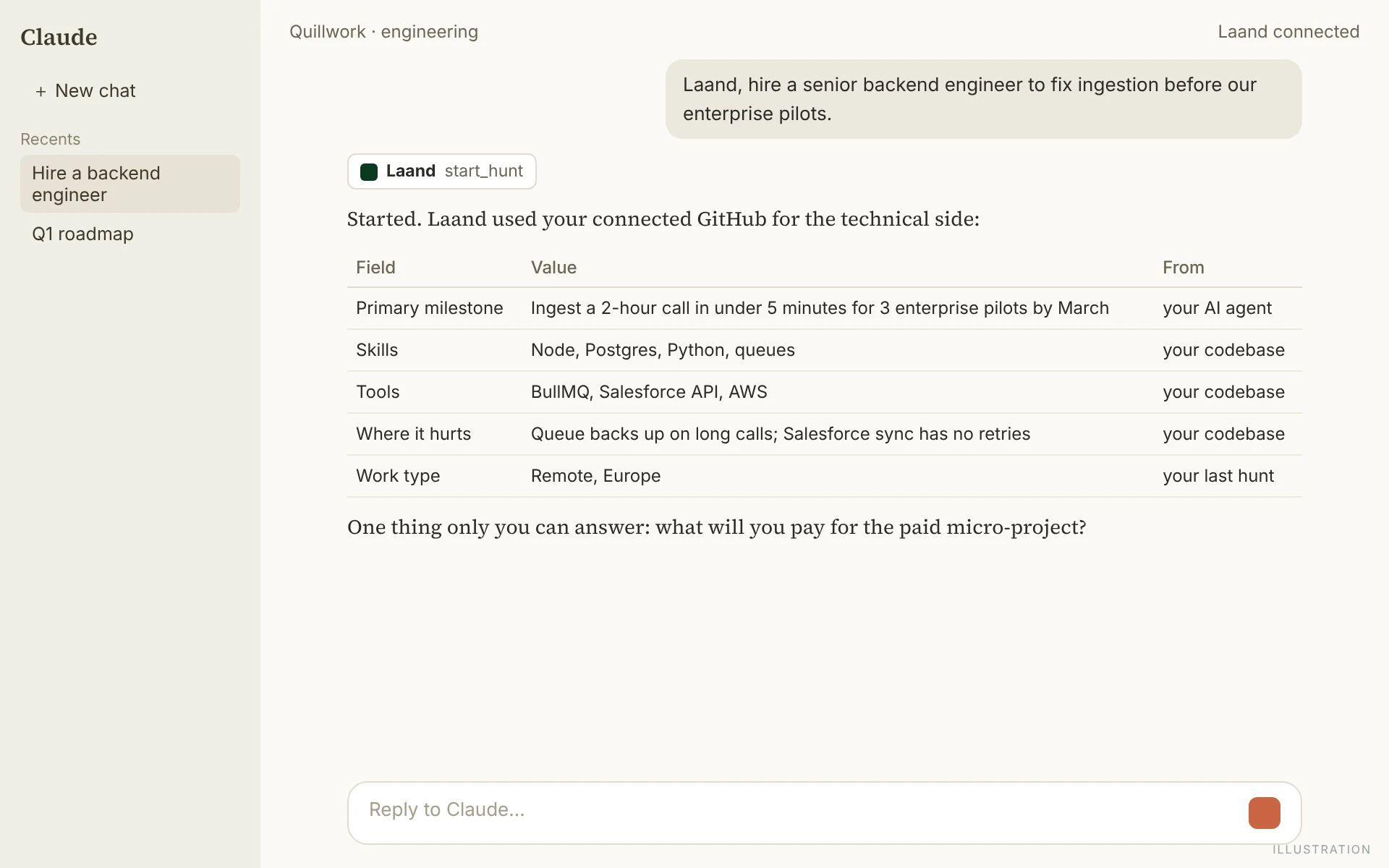
Step 2: Stop the flood at the door
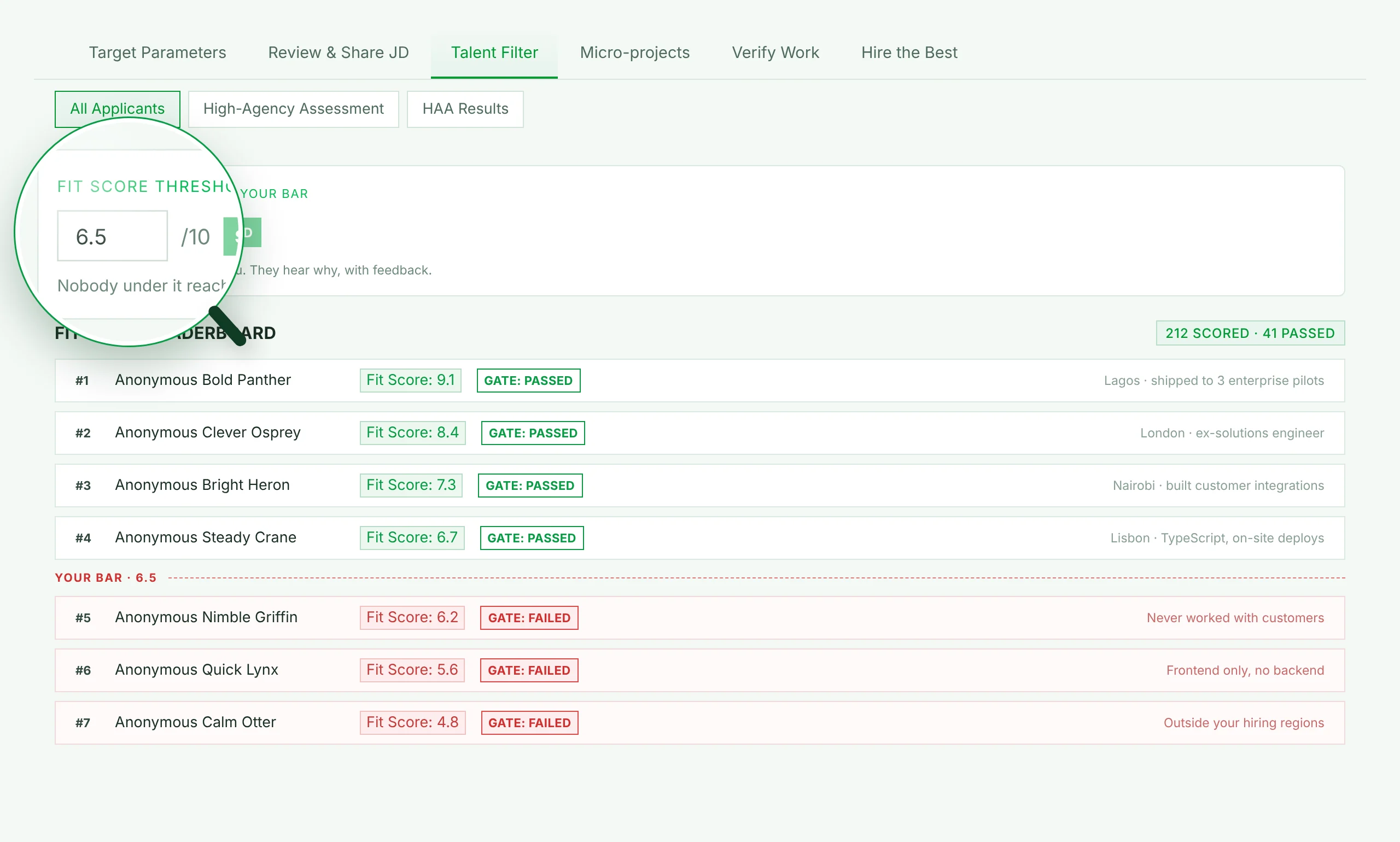
Instead of 1,100 applications, candidates hit an honest Fit Score before they go further, then a short High-Agency Assessment on your core problems. You see a leaderboard at your bar, not a pile.
Step 3: See the work, not the CV
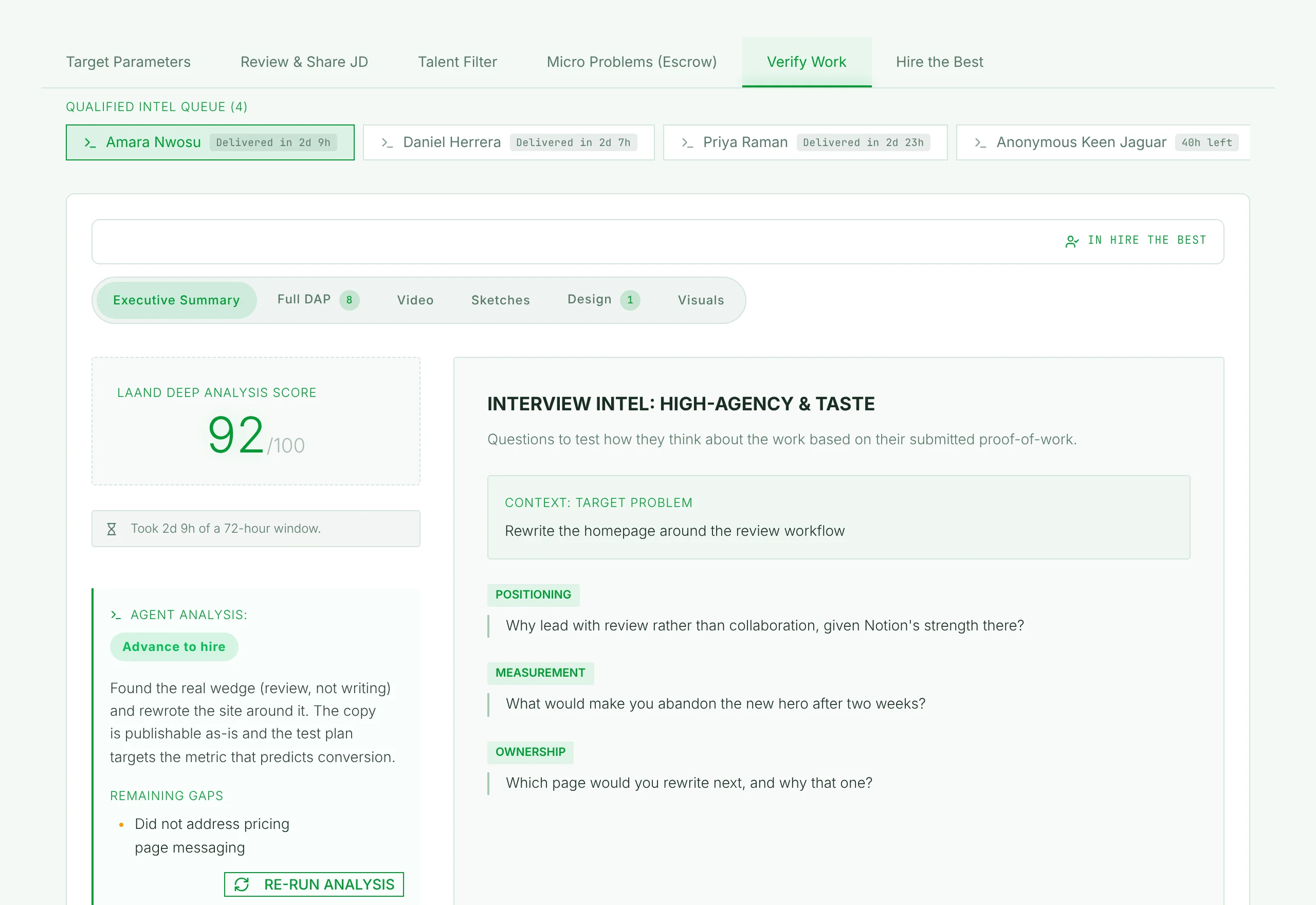
Finalists do a paid micro-project of about six hours on one of your real problems, with AI allowed and visible unless you turn it off, and a planted mistake to catch. Laand scores the work and how the person steered AI.
Step 4: Decide in Slack, then unlock
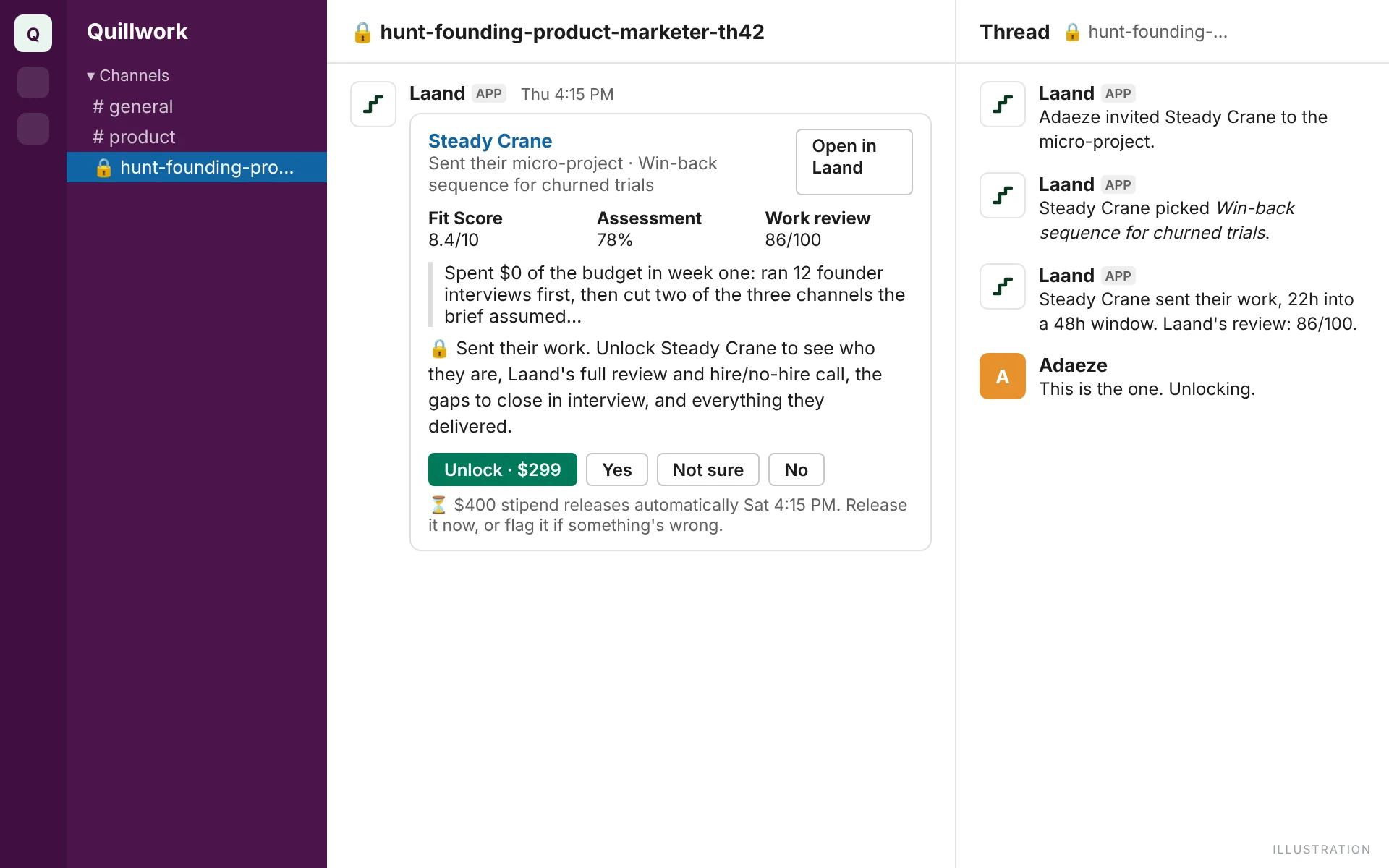
Each hunt gets a private Slack channel. Candidates appear as anonymous cards; your team says Yes, Not sure or No. When you've decided, you unlock the person for $750.
Step 5: Contracts and onboarding in Drive
With Google Drive connected, Laand drafts the contract and a 90-day onboarding guide in your team's hiring folder.
Ashby vs Laand at a glance
| Ashby | Laand | |
|---|---|---|
| Category | ATS + CRM + scheduling + analytics | Work-first hiring platform |
| Starts from | A job post | The result you need, plus hire or agent |
| Main signal | Applications (with AI assistance) | Paid work on your problem, AI use scored |
| Where your team works | In Ashby (with Slack notifications) | Slack, Claude, ChatGPT, code editors, or the dashboard |
| Needs a recruiter to run well | Usually | No |
| Candidate identity | Visible | Anonymous until you unlock |
| Pricing | Subscription | Free to publish; $750 per talent unlocked |
| Best for | Scaling teams hiring at volume | Founder-led AI-native teams under about 20 |
When to keep Ashby (and use both)
If you're past roughly fifty people, hire constantly and have a recruiting team, keep Ashby as your system of record. Use Laand for the roles where you need high-agency people who steer AI, and move the person you choose into Ashby for the offer and the records.
Why it matters now
In October 2026, the Laand Hiring Index read 411,000 new job descriptions. Of the roles that asked for high agency, 79% gave candidates no way to show it beyond a résumé.

An ATS can't close that gap, because it's organised around the résumé. Brian Chesky's rule is the one to follow: "Start with the results and work backwards to the people. Most [startups] start with resumes."
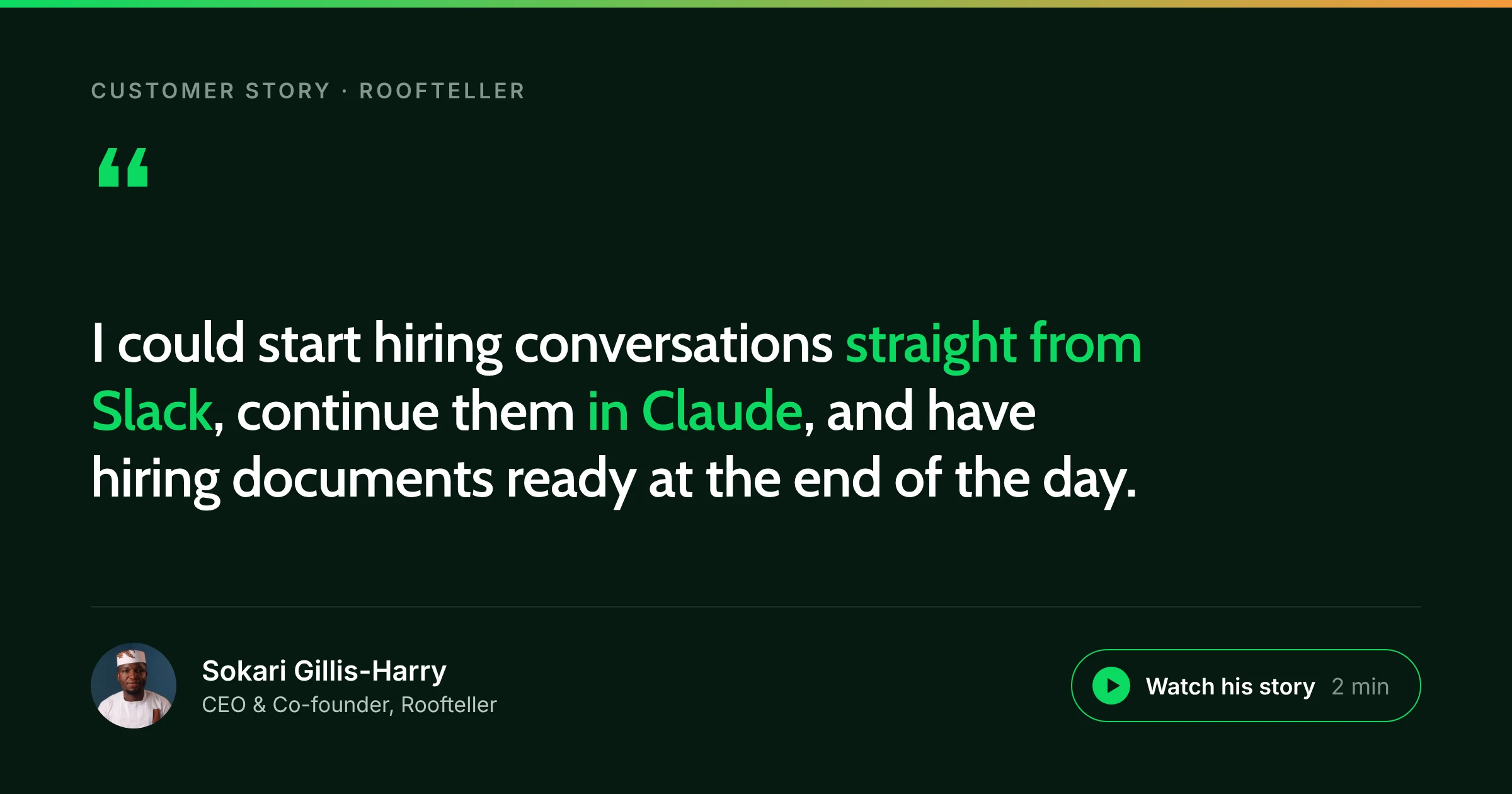
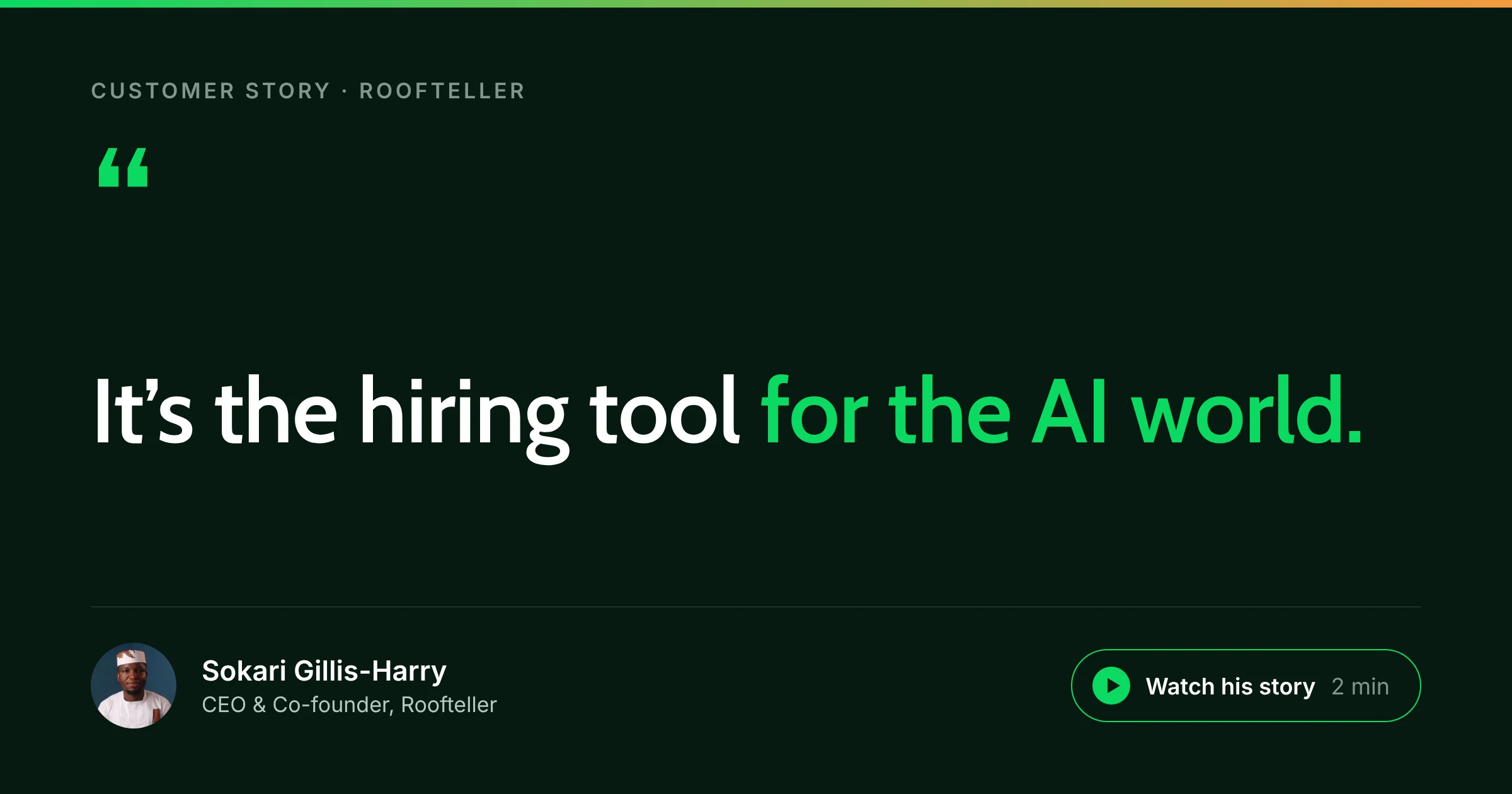
A founder who skipped the ATS
Sokari Gillis-Harry runs Roofteller with a very small team, almost entirely through Claude and Slack. He hired without adding a tool:
What you gain and what you give up
Every switch has trade-offs. Here's an honest list for a small AI startup moving from Ashby to Laand (or choosing Laand instead of setting Ashby up).
| You gain | You give up |
|---|---|
| Evidence before interviews: paid work on your problem | Ashby's deep reporting across a large pipeline |
| Hiring from Slack, Claude and your code editor | A single system of record for every applicant |
| An end to the application flood (Fit Score and assessment first) | Fine-grained interview scheduling and scorecards |
| Anonymous first review, less bias | A candidate CRM for long-term nurturing |
| Paying per person you unlock, not per month | Some compliance reporting larger companies need |
If the right-hand column describes things you use every week, keep Ashby and add Laand for key roles. If it describes things you set up and never open, you probably don't need them yet.
A 30-day plan for hiring without an ATS
Week 1: define and publish. Pick your most urgent role. Start a Talent Hunt from the Slack thread or Claude project where it was discussed. Review Laand's hire or agent? answer and the micro-projects, adjust them, set the stipend and publish. Share the Job Link where your network will see it.
Week 2: let the funnel work. Candidates take the Fit Score and the High-Agency Assessment. Each hunt's private Slack channel fills with anonymous cards above your bar. Your team says Yes, Not sure or No as they arrive. Invite your top candidates to the paid micro-projects.
Week 3: review the work. Submissions arrive with Laand's review, the AI-collaboration score and suggested interview questions. For engineering roles, have Claude Code or Codex run the finalists' code. Shortlist one or two.
Week 4: decide and hire. Unlock the person you want, hold one interview about their work, and make the offer. With Google Drive connected, the contract draft and onboarding guide are waiting in your hiring folder.
Five questions to ask before you switch
- How many hires will we make in the next 12 months? Under about ten, an ATS is mostly overhead.
- Who runs our hiring today? If it's the founders, choose the tool that costs them the fewest hours.
- Where do our hiring decisions actually happen? If the answer is Slack, choose a tool that lives there.
- What signal do we trust most? If it's "seeing what they can do", choose a tool that shows you that first.
- What would we lose if we turned Ashby off tomorrow? If the answer is "not much", you have your answer.
Key takeaways
- Ashby is an excellent ATS; the question is whether a small AI startup needs an ATS yet.
- Greenhouse, Workable and Lever are ATS alternatives; Perfectly and Jack & Jill replace sourcing.
- Laand replaces the job post, CV screen and first interviews with paid work on your real problem.
- Teams past about fifty people can keep Ashby as the system of record and use Laand for key roles.
- Laand is free to publish, with $750 per talent you unlock.
Frequently asked questions
What is the best Ashby alternative for a small AI startup?
If you want another ATS, Workable is simpler to run without a recruiter. If you need proof someone can do the work and your team works in Slack and Claude, Laand replaces the job post, CV screen and first interviews with paid real work.
Is Laand an ATS?
No. Laand is a work-first hiring platform. It replaces the front of the hiring process rather than tracking applications. Small teams often don't need an ATS alongside it.
Can I use Laand and Ashby together?
Yes. Use Laand to find and choose the person through real work, and Ashby to record the offer and keep your pipeline data.
Does Ashby have AI features?
Yes. Ashby has added AI features, including help with drafting and reviewing applications. They make the application-based process faster; they don't change what it measures.
How much does Laand cost compared with an ATS?
Laand is free to publish, and you pay $750 per talent you unlock. An ATS charges a subscription whether or not you hire that month.
Keep reading
- Greenhouse alternatives for small teams
- AI recruiting agency vs ATS
- The best AI recruiting tools for startups in 2026
Or start a Talent Hunt from the Claude project or Slack thread where your next hire is already being discussed.
Stop applying blind.
Laand scores your fit for any role, then builds the application kit that proves you can do the job.
Join LaandHire without setting up an ATS
Start a Talent Hunt from Slack or Claude, see paid real work on your problem, and decide as a team in Slack. Free to publish; $750 per talent you unlock.
Start a Talent Hunt