Hire with ChatGPT: how to run a real hire from a conversation, without hiring a chatbot's guesses
ChatGPT can write a job post in seconds. That was never the hard part. Here's how to use it for the parts that are.

Picture the CEO of a seven-person startup who did what every "hire with ChatGPT" article suggests.
She asked ChatGPT to write a job description for a growth marketer. It was polished in eight seconds. She posted it. She got 340 applications, most of them polished in about eight seconds too. She pasted forty CVs into ChatGPT and asked it to rank them. It ranked them confidently.
Three interviews later, she realised the ranking had rewarded whoever's CV most resembled the job description, which is to say whoever had used ChatGPT most effectively to tailor it. She'd built a perfect loop: AI writing to AI, judged by AI.
That's the trap of the obvious way to hire with ChatGPT. The tool is excellent. It was pointed at the two steps that matter least.
What ChatGPT is good at in hiring, and what it isn't
| Use ChatGPT for | Avoid using ChatGPT for |
|---|---|
| Finding the result the role must deliver | Writing generic job posts at scale |
| Splitting agent work from human work | Ranking CVs |
| Designing a paid work sample and a rubric | Judging candidates without evidence |
| Reviewing submitted work against criteria | Making the final decision |
| Preparing a short interview about the work | Handling candidate data you haven't secured |
| Drafting the onboarding plan | Anything that spends money or reveals identity |
Step 1: Ask for the result, not the job description
Give ChatGPT your context: paste the strategy doc, the metrics, the problem. Then:
"Based on this, what's the one result a growth marketer here would need to achieve in 90 days? How would we measure it? What's the deadline that matters, and why?"
As Brian Chesky, CEO of Airbnb, put it: "Start with the results and work backwards to the people. Most [startups] start with resumes."
Step 2: Ask whether you need a hire at all
"Which parts of achieving that result could AI agents do well today, and which need a person to own? Should this be a hire, a lean hire with agents, or an agent setup first?"
This is the question most hiring guides skip, and it's often the most valuable answer you'll get.
Step 3: Design the paid work sample
"Design a six-hour paid micro-project from the hardest part a person must own: context, deliverable, constraints, materials, and how we'll judge it. AI is allowed; we'll ask for chat links. Add one plausible planted mistake and tell me separately what it is."
Step 4: Write the rubric before you read anything
"Write a 1–4 rubric for that project: solves the problem, judgment and trade-offs, caught the planted mistake, quality of AI collaboration."
Step 5: Review the work, not the CV
"Score this submission against the rubric, quoting the parts that justify each score. Did they catch the planted mistake? Here are their AI chat links: where did they steer or correct the AI?"
The problem: ChatGPT can't see your candidates
Steps 1 to 4 work in any ChatGPT conversation. Step 5 needs real candidates doing real work, which means sourcing them, paying stipends, collecting submissions, keeping their data private, and getting it all back into the conversation.
That's what Laand does, and it connects to ChatGPT as a custom connector (over MCP).
How to hire with ChatGPT and Laand
Connect Laand to ChatGPT
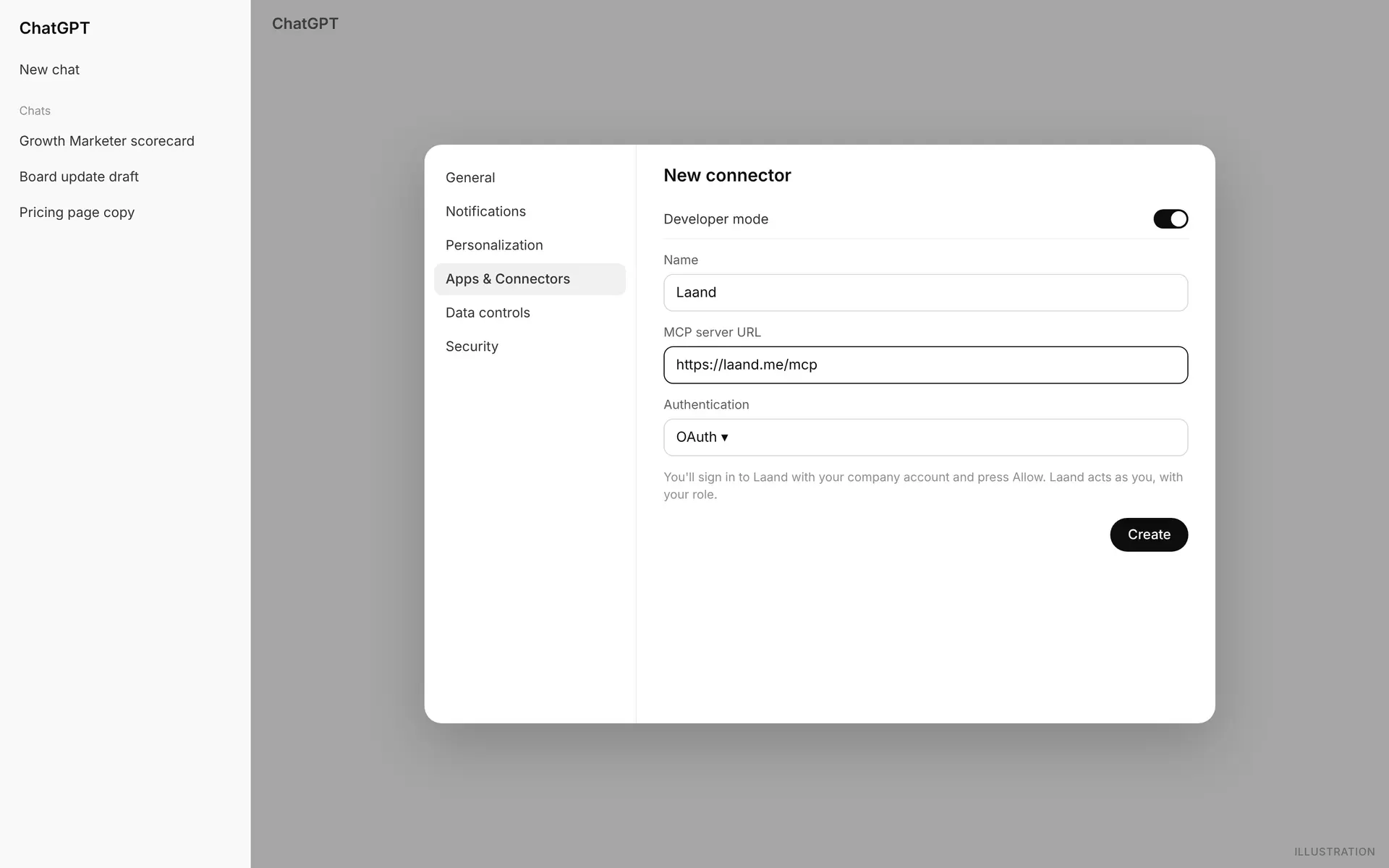
In ChatGPT, create a custom connector with Laand's MCP server URL, https://laand.me/mcp, and sign in.
Start the hire from the conversation
After steps 1 and 2: "Start a Laand hunt for this role." Laand fills the Target Parameters from the conversation, says where each value came from, and asks only for what it couldn't find, like the stipend and the hire-by date.
Let Laand do the scoping
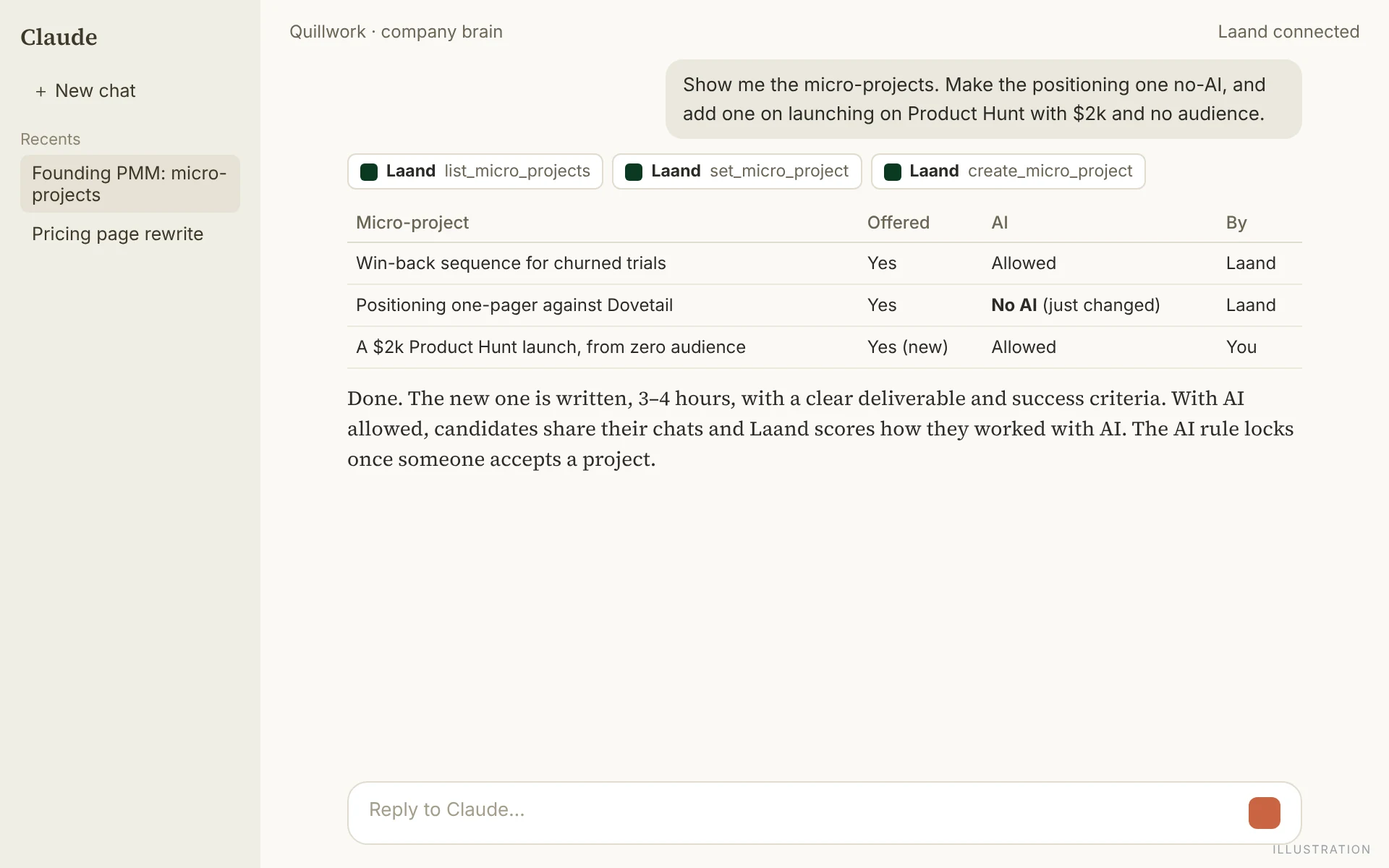
Laand's Deep Analysis gives you its own answer to hire or agent?, the core problems and paid micro-projects, each with a planted mistake. Ask ChatGPT to list them, turn AI off on one, or add your own from a sentence.
Publish, then let the funnel filter itself
Confirm, and the hunt goes live (publishing is free): a public Job Link, the job board, and alerts to matching talent. Candidates pass an honest Fit Score, then the High-Agency Assessment, then do the paid work. No pile of 340 CVs.
Ask whose work is strongest
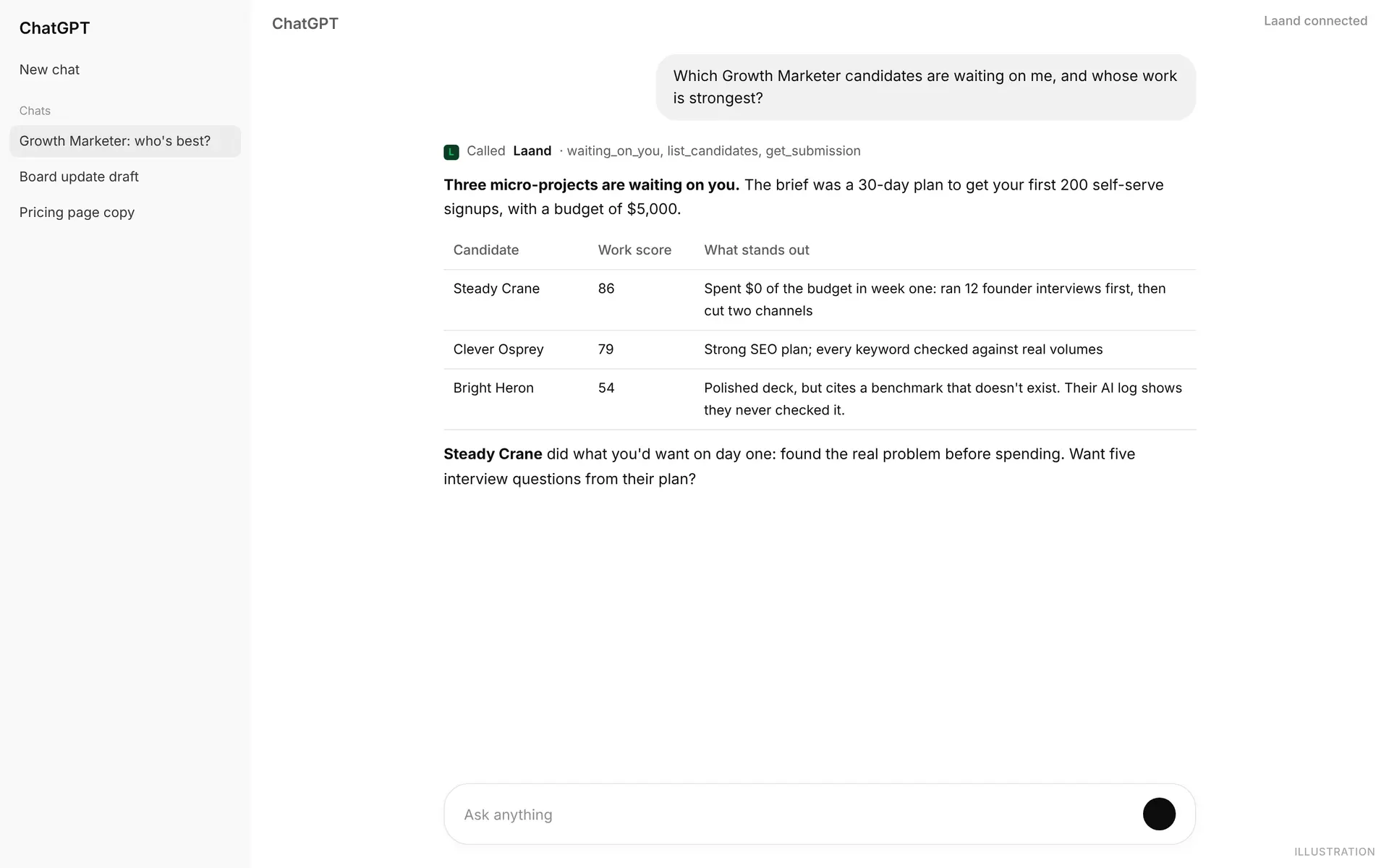
"Which growth marketer candidates are waiting, and whose work is strongest?" ChatGPT answers from Laand: anonymous candidates, scores, and Laand's review of each submission, including how they worked with AI.
Decide with your team, then unlock
Leave your Yes, Not sure or No from ChatGPT; your team sees it in Laand and Slack. When you've chosen, ChatGPT gives you the unlock link, and you pay $750 in Laand to see who they are. ChatGPT never spends money or sees names before you unlock.
ChatGPT alone vs ChatGPT with Laand
| ChatGPT alone | ChatGPT + Laand | |
|---|---|---|
| Define the result and the role | Yes | Yes, and it becomes a live hunt |
| Hire or agent | Yes | Yes, plus Laand's Deep Analysis |
| Design paid work | Yes | Scoped automatically, planted mistake included |
| Find candidates | No | Job Link, job board, matching talent |
| Filter the flood | No | Fit Score and High-Agency Assessment |
| Pay stipends | No | Yes |
| Review real work | Only what you paste | Yes, with Laand's review and AI-collaboration score |
| Candidate privacy | Up to you | Anonymous until you unlock |
Why the obvious approach backfires
The market is still screening documents. In October 2026, only 11% of the 411,000 new job descriptions in the Laand Hiring Index asked candidates to show any work.

Using ChatGPT to produce and rank more documents just makes that faster. Using it to get to real work is what changes the result.
From a founder who hires from his AI tools
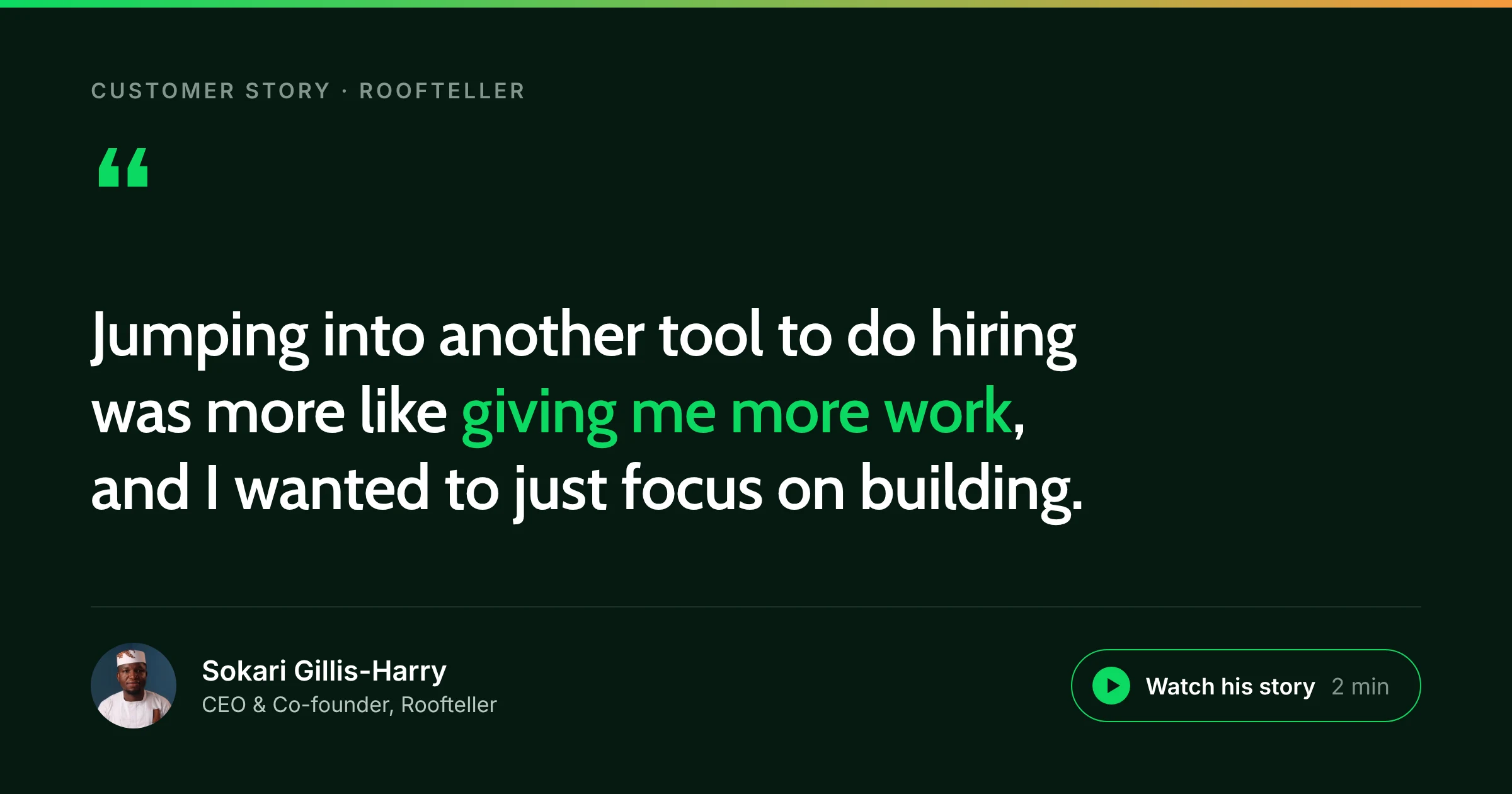
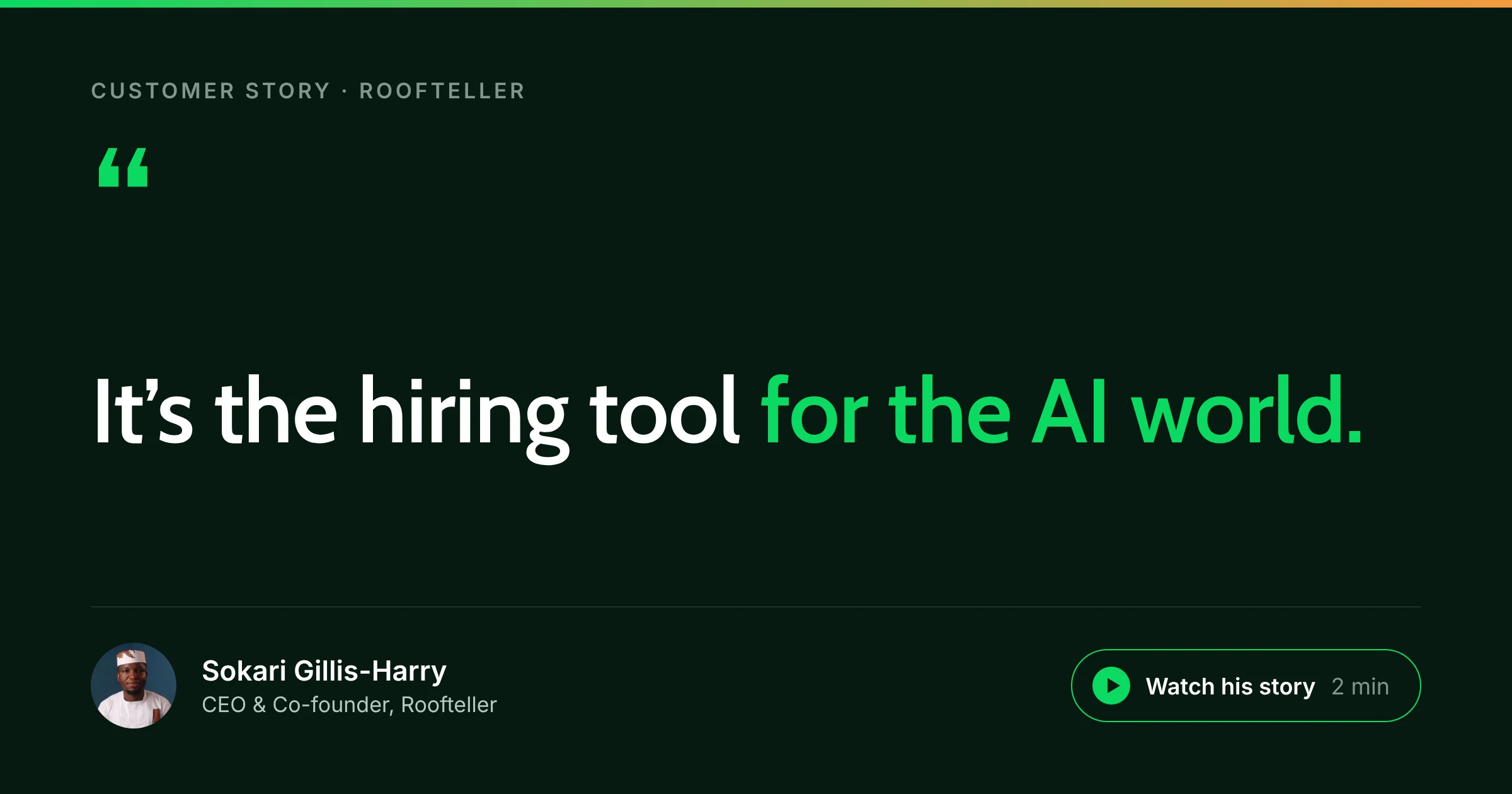
Sokari Gillis-Harry, founder of Roofteller, works through AI and wanted hiring to fit in:
Set up ChatGPT for hiring
The prompts above are only as good as the context behind them. Before your next hire, set up a ChatGPT project (or a custom GPT for your team) with:
- Your latest strategy or investor update.
- Your key metrics.
- A short description of what you value in people, in your own words.
- An instruction: "For hiring, always start from the result, separate what agents can do from what a person must own, and prefer paid work samples to CVs."
With the Laand connector added, the same project can then start hunts and read candidates' work.
A growth marketer hire with ChatGPT and Laand, day by day
Day 1. The CEO asks ChatGPT for the 90-day result (step 1). It concludes: trial-to-paid from 4% to 7% through better onboarding for integration-led trials. She asks whether it's a hire (step 2). ChatGPT suggests a lean hire: agents can draft emails and pull reports; a person must own the funnel diagnosis and partner relationships.
Day 1, later. "Start a Laand hunt for this." Laand fills the role, asks for the stipend and hire-by date, runs its analysis and returns micro-projects. She asks ChatGPT to add one: "diagnose our trial drop-off from an anonymised export and draft a three-email fix". She confirms, and the hunt goes live.
Days 2–6. Candidates take the Fit Score and the High-Agency Assessment. Instead of 340 CVs, she has a short list of people above her bar. She invites three to the paid work.
Days 7–10. Submissions arrive. She asks: "Whose work is strongest, and did anyone catch the planted mistake?" ChatGPT answers from Laand's reviews: one candidate questioned the brief's claim that most trials come from paid search, and built the sequence around integration-led trials instead.
Day 11. She leaves her Yes, unlocks the candidate in Laand, and holds a 30-minute call about the work. Offer out the same week.
Prompts to avoid
| Avoid | Why | Try instead |
|---|---|---|
| "Write a job description for a growth marketer" | Generic, attracts generic | "What result must a growth marketer here deliver in 90 days?" |
| "Rank these 40 CVs" | AI judging AI-written documents | "Score this submission against our rubric" |
| "Is this candidate a good culture fit?" | Vague and bias-prone | "What did this candidate cut, and was it the right call?" |
| "Write rejection emails for everyone" | Impersonal at scale | Let the process be clear up front; reply personally to finalists |
| "Decide who we should hire" | It's your call | "What would you ask each finalist about their work?" |
What candidates see
It's worth knowing the other side. When your hunt is live, candidates see a public Job Link that leads with the milestone the hire must move, the paid micro-projects and the stipend. They paste it into Laand to get an honest Fit Score before going further. Strong, employed candidates respond to that, because it tells them exactly what's at stake and that their time will be paid for.
Key takeaways
- Don't use ChatGPT to mass-produce job posts or rank CVs.
- Use it to find the result, decide hire or agent, design paid work and review real submissions.
- Give it context with a project: strategy, metrics and what you value in people.
- Connected to Laand, ChatGPT can start the hire and read real candidates' work, anonymously, and never spends money.
Frequently asked questions
Can you hire with ChatGPT?
Yes. ChatGPT is useful for defining the role, deciding what a person must own, designing work samples and reviewing work. Connected to Laand, it can also start the hire, see real candidates and their work, and tell you what's waiting on you.
Should I use ChatGPT to screen résumés?
It's a weak use. CVs are increasingly written with AI, so ChatGPT ends up ranking how well candidates tailored them. Screening on real work gives a far better signal.
How do I connect ChatGPT to a hiring platform?
Add a custom connector in ChatGPT with the platform's MCP server URL and sign in. For Laand, the URL is https://laand.me/mcp. See our ChatGPT guide.
Is candidate data safe when hiring with ChatGPT?
With Laand, ChatGPT sees anonymous candidates and their work, never names or contact details until a person unlocks them in Laand, and it can't spend money.
How much does it cost?
Publishing a hunt is free. You pay $750 per talent you unlock. Candidates' micro-projects pay a stipend you set.
Can ChatGPT write a good job description?
It can write a polished one quickly, but polish isn't the problem. Ask it to define the result the role must deliver and what a person must own versus agents; the description that follows will be specific enough to attract the right people.
Can ChatGPT interview candidates?
It can help you prepare, but a short interview about the candidate's actual work, run by the people who'll work with them, is a much better use of everyone's time.
Does ChatGPT need to know about my company to help with hiring?
It helps a lot. Put your strategy, metrics and what you value in people into a ChatGPT project. The more context it has, the more specific its view of the result, the hire-or-agent split and the paid work will be.
Keep reading
Or start a Talent Hunt and connect ChatGPT when you're ready.
Stop applying blind.
Laand scores your fit for any role, then builds the application kit that proves you can do the job.
Join LaandRun your next hire from ChatGPT
Connect Laand to ChatGPT, start a hunt from the conversation, and ask whose work is strongest. Free to publish; $750 per talent you unlock.
Connect ChatGPT