How AI changed hiring in 2026: seven shifts every founder should plan for
The application flood, the death of the cover letter, "hire or agent?", and the return of proof of work.

In 2023, a founder hiring an engineer posted a job, got 80 applications, read them, interviewed eight people and made an offer. It took five weeks and was mostly fine.
In 2026, the same founder posts the same job and gets 600 applications in four days. They're all well written. Plenty were written by agents applying to hundreds of jobs on their owner's behalf. The founder's own team is half the size it would have been in 2023, because agents now do a third of the work. And the person they need isn't the one who can write the most code; it's the one who can direct the agents that write it.
Same founder, same role title. Completely different hiring problem.
Here are the seven shifts behind that, what the data says about each, and what to do about them this quarter.
Shift 1: Applications became free, so they became noise
AI made applying nearly costless. Candidates use assistants to tailor every CV and cover letter; some use agents that apply on their behalf at scale. The result is an application flood where polish carries no information.
What it means for you: reading applications faster won't help. You need a filter that the flood can't pass: an honest fit check and evidence of real work.
Shift 2: Teams got smaller, and every hire got bigger
AI-native startups now ship with teams a fraction of the size they'd have needed a few years ago, because agents do the first draft of almost everything. That makes each hire a larger share of the company and a larger bet.
What it means for you: you can't afford proxy-based hiring. At twelve people, one hire is 8% of your company.
Shift 3: "Hire or agent?" became the first question
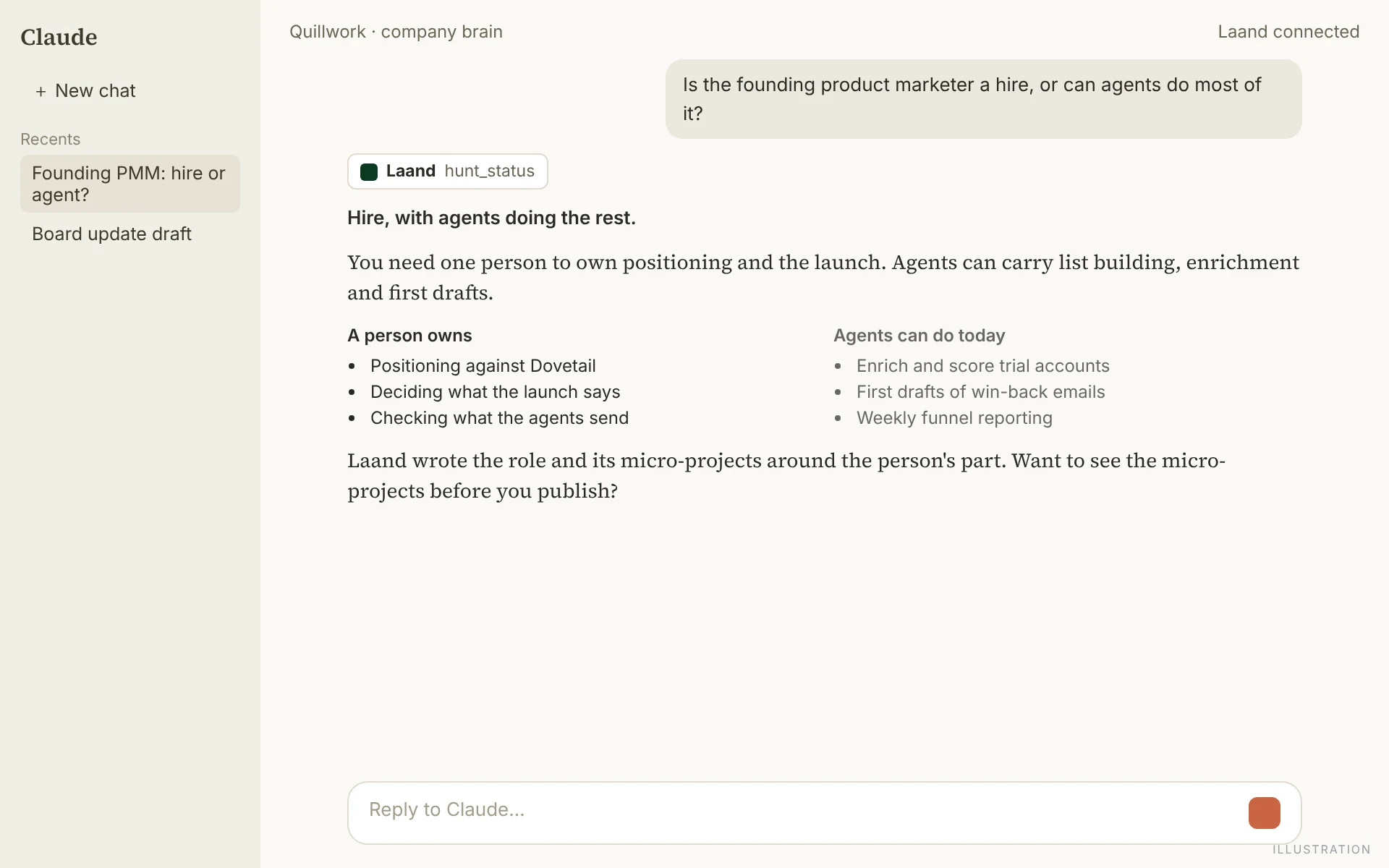
Before 2024, the question was who to hire. Now the first question is whether to hire, and for which part of the work. Many roles turn out to be half agent work and half judgment.
What it means for you: split every role before you open it. What can agents already do? What must a person own? Hire for the second list.
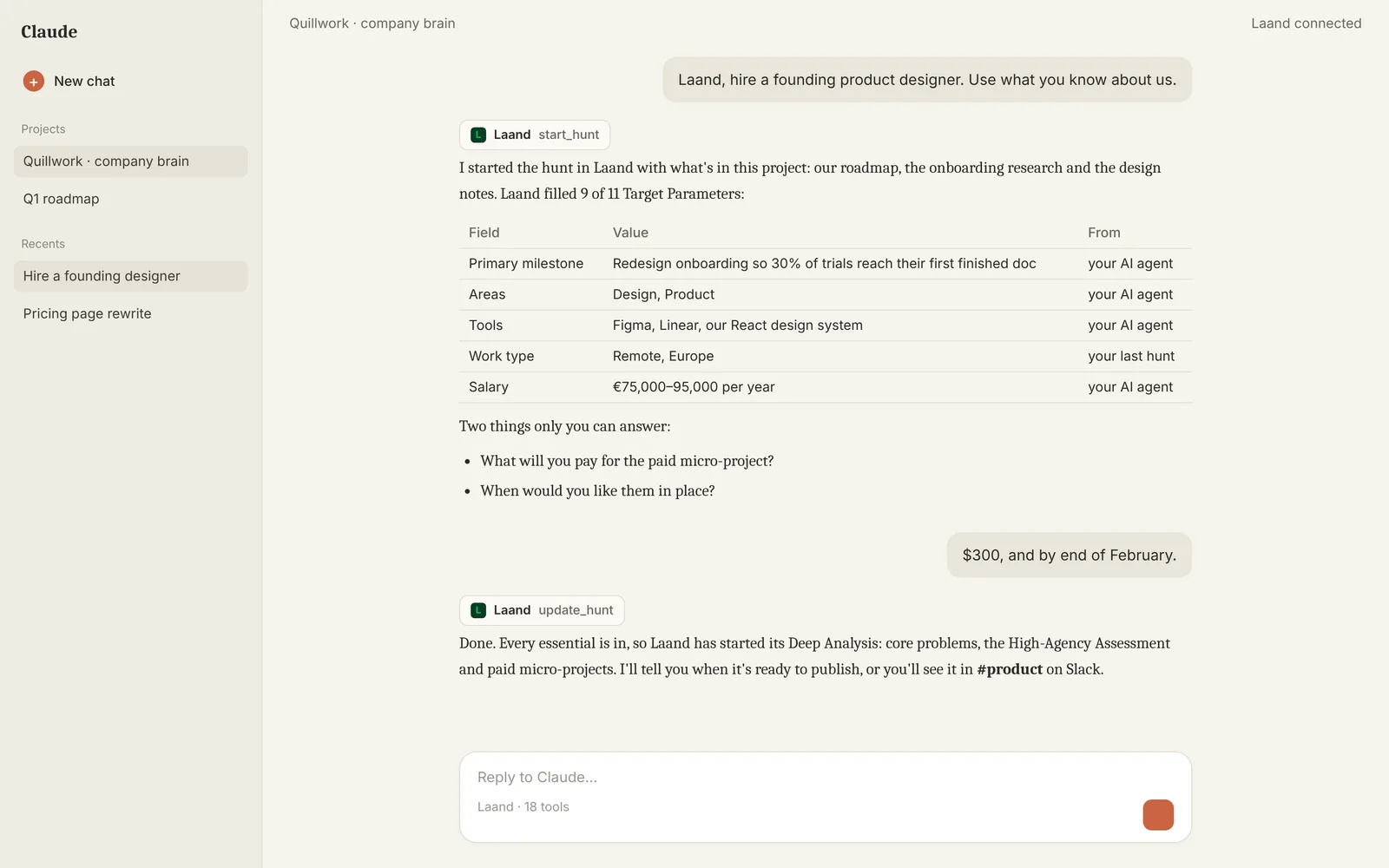
How Laand does it: every Talent Hunt goes through a Deep Analysis that answers hire or agent? and writes the role around what a person must own.
Shift 4: Judgment over AI became the scarce skill
When agents can write the code, the copy and the analysis, producing output is cheap. Knowing what to build, catching what the agent got wrong and driving the work to done is not. Job ads increasingly reach for this in words like proactiveness, autonomy and craft.

And the roles most likely to ask for high-agency work are the ones closest to customers and outcomes: in October 2026, Forward-Deployed roles led at 22%.

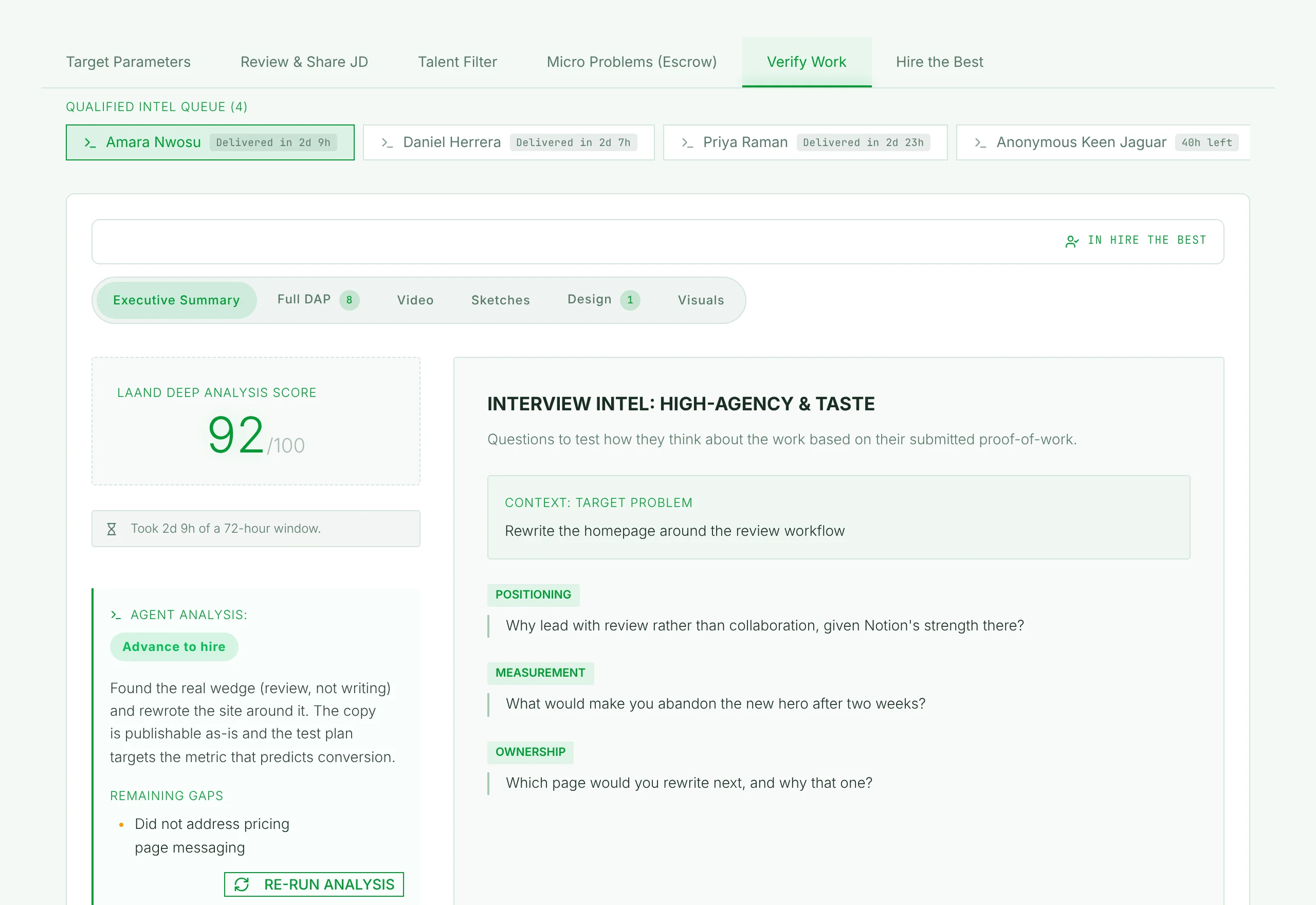
What it means for you: test for judgment over AI directly. Let candidates use AI, ask for the chat links, and score how they steered it. (More in AI fluency hiring.)
Shift 5: Proof of work came back
When every document can be generated, the only signal that's still expensive to fake is real work. But most companies haven't adapted yet. In October 2026, only 11% of 411,000 new job descriptions asked to see any work, and 19% still required a degree.

Among roles that ask for high agency, 79% give candidates no way to show it beyond a résumé.

What it means for you: that gap is your edge. Ask finalists for a short, paid piece of your real work, and you'll be one of the few companies the best people take seriously. (More in proof of work hiring.)
How Laand does it: finalists do a paid micro-project from your real problems, AI allowed and visible, with a planted mistake to catch. Laand scores the work and how the person worked with AI.
Shift 6: Hiring moved into Slack and AI agents
Teams now do most of their work in Slack and in AI assistants like Claude and ChatGPT, connected to their documents, code and data. A hiring tool in a separate tab is a tool that gets ignored. With MCP (the Model Context Protocol), an AI agent can now call a hiring platform directly: start a role, check on candidates, review work.
What it means for you: choose hiring tools that work where your team works. (More in MCP recruiting.)
How Laand does it: start a hunt from a Slack thread or a Claude conversation, review candidates from your agent, decide in a private Slack channel.
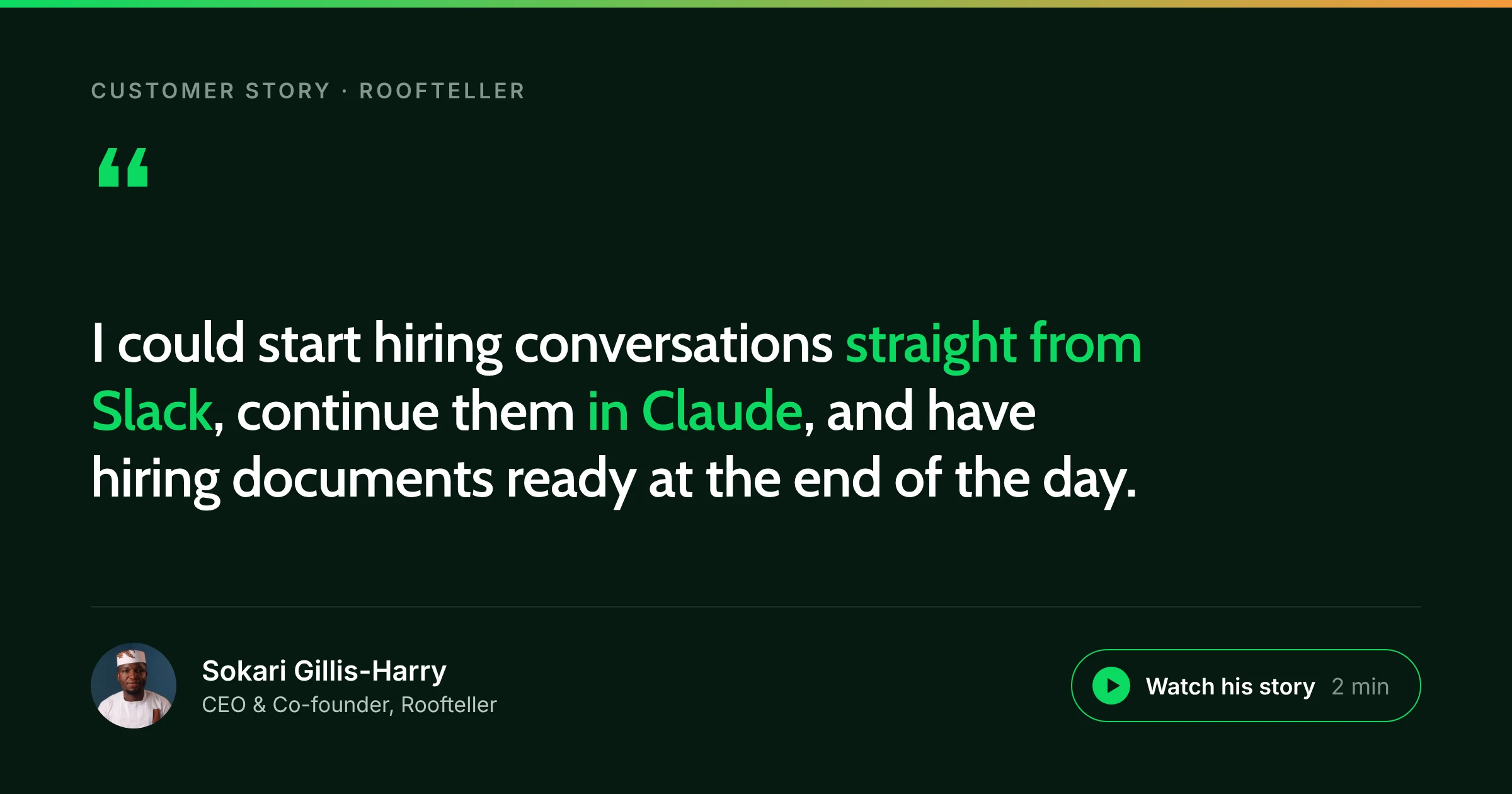
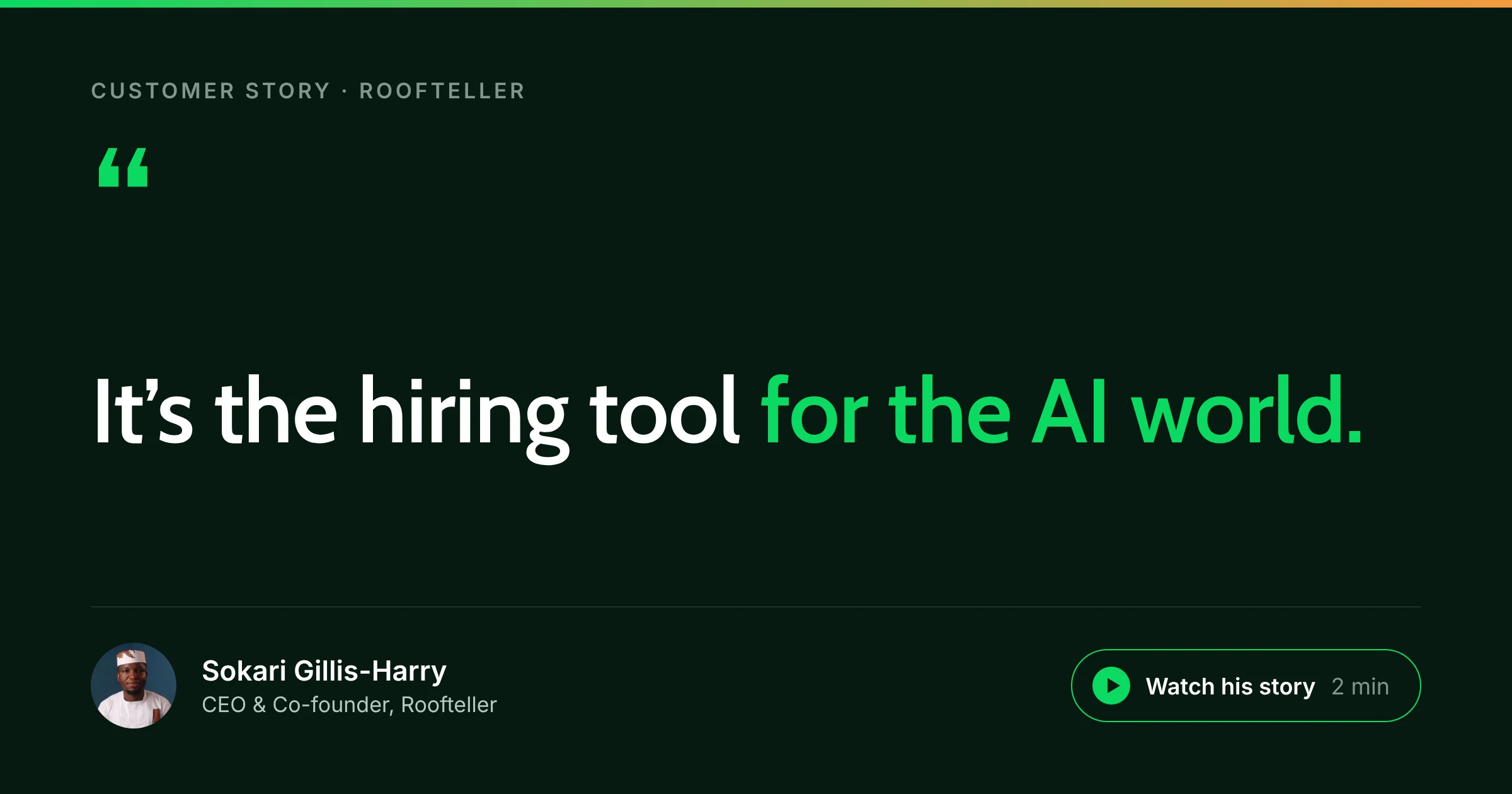
Sokari Gillis-Harry, founder of Roofteller, described exactly this:
Shift 7: Pricing started following outcomes
Seat-based subscriptions made sense when recruiters lived in the software all day. For a founder-led team making a few hires a year, paying monthly for an empty pipeline makes less sense. Agencies charge on hire, but usually as a share of salary. A newer model charges per outcome you can see.
What it means for you: pay for what you actually want: people you've seen do the work.
How Laand does it: publishing is free, and you pay $750 per talent you unlock, after you've seen their work.
The 2023 playbook vs the 2026 playbook
| 2023 | 2026 | |
|---|---|---|
| First question | Who do we hire? | Hire, or agent? |
| Starts from | A job title | The result you need |
| First filter | CV keywords | Honest fit for the problem |
| Main signal | CV and interviews | Paid work on your problem |
| AI in the assessment | Banned | Allowed, visible, scored |
| Where hiring happens | An ATS tab | Slack and AI agents |
| Pricing | Seats or % of salary | Per outcome |
| Scarce skill | Producing output | Judgment over AI |
What hasn't changed
Brian Chesky's rule is older than any of this, and more true than ever:
"Start with the results and work backwards to the people. Most [startups] start with resumes."
AI didn't change the principle. It removed the excuses for ignoring it.
What to do this quarter
- Write the result for your next hire before you write the job post.
- Split it: agent work vs what a person must own.
- Add an honest fit check before applications.
- Replace your take-home with a paid six-hour project from your real work.
- Allow AI, ask for the chat links, and plant one mistake.
- Run the decision in Slack, with identities hidden for the first look.
Or let Laand run all six from the tools you already use.
What changed for candidates
Hiring changed on the other side of the table too, and understanding it helps you hire better.
The best candidates stopped doing unpaid homework. When AI can complete a generic take-home in minutes, strong candidates, especially employed ones, see unpaid assignments as a filter for desperation. Paid, real work on an interesting problem still gets a yes.
Candidates now check fit before they apply. Many use AI to read a job post and ask whether they're a real match. Laand builds this in: talent paste a Job Link and get an honest Fit Score out of 10, what the company is really trying to fix, and where their background is strong or thin.
Proof became portable. On Laand, talent keep a Career Vault of projects written the way a hiring team reads them, including the public links to the AI chats behind the work and what they checked. Projects Laand reviewed, repos connected from GitHub and self-described projects are labelled differently, so you know which kind of proof you're looking at.
Anonymity became a feature. When the first review is of the work, not the name, candidates from unusual backgrounds get a fair look, and companies get a wider pool.
Five predictions for 2027
These are opinions, not data. Hold us to them.
- "Hire or agent?" will be a standard line in every hiring plan, the way "build or buy?" is in every product plan.
- The CV won't disappear, but it will stop being read first. It'll become context for the work, not a filter before it.
- Paid work samples will become normal for senior roles, because the best people will expect them.
- Most hiring actions will start in an AI agent or a chat tool, not in a hiring tool's own interface.
- Pricing will keep moving toward outcomes, because founders will stop paying monthly for empty pipelines.
A checklist for your next board update
If your board asks how you're hiring in an AI-native way, you should be able to say yes to most of these:
- Every role starts from a written result with a measure and a deadline.
- Every role has a hire-or-agent split.
- No role is filtered on degree.
- Finalists do paid, real work, with AI allowed and visible.
- The first review is anonymous.
- The team decides where it works, and the decision is recorded.
- We pay for outcomes, not idle software.
Key takeaways
- AI made applications free, so they stopped carrying information.
- Teams got smaller and each hire got bigger.
- "Hire or agent?" is now the first question for every role.
- Judgment over AI is the scarce skill; proof of work is the signal that shows it.
- Hiring moved into Slack and AI agents, and pricing is moving toward outcomes.
Frequently asked questions
How has AI changed hiring in 2026?
AI made applications nearly free to produce, which flooded hiring with polished, similar applications. It also shrank teams and changed the scarce skill from producing output to judgment over AI. Companies are responding with results-first roles, hire-or-agent decisions and paid work samples.
Are AI-generated applications a problem for employers?
Yes, when the process relies on CVs and cover letters, because they no longer distinguish candidates. Filters based on fit for a specific problem and on real work are much more resistant.
What skills matter most in 2026 hiring?
High agency, execution taste and judgment over AI: deciding what to build, directing agents, catching their mistakes and driving work to done.
Will AI replace recruiters?
It's replacing much of the mechanical work: sourcing, scheduling and first screens. Judging whether someone can do the job is moving to work samples, which AI helps review but doesn't replace.
What is the Laand Hiring Index?
A weekly and monthly report from Laand that reads hundreds of thousands of new job descriptions to track how companies hire: which skills they ask for, whether they ask to see work, and where demand is moving. Read the October 2026 report.
Keep reading
Stop applying blind.
Laand scores your fit for any role, then builds the application kit that proves you can do the job.
Join LaandHire the 2026 way
Start from the result, decide hire or agent, and see paid, AI-made work before you meet anyone, from Slack, Claude or your dashboard. Free to publish.
Start a Talent Hunt